
Monkey Forest Tales: A collaborative book chapter about the use of flooded forest by primates in Colombian Llanos (Español abajo)

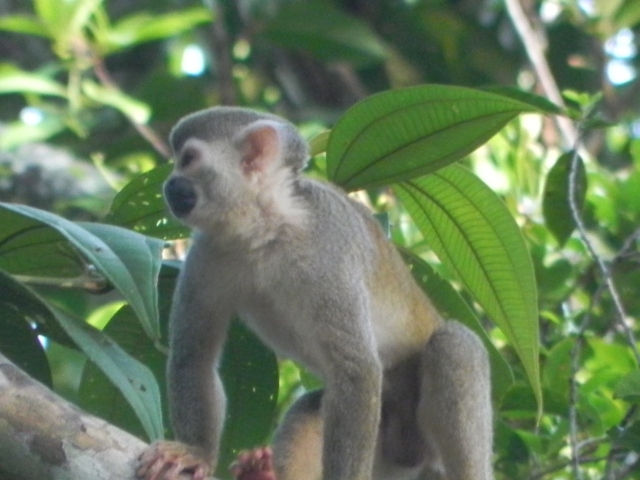
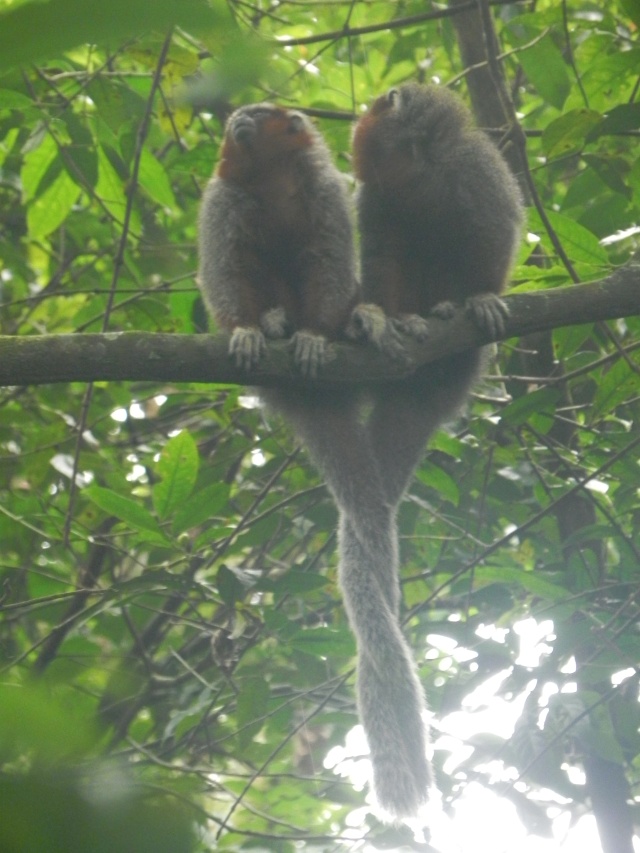
In today’s post, we continue with our series of articles based on information we had been collecting in the study area over the past 21 years. We are going to talk about a book chapter that we write with Dr. Thomas Defler. This chapter present habitat use data by primate species from three areas of Colombian Llanos: Tinigua national park, El Tuparro national park and San Martín area, Zocay Project study area. The data from Tinigua national park came from my bachelor thesis on Colombian squirrel monkeys (Saimiri albigena, before called Saimiri cassiquiarensis albigena), and published data on other primate species in this park from other authors. San Martin area data came from my master thesis focused on the behavior and ecology of Colombian squirrel monkey (Saimiri albigena) and occasional observations of other primate species in the area using flooded forest fragments and Mauritia flexuosa swamp fragments. Finally, El Tuparro national park data came from data collected by Thomas in flooded and unflooded forest focused mainly on the use of these forest types by Cebus albifrons and Sapajus apella (before called Cebus apella).

This chapter showed the importance of flooded forest in different parts of the Colombian Llanos for different primate species in degraded and undegraded areas. The use of flooded forest in the Colombian Llanos seems to be influenced by fruit availability especially during the early rainy reason in the areas studied. However, this chapter also shows that it is important to make more studies of primate species in these flooded areas as there is still information missing on how seasonal the use of this flooded forest for some primate species is as well as the role that Mauritia flexuosa swamp fragments can have on the ecology of primate species in fragmented landscapes of the Orinoquia region.

Español: Un capítulo de libro en colaboración sobre el uso de bosques inundables por monos en los Llanos Orientales

En el blog de hoy continuamos con nuestra serie de artículos basados en la información que hemos estado recolectando en el área de estudio por los últimos 21 años. Vamos a hablar de un capítulo de libro que escribimos con el Dr. Thomas Defler. Este capítulo presenta datos sobre el uso del hábitat por monos en tres áreas de los llanos colombianos: el parque nacional Tinigua y El Tuparro y el área de San Martín, área de estudio del Proyecto Zocay. Los datos del parque nacional Tinigua son parte de mi tesis de biología sobre los monos titis colombianos (Saimiri albigena, antes llamados Saimiri cassiquiarensis albigena), y datos publicados sobre otras especies de monos en este parque por otros autores. Los datos del área de San Martin vienen de mi tesis de maestría enfocada en el comportamiento y ecología de los monos titis colombianos (Saimiri albigena) y observaciones ocasionales de otras especies de monos en el área que usan fragmentos de bosque que se inundan y fragmentos de morichales (fragmentos de bosque principalmente compuestos de la palma de moriche, Mauritia flexuosa). Finalmente, los datos del parque nacional El Tuparro vienen de datos colectados por Thomas en bosques inundado y no inundados, principalmente enfocados en el uso de estos tipos de bosque por Cebus albifrons y Sapajus apella (antes llamado Cebus apella).

Este capítulo muestra la importancia de los bosques inundados en diferentes partes de los llanos colombianos para diferentes especies de monos en áreas degradadas y no degradados. El uso de bosques inundados en los llanos colombianos parece estar influenciado por la disponibilidad de frutos especialmente durante principios de la época de lluvias en las áreas estudiadas. Sin embargo, este capítulo también muestra que es importante hacer más estudios de las especies de monos en estas áreas inundadas ya que aún falta información sobre qué tan estacional es el uso de estas áreas inundadas para algunas de las especies de monos, así como el papel que los fragmentos de bosque de morichal tienen en la ecología de las especies de monos en paisajes fragmentados de la región de la Orinoquia.

If you want to support our activities, please visit https://fineartamerica.com/art/xyomara+carretero or get in contact with us at xcarretero@gmail.com if you want to collaborate, donate or volunteer in our activities. You can also support our activities by buying our ornate titi monkeys stuff dolls https://www.instagram.com/p/Ctm_sEORvk8/?igshid=MzRlODBiNWFlZA== and our new journals in Amazon https://www.amazon.com/X-Carretero/dp/B0CWD1DBJM/ref=mp_s_a_1_1?

© Copyright Disclaimer. All pictures used on this web page are protected with copyrights to Xyomara Carretero-Pinzón. If you want to use any of these pictures, please leave a message on the website or contact xcarretero@gmail.com
Monkey Forest Tales: news from the field

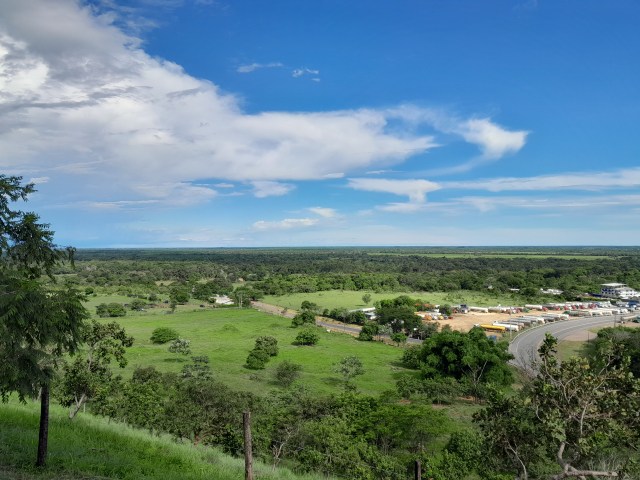
In today’s post we are going to talk about some of our recent news from the field. This month field season was a little bit longer due to a small anonymous donation to our field surveys. We continue with our samplings of Colombian squirrel monkey’s babies (Saimiri albigena) in Villavicencio and San Martin. We also had the opportunity to see other primate species during our surveys.

During these surveys we try to count as many monkey groups of black-capped capuchins (Sapajus apella), red howler monkeys (Alouatta seniculus) and ornate titi monkeys (Plecturocebus ornatus) as possible. We also have the opportunity to spend time observing Colombian squirrel monkey’s babies during their first months of their lives. At the moment, Colombian squirrel monkeys have babies from one to three months old. So, some of the older babies are starting to move a little bit away from their mother’s body, starting to bite branches and trying to bite fruits, showing interest in their environment. However, this also means that Colombian squirrel monkey’s babies living in the city, also explore human structures while growing up in the city. Unfortunately, this means that in cities babies bite not only tree branches as well as electricity cables, which is a huge risk for this endemic species of Colombian primate.

It is time for ornate titi monkey’s babies too, however the ornate titi monkey’s groups we had seen up to now didn’t have any. However, we saw one six month old black capped capuchin baby in one of the groups we saw in San Martin. No babies had been observed for red howler monkeys. We will continue surveying monkey groups in both areas and will be able to make an additional sampling in Villanueva next month. Information about when and how many babies are born every year is important information to know the birth rate of monkey’s population. Over the years we have tried to compiled information about as many groups as possible of all monkey’s species in San Martin area, however resources are not always easy to get, so in some years we had not been able to collect all the information necessary, an effort we will try to correct this year and if possible, in the following years.

If you want to support our activities, please visit https://fineartamerica.com/art/xyomara+carretero or get in contact with us at xcarretero@gmail.com if you want to collaborate, donate or volunteer in our activities. You can also support our activities by buying our ornate titi monkeys stuff dolls https://www.instagram.com/p/Ctm_sEORvk8/?igshid=MzRlODBiNWFlZA== and our new journals in Amazon https://www.amazon.com/X-Carretero/dp/B0CWD1DBJM/ref=mp_s_a_1_1?© Copyright Disclaimer. All pictures used on this web page are protected with copyrights to Xyomara Carretero-Pinzón. If you want to use any of these pictures, please leave a message on the website or contact xcarretero@gmail.com

Monkey Forest Tales: Balance of Zocay Project activities in 2023 – Part 2: projects and collaborations (continuation)

In today’s post we want to continue mentioning some of our collaborations and projects from 2023. This year also give us the opportunity to know and support an incredible nature tourist project lead by Cesar Angel and his company Nature Trips Colombia that is supporting nature tourism projects in Vista Hermosa area where ornate titi monkeys are used as an umbrella species to incentivize sustainable economic alternatives in an area that suffers from violence over the past decades.
Additionally we continue supporting Cumaral biodiversa and El Silencio farm in their effort to monitor and map Brumback night monkey’s nest in Cumaral town. We also support them in their efforts to learn more about the wildlife they have in their territory through camera traps.
A few days back, we also received great news for our project about the ornate titi monkey’s distribution. We received funds from Little Chalcraft Fund, manage by Rewild, to make specific surveys on the north, east and south part of ornate titi monkey distribution limits next year. So stay tuned in the following months for news on these trips and more ornate titi monkey (Plecturocebus ornatus) news.
We are also in conversations with two organizations at national and international level to increase our impact on primate conservation. More news on these collaborations in the following months. We are also reconnecting with El Caduceo reserve in San Martin to monitor primates there
Finally, this year had leave us with multiple learnings about the impact we can and must have on primates and their habitats as well as multiple new friendships, renewed collaborations and friendships and more plans for future years.
If you want to support our activities, please visit https://fineartamerica.com/art/xyomara+carretero or get in contact with as at xcarretero@gmail.com if you want to collaborate, donate or volunteer in our activities. You can also support our activities by buying our dusky titi monkeys stuff dolls https://www.instagram.com/p/Ctm_sEORvk8/?igshid=MzRlODBiNWFlZA==
© Copyright Disclaimer. All pictures used on this web page are protected with copyrights to Xyomara Carretero-Pinzón. If you want to use any of these pictures, please leave a message on the website.