



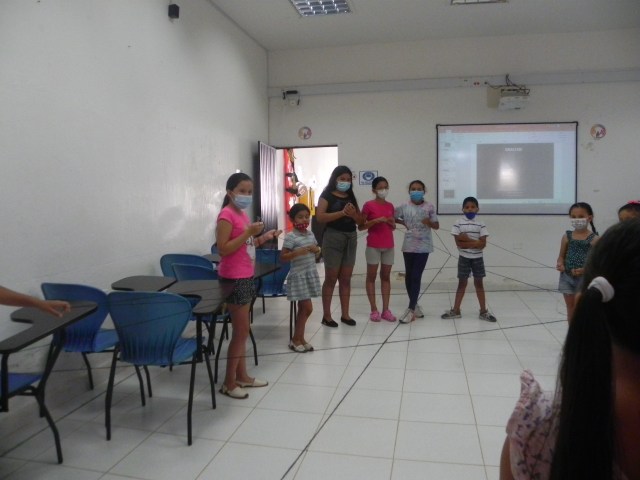

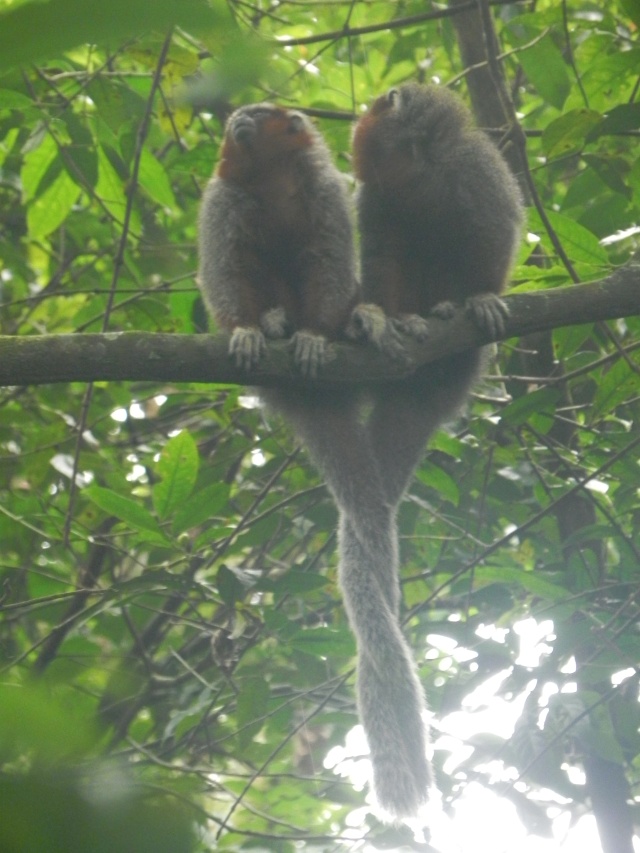

In recent weeks some people, locals from the study area, and colleagues had been asking what we do at Zocay Project. So, today’s post is about our activities and projects.
From the beginning the purpose of Zocay Project (Proyecto Zocay in Spanish) has been to monitor primate populations in forest fragments of different sizes, around San Martin town in Colombian Llanos. At the same time and during several years, with help from students and volunteers we also collected behavioral and ecological data focusing on mainly on movements, diet and individual relationships of four of the five species of primates found in the study area (see some of our findings and lessons learned in some or our past posts). Additionally, and in different years, we have support landowners initiatives of reforestation in fences and swamp areas with native species used by monkeys in the area. We have also make environmental education activities mainly with kids in farms and in San Martin town.
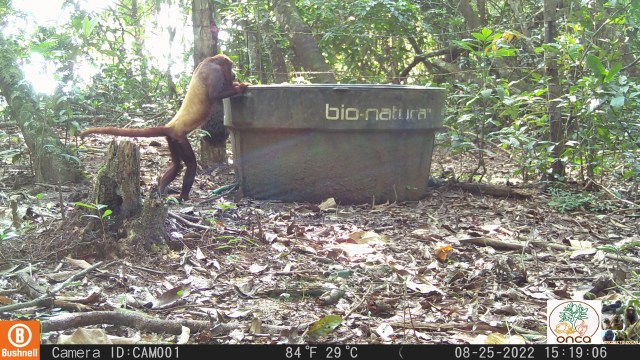
More recently, we initiated a camera trap project (in August of past year) to monitor wildlife use of natural and artificial water sources (see post from March 3rd, 2023 here). This project has helped us to also monitor the presence of feral dogs in the area and make possible our collaboration with Onca Foundation (a Colombian NGO) not only for this camera trap project but also a campaign of farm’s dog vaccinations that will be done in May 20th, as part of an international campaign with Onca Foundation and their partners as a prevention measure to reduce disease transmissions between domestic dogs and wild felids and canids.
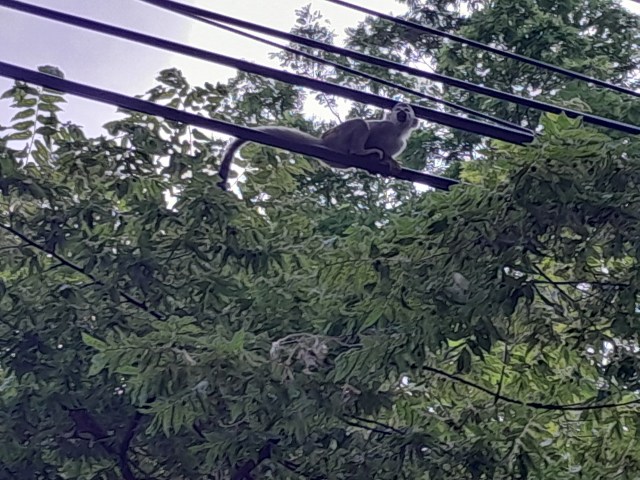
In recent years we also expanded our activities and collaborations with local organizations in Cumaral town (Cumaral Biodiversa, Terra Viva Foundation and El Silencio farm) to study nocturnal monkey’s populations and nesting sites in this area. And Villavicencio city (William Barrios Fundation and SUSA research group from Universidad de los Llanos, a regional university) to study nocturnal and dusky titi monkeys in forest fragments in the urban and rural area of this city. In Villavicencio we also started a monitoring of squirrel monkeys groups living in remnant forest fragments inside the city, with help of citizen science and direct group counts.
We also had expanded our sampling to Villanueva town, limits of dusty titi monkey (zocay) in search of clarifications of their distribution area. We started monkey’s groups monitoring around this town with help of local people.
Finally, we are collaborating with the local environmental authority to support and participate in some activities coordinated by them in terms of environmental education in San Martin, with participation of the municipality, and fauna accidents in Villavicencio city.
So, although most of our focus and activities are concentrated in San Martin we had tried to include additional areas in the region that have the same monkey’s species and expand our collaborations. If you want to collaborate and/or participate and support our activities please contact us at xcarretero@gmail.com
If you want to support our activities, please visit https://fineartamerica.com/art/xyomara+carretero or get in contact with as at xcarretero@gmail.com if you want to collaborate, donate or volunteer in our activities
© Copyright Disclaimer. All pictures used on this web page are protected with copyrights to Xyomara Carretero-Pinzón. If you want to use any of these pictures, please leave a message on the website. Thank you.
Monkey Forest Tales: linving in the cement jugle: challenges and dangers
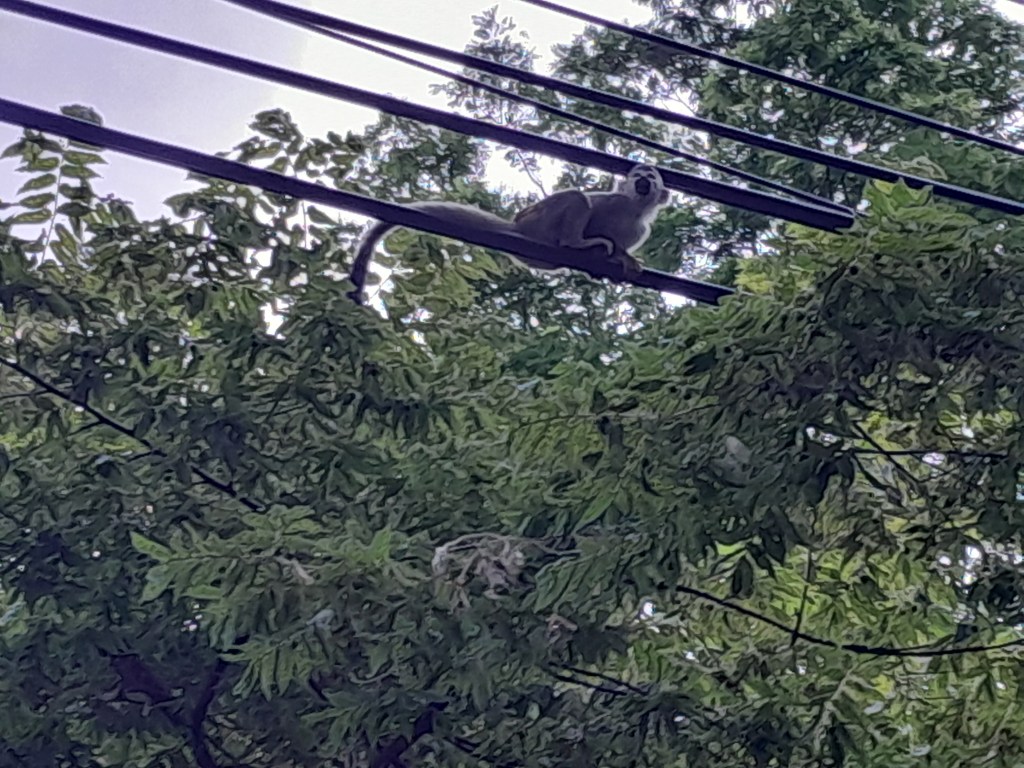
In today’s post we are going to talk about the challenges and dangers of primates living in our cement jungles, i.e. cities. While growing up momkey’s babies and juveniles have different challenges and threats that they need to overcome and learn to identify in order to survive.
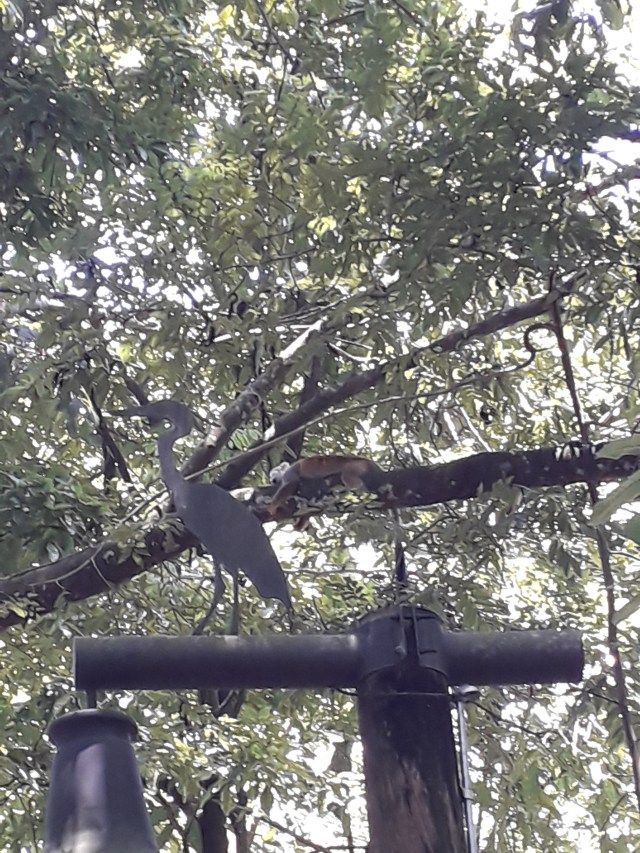
Monkeys explore those challenges in the same way they will do it if they were living in the forest. This means they will bite, lick and touch everything around them while exploring and learning from their moms what is good and what is not. In the forest this includes biting sticks, leaves and fruits while trying to learn what is tasty. In the city this can also means biting and licking metal surfaces, biting electrical cords, licking cement surfaces with or without toxic substances as well as the few trees, fruits, flowers and leaves in our gardens, parks and forest remnants.
How this affect them is poorly understood. For now we know that biting cords can be one of the causes of electrocution of young monkeys in some urban areas, as well as the bad conditions of these cord insulation. In addition in some areas electrical cords are also used to move between trees and buildings increasing their probability to electrocutions.
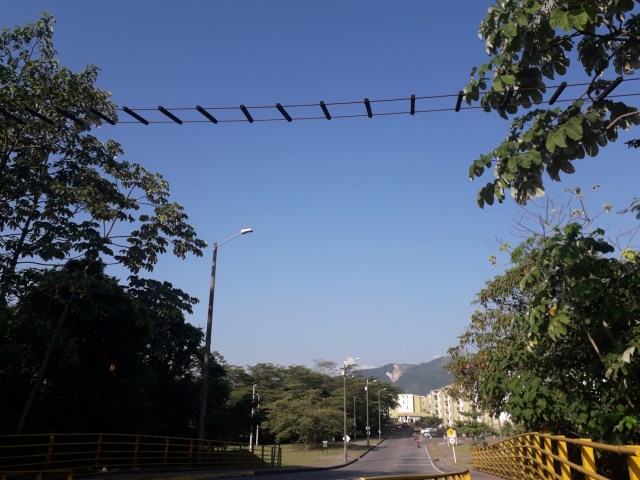
Crossing busy roads in cities is an additional challenge for monkeys in cities that is poorly mitigated despite of some studies showing monkey’s use of canopy bridges located in specific pathways. Presence of big trees is possible in cities along narrow roads that can make natural bridges for monkeys still possible. However many cities have policies that includes periodic trim and more common these days complete cut old trees, despite of their benefits to reduce temperature in cities.
An additional challenges is the presence of stray dogs roaming in the streets and sometimes hunting in packs that not always can be avoided. Baby monkeys and juveniles learn from their moms how to recognize those dogs as threats, however roadkill, electrocutions and sometimes mother’s death can make this learning more difficult.
We are trying to monitor those threats (dogs, electrocutions and roadkill) in Villavicencio city and San Martín town to find strategies that reduce those threats for monkey’s populations in urban areas. This threats are also present in rural areas however it seems its intensity is less strong. However more data is need it.
So if you live in the area or want to get involved plase contact us at xcarretero@gmail.com
If you want to support our activities, please visit https://fineartamerica.com/art/xyomara+carretero or get in contact with as at xcarretero@gmail.com if you want to collaborate, donate or volunteer in our activities
© Copyright Disclaimer. All pictures used on this web page are protected with copyrights to Xyomara Carretero-Pinzón. If you want to use any of these pictures, please leave a message on the website. Thank you.
Monkey Forest Tales: Feral dogs and cats and it’s impacts on our biodiversity
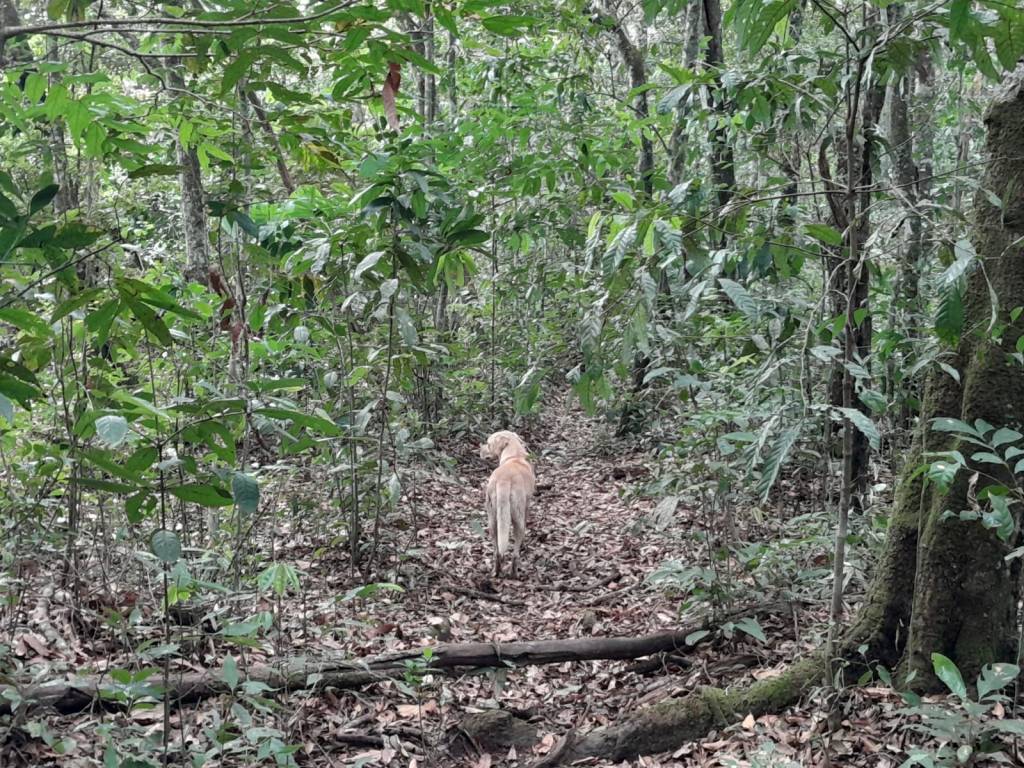
In today’s post, we will like to talk about the impacts of feral dogs and cats. For the last two years we had been thinking on ways to assess the effects of feral dogs and cats on our study area’s biodiversity. Our anecdotal observations and farm workers reports over the past 5 years seems to highlight an increase of feral dogs in the area, also supported by some data of camera traps. However feral cats seems to be more difficult to register, at least on the main study area of Zocay Project in San Martín town.
In Villavicencio, feral cats effects on biodiversity seems to be more evident in some areas, such as urban parks. However street dogs affecting biodiversity seems to be more difficult to assess.
Feral dogs and cats had been reported to have a huge impact on small vertebrates mortalities near and within urban areas. Additionally to their impact as hunters, they are also reservoirs of disease that can be transmitted to wild carnivorous present in these fragmented areas. At Zocay Project area it is particularly important due to the presence of ocelots and other carnivorous that can get some disease from domestic dogs and cats.
One of the strategies that seems to start giving some results to assess feral dogs impacts seems to be camera traps as we had detected at least 5 different individuals of domestic dogs roaming in the core area of our study area. Although not hunting activity had been detected yet. However in past year we had local reports of a group of 4 dogs hunting goats in one of the farms in which Zocay Project is working.
Although we still have questions about feral dogs and cats effects on our study area, identification and detection of feral dogs and cats is a starting point to assess those impacts. Some interviews and assessment of vaccination status of domestic dogs and cat in neighboring farms can give us additional information to evaluate their effects and guide us on which management action can we suggest to landowners.
If you want to support our activities, please visit https://fineartamerica.com/art/xyomara+carretero or get in contact with as at xcarretero@gmail.com if you want to collaborate, donate or volunteer in our activities
© Copyright Disclaimer. All pictures used on this web page are protected with copyrights to Xyomara Carretero-Pinzón. If you want to use any of these pictures, please leave a message on the website. Thank you.
Monkey Forest Tales: Fieldwork challenges and how to maintain you mind flexible when trouble happens

First, we apologies for posting this a bit later than usual, but as it is mentioned in the title fieldwork have some challenges and Zocay Project has not exceptions on this even after almost 19 years of visiting the same forest fragments and farms.
Depending on the focus of your fieldwork there are different challenges that comes with sampling in the field. When I started, those challenges include travelling to far remote areas, something that now is easier because Zocay Project study area is close to a town and public transport to that town runs daily, several times a day, which is a huge advantage when your presence is need it urgently. But what kind of things would require that you need to travel urgently to your field site…
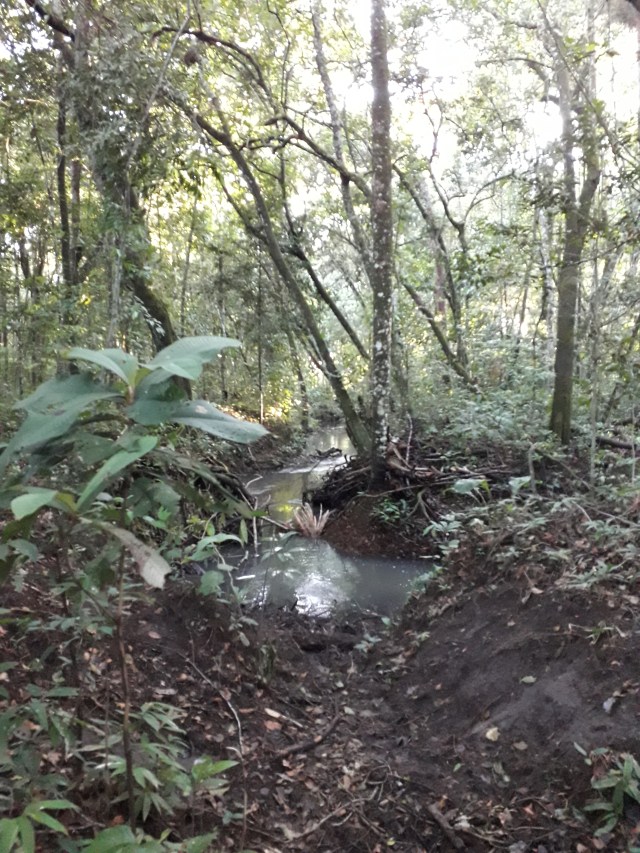
Well, when your samplings require to put traps, like camera traps and the study site has flooded areas. This will mean that when rainy season start some streams, lagoons and swamp areas could be flooded in a matter of hours. These situations are common in Orinoquia and Amazon areas where certain areas of the forest are highly influenced by water level rises, that goes from a few centimeters to up to several meters (Amazon forests).
Other challenges include time to accommodate fieldwork and the rest of your job/ personal life. Although having a field site close to your home base can help, you also need flexibility in your job hours to be able to make quick trips to the field in case something happens or when that is not possible to be able to delegate those field activities to people you can trust to make the work in the same way you will do it. It is not always easy to delegate activities, especially if those activities can have a huge impact on the data you are collecting.
In science, we usually work with schedules and most of our field trips usually are planned ahead, however we cannot control weather and sometimes rains start before usual times and you need to be flexible to adjust to those climate patterns, especially now that rainy patterns are changing so much in unpredictable ways.
Other challenges include equipment damage because of humidity conditions on the field site or faulty equipment. Humidity is a big problem for most of the equipment we use and sometimes even if we carefully choose the brands and take care of equipment as much as possible, still can get wet inside. Therefore, is always useful to take some silica gel to put wet equipment inside a hermetic box or when you have difficulties to get it, some rice will also works to extract humidity, from cameras, GPS, binoculars and camera traps. It is also wise to check your equipment before going to the field to avoid taking faulty equipment to field sites.
However, even when you plan, check your equipment before going to the field or when you can delegate, it is sometimes difficult to face some of those challenges and it is up to us to maintain a flexible mind to face those challenges to do our sampling, even when it seems we don-t have the skills and tools to solve it.
If you want to support our activities, please visit https://fineartamerica.com/art/xyomara+carretero or get in contact with us at xcarretero@gmail.com if you want to collaborate, donate or volunteer in our activities
© Copyright Disclaimer. All pictures used on this web page are protected with copyrights to Xyomara Carretero-Pinzón. If you want to use any of these pictures, please leave a message on the website. Thank you.
Monkey Forest Tales: International Forest Day
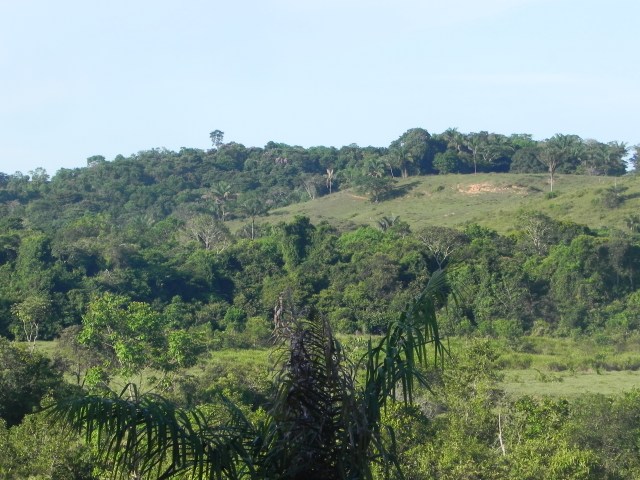
On March 21st we celebrate the International Forest Day, a date to rise awareness about forest protection of our native forest. Usually when we talk about forest, we usually think about large extensions of forest without paying much attention to the importance of small areas/ patches of forest that are also important. Those small forest are particularly important from the perspective of connectivity and water conservation in many productive systems.
In highly fragmented areas, such as Zocay Project study area, forest are perceived by landowners as a source of resources for human activities, such as firewood and wood for poles, or as unproductive land that need to be transformed.
During the past 19 years in the study area of Zocay Project, we had supported the use of living fences to connect small forest, reforestation, natural regeneration and we highlight the importance to fence forest areas to control livestock effects on plant regeneration inside forest fragments. However when working in private lands, we need to be flexible and sensible about the main productive activity developed in those areas and be aware that those activities had an impact that not always can be avoided and find ways of mitigate those impacts.
For example, in some cases cattle ranching areas need poles’ changes and in most cases those poles are cut from small fragments inside the same property. This is something that can affect and influence behaviors and ecology of many species, however we can advice landowners in terms of areas where those extractions may have less effects despite the impact of those activities.
Although those activities will continue occurring inside private lands we can reach agreements with landowners to protect certain areas, as well as manage others to mitigate the effects of productive activities in these private properties managing in this way the landscape and wildlife populations. Education and agreements with farm workers is also important and sometimes the impact of our effort are only visible after several years or decades.
If you want to support our activities, please visit https://fineartamerica.com/art/xyomara+carretero or get in contact with as at xcarretero@gmail.com if you want to collaborate, donate or volunteer in our activities
© Copyright Disclaimer. All pictures used on this web page are protected with copyrights to Xyomara Carretero-Pinzón. If you want to use any of these pictures, please leave a message on the website. Thank you.
Monkey Forest Tales: Wonders and Challenges of Camera Trap Surveys
In today’s post we are talking about camera trap surveys, some of the wonders and challenges of working with this incredible technology. Camera traps had made easier to witness some behaviors that otherwise will be so difficult to see, especially for species that are naturally shy. It also had made possible to discover new locations for some species that we though weren’t able to inhabit those areas.
Don’t get me wrong, I started doing behavior in the old way, with binoculars at hand and following monkeys all day long, and still enjoy that part. However, camera traps can help with animals of nocturnal habits that are difficult to follow or behaviors that are rare and not commonly seen.
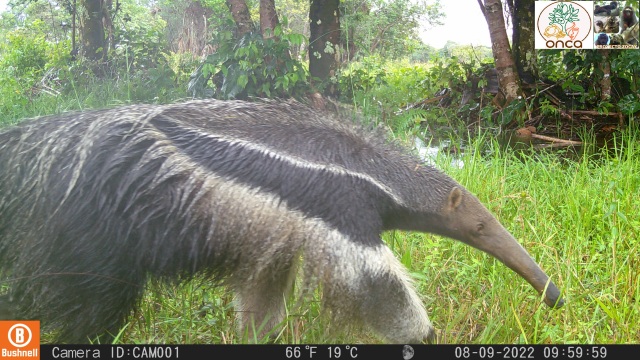
It is surprising the number of behaviors that you can discover using camera traps, from giant ant eaters taking a bath or discovering that crab-eating racoons are more common that you thought in your study area. Or finding out that huron or grison are also found in small gallery forest fragments.
However, there is a lot of challenges, not only to find the right kind of camera trap to use, where to located it and make sure that the camera trap you choose is resistant to humidity, and even to battery explosions due to excess of heat!!!!
In tropical forest humidity is a big challenge that not always is easy to sort out, and sometimes in areas where you have high humidity at sometimes in the year while at other times you have high temperatures and very dry air, make difficult to choose the right kind of camera and not always you make the right decisions. Balancing cost of cameras and resistance to humidity and high temperatures is not easy and sometimes means a lot of trial and error.
If you want to support our activities, please visit https://fineartamerica.com/art/xyomara+carretero or get in contact with as at xcarretero@gmail.com if you want to collaborate, donate or volunteer in our activities
© Copyright Disclaimer. All pictures used on this web page are protected with copyrights to Xyomara Carretero-Pinzón. If you want to use any of these pictures, please leave a message on the website. Thank you.
Monkey Forest Tales: News from the field: babies’ season continues


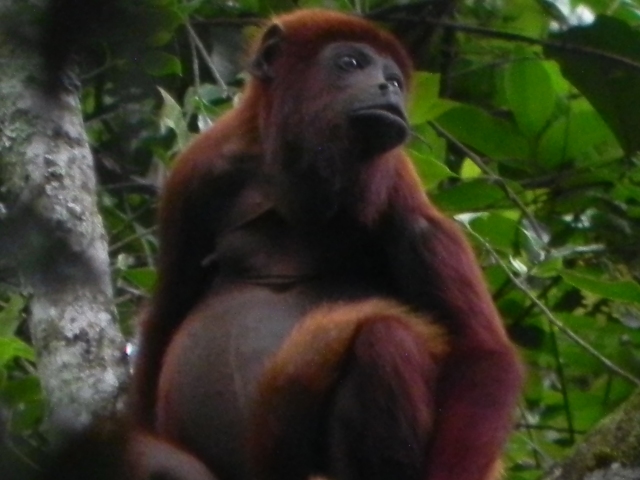
Today’s post is once again one from our fieldsite in Colombian Llanos, as every years we are monitoring babies’ season of Colombian squirrel monkeys. Babies’ season for this small monkey occurs every year for around three months between January to March with some groups having all their babies at the beginning of January and others having their babies in March.
This time of the year is critical for them as not all babies reach their first year. Some of them died when they still depends on their moms for everything. And others died after their first year when they start their lives as juveniles. Therefore, group size for squirrel monkeys can remain the same for several years despite new babies born every year.
This year we had been able to count new babies in groups which we don’t monitor every year due to logistic constrains. A total of seven group of this species were monitored this month, all with babies.
Beginning of year is also dusty titi monkeys babies’ season. For this species, babies’ season started a bit earlier with some babies born in December. In this trip we detected an additional group of this species with one baby.
Additionally, our camera trap project is showing interesting behaviors of birds and mammals close to natural and artificial water sources.
Dry season in the area continues with esporadic rains. Mauritia swamps are almost completely dried, as well as most lagoons. Some of the streams also are completely dried and some had small ponds. Live is difficult at this time of the year for some animals, however some trees had fruits that serve as small islands.
The dry season in the area is full of contrast, the forest is full of yellow and brown tones with a few shades of green, a few redish fruits hanging in branches give enough food to all monkeys moms, while strong winds help them hide from possible predators from above and below.
© Copyright Disclaimer. All pictures used on this web page are protected with copyrights to Xyomara Carretero-Pinzón. If you want to use any of these pictures, please leave a message on the website. Thank you.
Monkey Forest Tales: Celebrating the wetlands, especially the Mauritia swamps in Colombian Llanos


On February 2nd, we celebrate Wetlands World Day!!! A day to rise awareness to wetland areas around the world. Colombian Llanos or Orinoquia region, an area of around 981.446 km2, in which 48% are wetlands, wetlands are threatened by some cattle ranching practices, infrastructure construction, urbanization in cities such as Villavicencio, and agriculture. Part of those wetlands are Mauritia flexuosa swamps (Morichales, in Spanish), that had been fragmented and in some case drought for cattle ranching. Some of those areas, however, still persist inside of cattle ranches and become one of the most interesting areas to connect gallery forest fragments.
One of our newest projects, started in August 2022 is focused on monitoring water sources used by livestock to get water in a highly fragmented landscape mainly of cattle ranching. This project monitors natural and artificial lagoons, artificial water reservoirs and Mauritia swamps using camera traps (This project is funded by Little Chalcraft Fund through Rewild). Our preliminary result had shown the use of these water sources during the transition period between rainy and dry season and will continue monitoring this area through the year.
Some of the amazing results we already found is the use of water reservoirs by red howler monkeys and Colombian squirrel monkeys during wet-dry transition period. But monkeys are not the only ones using these water sources, giant ant eaters, tamanduas, coatis, and crab-eating raccoons.
Mauritia swamps are important for primates not only as corridors but also as places to make nest for Brumback’s nigh monkeys, but also as a source of food. All species living in the study are had been seen over the years feeding on Mauritia flexuosa fruits and using those palms to search for arthropods during several hours of their feeding times. Therefore, its protection not only is important because of the value wetlands have to provide clean water but also because in the case of Mauritia swamps it also serve as an important food and habitat source for primates and other native fauna.
© Copyright Disclaimer. All pictures used on this web page are protected with copyrights to Xyomara Carretero-Pinzón. If you want to use any of these pictures, please leave a message on the website. Thank you.
Monkey Forest Tales: News from the field, babies season is here!!

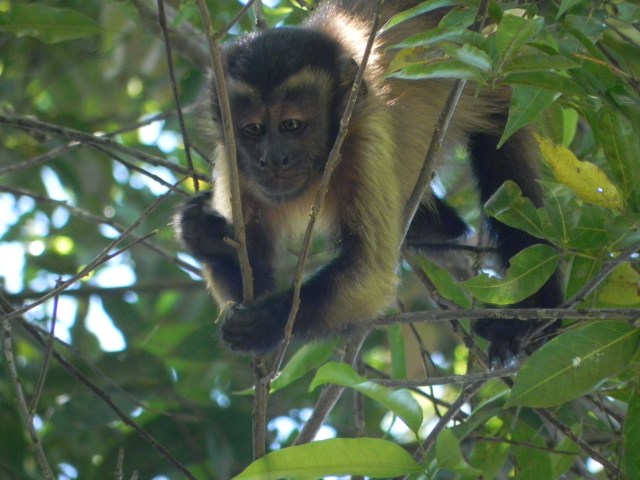

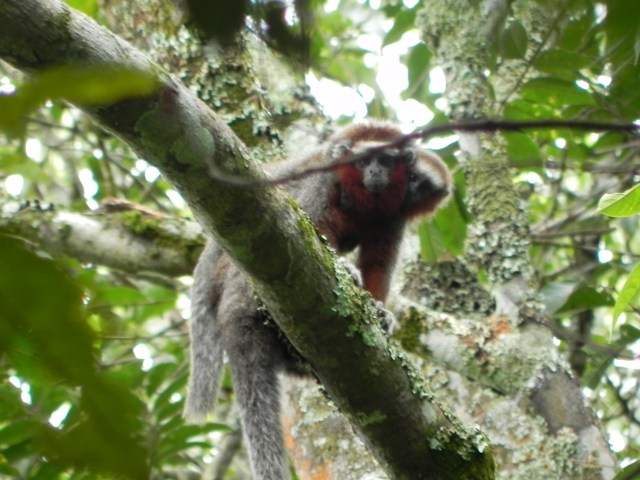
I’m writing today’s post, sitting at one of farm house in which we stay during our field trips, while refreshing myself after coming back of my third day of this year babies season. It is always exciting when I visit these fragments to count how many new babies the Colombian squirrel monkeys have and it is even more exciting when we found out that not only squirrel monkeys have babies this year during this month but also the dusty titi monkeys. In the past days we also saw three month old howler babies and six month old black-capped capuchin babies.
This year we had been lucky enough to see also babies from the squirrel monkey group near to town, that we are able only few times to see it at the beginning of the year. So up to now baby monkeys season has been successful, let’s hope those babies can reach the adulthood. Unfortunately our data from past years had showed a high mortality of juveniles, especially in squirrel monkeys.
Up to now, one of the three squirrel monkeys that we check every year had babies. The other two groups have pregnant females, which we continue monitoring in February and March, the whole birth season for this species in the area. All these groups had at least two infants from last year still alive and at least one group of bachelor males has been observed this month.
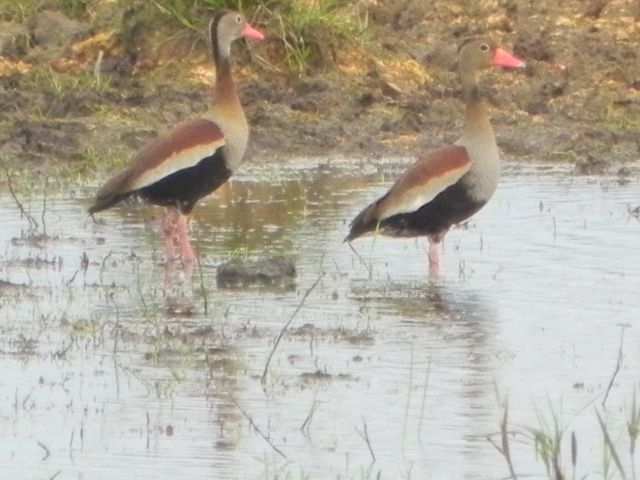
Monkeys are not the only beautiful surprises that these forest fragments give us in this trip, we also had seen coatis, squirrels, guan’s, toucans and a giant ant eater. Scarlet ibis are arriving, as well as migratory ducks.
This year seems to be more wet than years before and the stream had more water than in previous years during this same month. Usually this region have few rain during January, however this year rain have been more frequent than usual. It is always difficult to predict how long the dry season will last and how strong it will be as the rainy pattern in the area had changed in the past decade.
© Copyright Disclaimer. All pictures used on this web page are protected with copyrights to Xyomara Carretero-Pinzón. If you want to use any of these pictures, please leave a message on the website. Thank you.
Monkey Forest Tales: Planning 2023
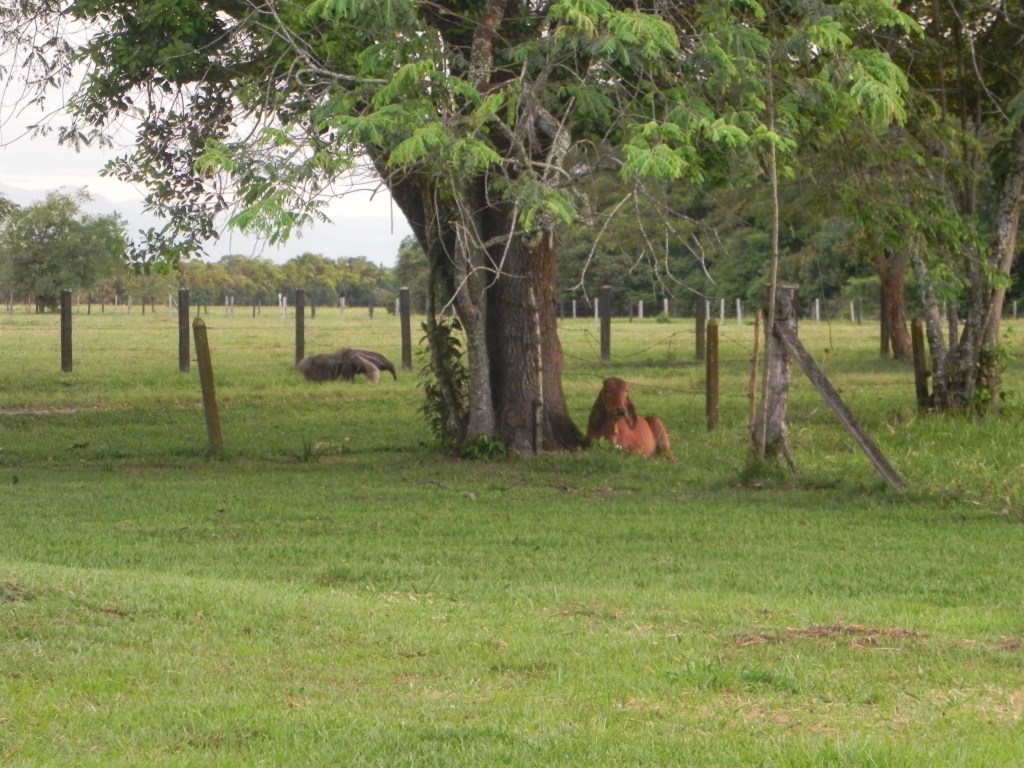

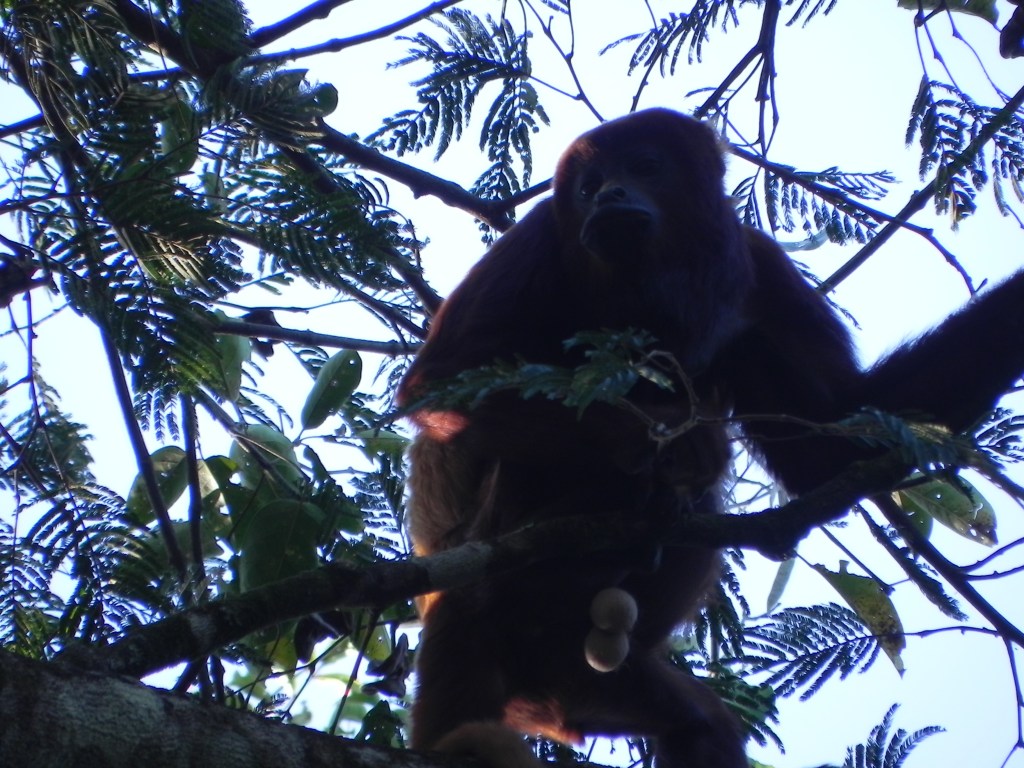

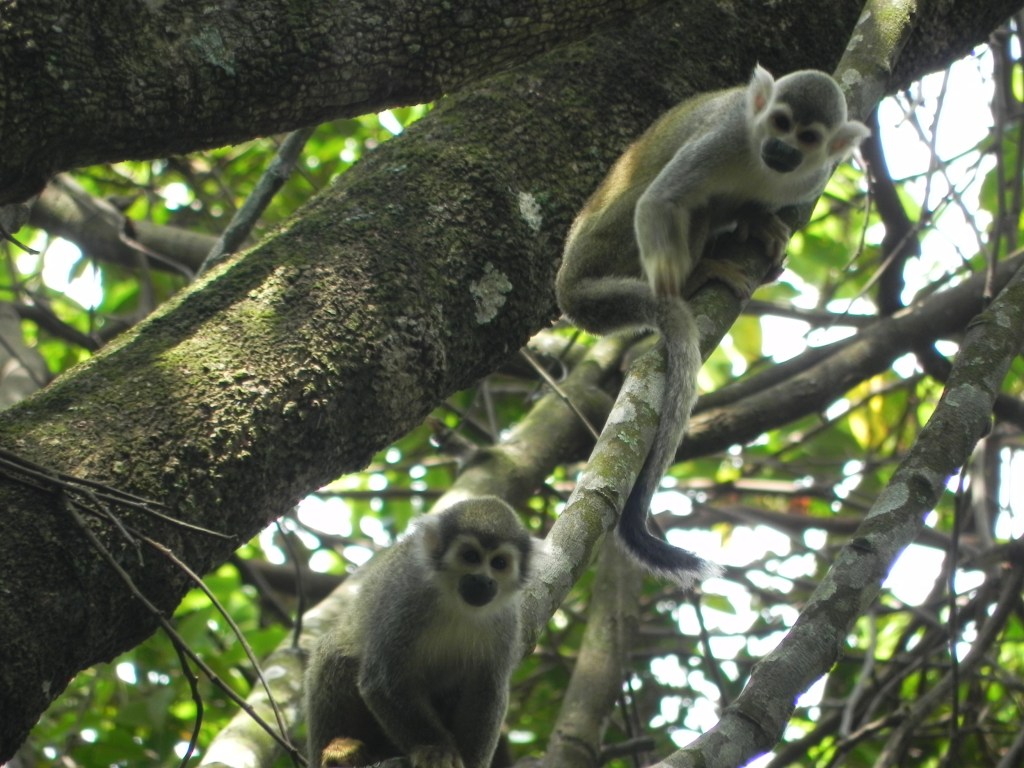

Today’s post is the first one of 2023 and although our fieldwork won’t start until next week, is still that time of the year when you plan for the whole year activities, so that is part of what we are doing at the moment in Zocay Project. So, for now I just give you a few updates of our plans for this new year and some preliminary news on our wildlife use of water sources.
This new project of wildlife use of water sources, we started our first round of camera pictures revision and again we observed ocelots, as well as we had observed tayras in the area, which means we still have some carnivorous in the area. We also get some pictures of new birds and rodents that we didn’t see before, and we are excited to continue discovering what our cameras are capturing close to the water sources.
An additional discovery in our cameras is that an elusive but common carnivorous, crab-eating racoon, seems to be more common than we thought in the area, and it appears in several of the cameras, including some cameras near to artificial lakes in the middle of pastures. So, even with all the transformation of this landscape, we still have an incredible amount of biodiversity that make these cattle ranching landscapes
 zocayproject