Monkey Forest Tales: Are volunteer experiences worth it?

In the past some students have asked if volunteers experiences are really worth it. In today’s post I will talk about it from my own experience. My short answer is YES it is worth it.

I’m from a country where social, family and financial pressures make you think that any free job is not worth it. Why? because if you finish your career you need to start working and stop depending on your family, except if your family have some means to support you.

In my case, I have some family support at some times, but not all the time. Some volunteer work I did were using my own resources. I didn’t start doing volunteer work after a few years after graduation. A bit later than many people from Europe, US or Australia who sometimes start volunteering at a younger age.

There are different types of volunteer work, and all give you different kinds of experiences, from administrative, logistic to fieldwork experience. Most important to understand is that these different volunteer experience can give you experiences that can be used in your CV as skills that you bring with you when applying to a new job.

Some other volunteer experiences give you opportunities to meet new people, visit places otherwise you won’t be able to visit, or help to study animals that you are interested on but don’t feel sure you want to expend too much time working on. In all cases, the experience you get will depend on how well you choose where you do your volunteer experience.

As well as when you choose where to study, is important to search about the institution, people, and area in which you are planning to do your volunteer work. In some cases, how much money will you require to do it is another consideration to have in mind. If you have doubts, ask questions, look for people who had made volunteer work with the same organization and ask them questions, research the place you will visit. All that information can help you choose the experience and make the best of it.

In my experience, all volunteer work has challenges. In some cases, those challenges comes from working with people from different cultures and backgrounds, others come from natural conditions of the place in which you have to work and other come from your own personal preferences of how, when and with who you like to work. For me, volunteer experiences are learning experiences that sometimes are need it to really know what is best for me and where I work the best.

So, if you are thinking of doing a volunteer work in science, my best advice is to research a bit first about, conditions, cost, and type of experience you will get and then make your decision knowing that you are not only going to learn about some interesting topic, but also about yourself…

© Copyright Disclaimer. Sketches were made by Cleve Hicks, pictures reproduced with his permission. All pictures used on this web page are protected with copyrights to Xyomara Carretero-Pinzón. If you want to use any of these pictures, please leave a message on the website. Thank you.

Monkey Forest Tales: Some stories from visitors: Exploring the human-wildlife frontier in the Colombian Llanos – Part 3

Day 3                     

With Sonia gingerly favoring her twisted ankle, the three of us headed north in the direction from which we had heard the howlers the day before. Xyomara’s instincts were again spot on: this time we had an unforgettable encounter with three species of monkey sharing the same forest patch: squirrels, red howlers and dusky titis (we had glimpsed a pair of the latter on the first day as well).

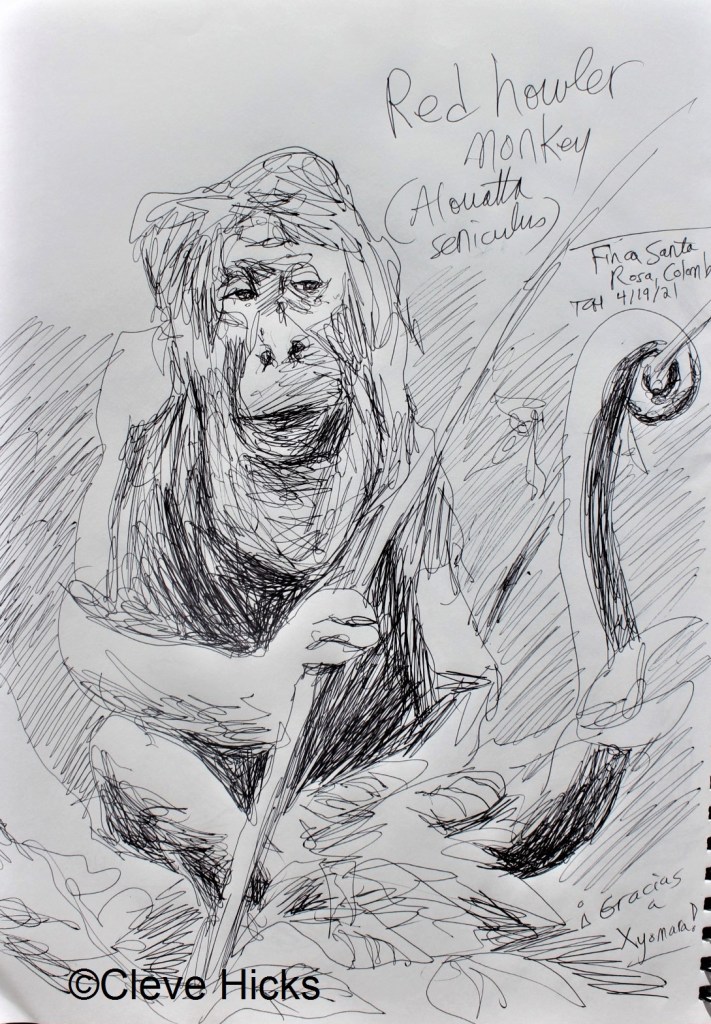
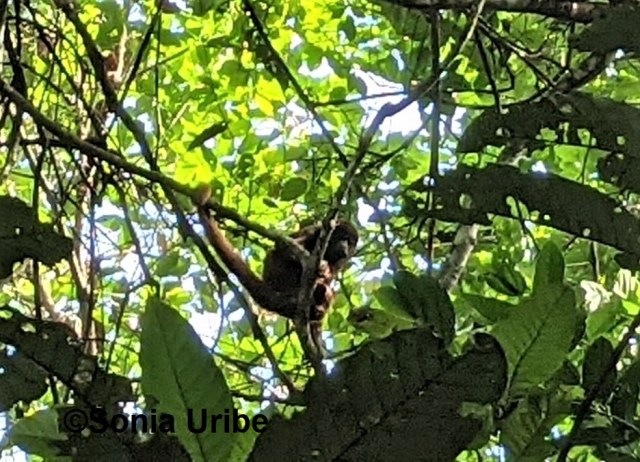
The red howlers were not howling this time but contented themselves with languidly observing us from just a few meters up in the trees. Like other members of the family Atelidae, their long prehensile tails truly function as a fifth hand. They even have fingerprint-like ridges on the naked undersides. While the three owners of these expressive organs observed us with somewhat nonplussed expressions, the tails would slither along a branch and then loop themselves over their shoulders or beneath their chins, as if their owners were lost in thought, or they would coil around a branch like an octopus tentacle. Prehensile tails are found only in a few genera of South American primates. It is a mystery to me why they would not exist in their Old World cousins; they seem to be so ‘handy’!

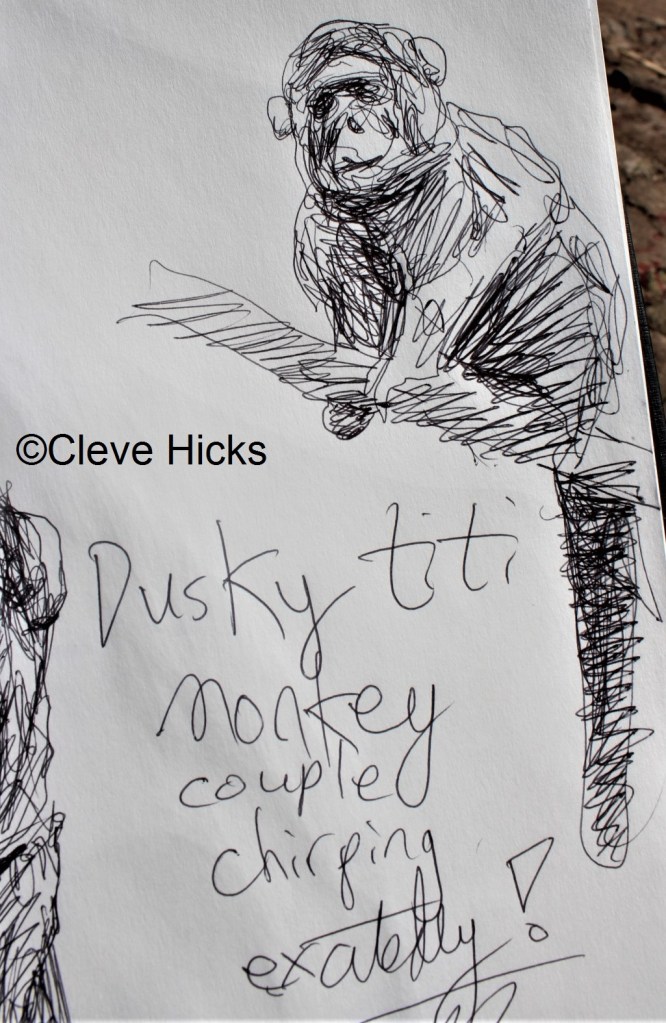
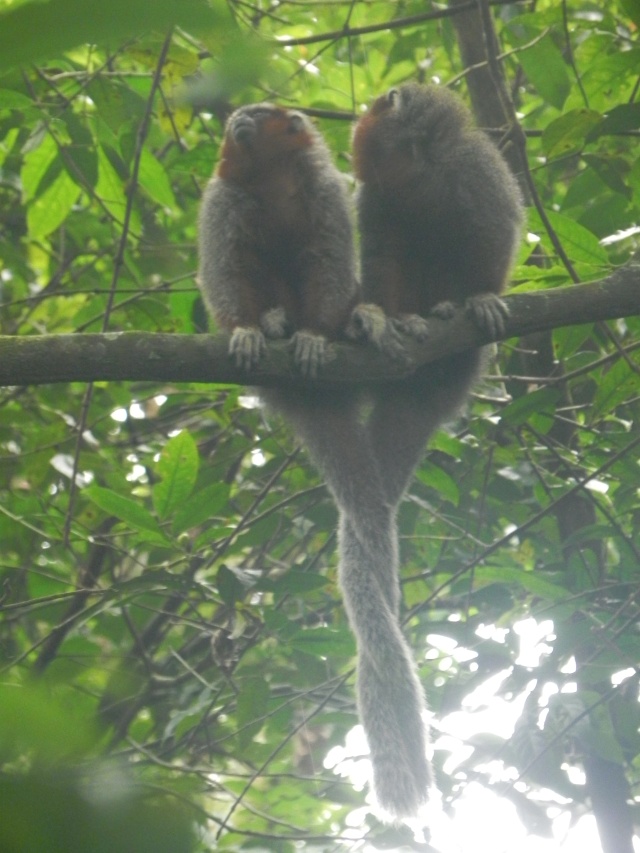
The dusky titi monkeys (Plecturocebus ornatus) showed no such serenity and instead expressed annoyance that we had intruded into their small mutually-defended domain. Although they began their energetic displays separately, soon male and female were in the same tree embracing one another and periodically emitting booming alarm hoots. Their glowering faces were framed by a prominent white band above the eyes, but it was the crimson tinge to the sideburns that most attracted my attention. I was surprised by the titis’ high-energy behavior. Although enchanted by descriptions of their charming habit of entwining tails like teenage lovebirds, I had held a stereotypical image of these monkeys as rather dull, inactive creatures. Today, though, I was impressed by the coordination that was evident in their mutual display, as if to say: ‘you and me against the world, baby!’

Day 4

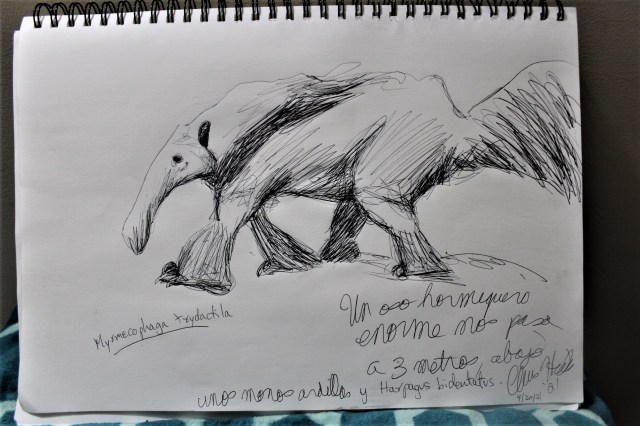
We stood beneath another chittering group of squirrel monkeys, absorbing their jittery, expressive energy as they hunted beneath leaves for insects and occasional fruits. Perched in a nearby tree, a raptor (Harpagus bidentatus) gazed serenely upon us and our smaller primate cousins. Suddenly, at ground level, a shaggy, slightly disheveled oso hormiguero burst from the foliage to enter the scene. This was a male giant anteater that Xyomara had already captured on her camera traps. A female also inhabits the area, recognizable in the video clips by the adorable baby clinging primate-like to her back.

We felt we were dreaming as this charmingly unlikely-looking creature lumbered through the vegetation in front of us, strode rapidly in our direction, focused its small short-sighted eyes on us, thought better of the whole thing, and lumbered right back into the forest from which it had emerged.

It had been my fervent wish for months to sketch one of these beings. My hands moved rapidly across the paper of my art book without my eyes once leaving the apparition in front of me, capturing the bushy tail and the black stripe crisscrossing the shoulder like a jaunty bandolier. I had never drawn an animal so quickly!

Before our return to camp and a bit further down the trail, we were enchanted by the exhuberant displays of lekking males of white-bearder manakin. According to Xyomara they gather regularly at this one spot in the forest to ‘lek’ for choosy females. For a while we watched them flit around the clearing in their black-and-white glory, creating loud popping sound with their wings that sounded like fireworks, all within a few meters of the barbed wire fence demarcating the pasture. Then it was time to trek back to the farm. 

SONIA: In addition to the respect that the family showed to the wildlife, it was also clear that the domesticated animals in their charge were part of the family, cared for, and able to live relatively natural lives. The chickens and turkeys foraged freely in the yard, the dogs spent the day running alongside horses and grappling with their packmates, and a newborn calf that fell ill was treated tenderly. Each animal played their role in the family; for instance, the cats eat mice, the dogs guard the house, the chicken provide eggs, and the horses provide transportation.

It was clear that these folks cared about wildlife as well. We participated in the rehabilitation of three flycatcher chicks who had lost their parents, ending with these baby birds adopted into a flock of their wild cousins. Another bird who had been rescued by the family continued to hang around at the farm despite being free to go where it wanted.   

Particularly fun for me was when the teenage daughter and young boy accompanied us on some of our forest walks. They knew to be quiet and respectful when we spotted monkeys, and the kid even helped me walk through the forest by holding branches aside for me. To see young Colombians take such an interest in their nonhuman neighbors and to treat them with such respect was an inspiration!

Day 5

Our trip was nearing its end. We had seen all but one of the five resident monkey species: despite two night walks, we had failed to locate Aotus brumnbacki, the night monkey with its big goggly eyes. No matter … 

For our last day, Xyomara had saved the most spectacular encounter for the last. She led Sonia, the two children of the farmhands and me across a wide stretch of pastureland towards a swamp sheltered beneath a cluster of native Moriche  palms. As we picked our way between the cow patties, Sonia pointed down into a deep puddle. ‘Que es esto?’ she asked. I saw only a muddy glob, but Sonia insisted and, looking closer, we could make out the lurking form of a babilla (Caiman cocodrilus), a small crocodilian, which had apparently become stranded in this puddle following heavy rains. Here, native fauna thrived not just in the forest but even in the pasture.

As the gorgeous Antioquian sunset filled the sky, we arrived at the palm cluster. Cows came again rushing to greet us in a massive herd. Xyomara greeted them as old friends and assured us they meant no harm. They peered at us with their liquid brown eyes, hoping for a salty treat. Eventually they grew bored with us and flowed off together in a synchronized swell across the landscape. As the sun began to sink, we settled down to watch the white cattle egrets roosting by the dozens in a tree in the middle of the swamp. We were startled out of our calm by a dizzying and unexpected explosion, a huge swell of flapping rosy color rising up against the dark fringe of forest lining the horizon. Flamingos! Not at all, this was Xyomara’s surprise for us, a flock of scarlet ibises (Eudocimus ruber), gorgeously flaming in V formation across the sky. We were stunned at the sheer exhuberance of color displayed by these most elegant of birds. In the midst of one swirling flock we spotted two errant white herons flying together with their brilliantly-colored cousins. Several more flocks swirled by as dusk spead against the sky. Xyomara clearly relished the effect this had on us; such an unexpected site in the middle of a pasture!

Only one week before, Sonia and I had been exploring the wild Pacific coast of Nuqui. Those dripping ocean-hugging forests presented a diametrical contrast to these hot flat plains, but the biodiversity at both was astounding. The human cultures (Afrocarribean and indigenous Emberra at Nuqui vs cowboys in the llanos) were spectacularly diverse as well. Colombia is a vast and beautiful country full of breathtaking natural beauty. Muchas gracias to Xyomara and the owners of the ranch for letting us peek, so briefly, into one of those rich corners of biodiversity.

SONIA: This was a very special experience, spending time so close to the monkeys and other species in their native habitat. On our last day, for example, we were serenaded by a group of red howlers as the sun rose over the landscape. Unforgettable! Although we are clearly an invasive species, for one week I experienced a lovely example of people entering into wildlife habitat and treating the animals with respect.

The ranch residents treated us with courtesy and made sure that we felt a part of their community, a community which included not only humans but various forms of domesticated and free-living life. We left Finca Santa Rosa with a feeling of peace. It was a bit of a challenge to then readjust to city life.

© Copyright Disclaimer. Sketches were made by Cleve Hicks, pictures reproduced with his permission.  Pictures in this post by Sonia Uribe. All pictures used on this web page are protected with copyrights to Xyomara Carretero-Pinzón. If you want to use any of these pictures, please leave a message on the website. Thank you.

Monkey Forest Tales: Some stories from visitors: Exploring the human-wildlife frontier in the Colombian Llanos – Part 2

Day 1

We left the pasture behind and squirmed beneath the electrified fence to gain access to the gallery forest. The shaded canopy wending alongside a trickling stream sheltered a riot of vegetal life. How I had missed being in forest! As we followed the trail alongside the fence, we crossed patches of the forest floor that had been smoothed over by the regular passage of foraging cattle.

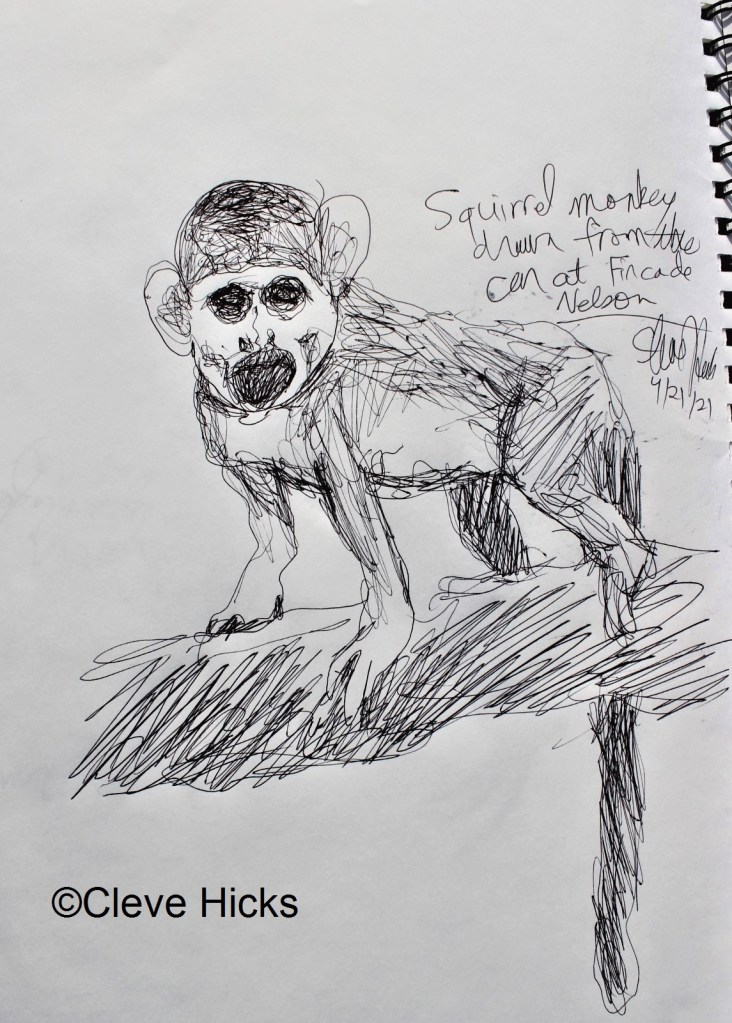
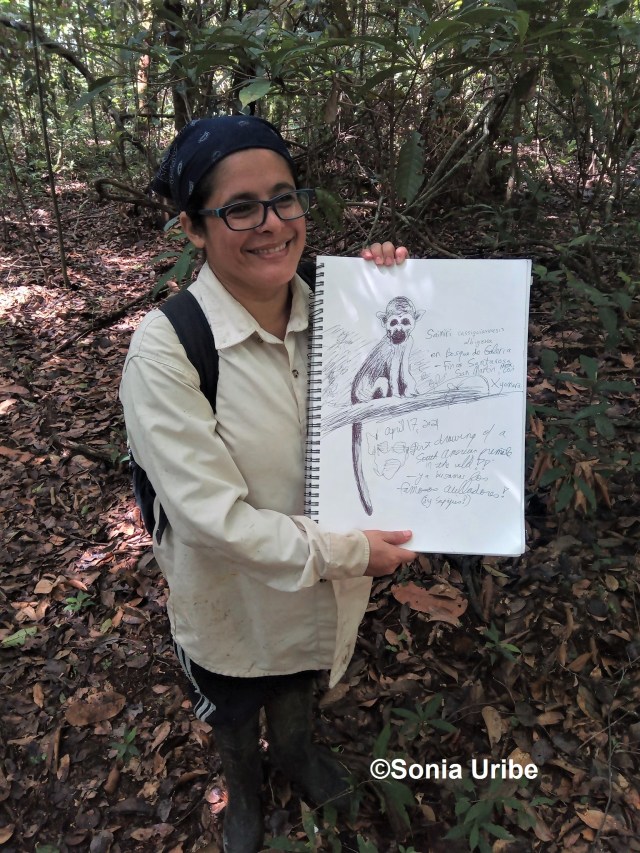
Not far along, Xyomara’s keen eyes spotted movement in the canopy. We tiptoed ahead and craned our necks upward. Our guide’s eyes brightened in recognition: above us was a tree-full of boisterous squirrel monkeys (Saimiri cassiquiarensis albigena), which happened to be Xyomara’s favorite species. These energetic little primates, of dunnish color with beady, intense eyes were too busy foraging to pay much attention to us. They left no leaf unturned as they searched for insects, which make up the majority of their diet, in the canopy. The monkeys occasionally peered at us with their heads cocked quizzically to the side, nearly upside-down, an adaptation that according to Xyomara helps them scan the undersides of leaves for prey. To sketch them, I had to be quick, given their irrepressible twitchiness! We returned to the farm in high spirits. To have found this group so quickly and so close to camp boded well for the rest of our trip.

In Colombia, the nomenclature of these monkeys can be confusing: they are often referred to locally as titis, not to be confused with the English name for a completely different kind of monkey, the monogamous titis (we will meet them later). Even more confusingly, in some regions titis is the local Spanish name for tiny tamarin monkeys, which are neither English-name-titis nor sapajus! ¡Ay caramba!

Day 2

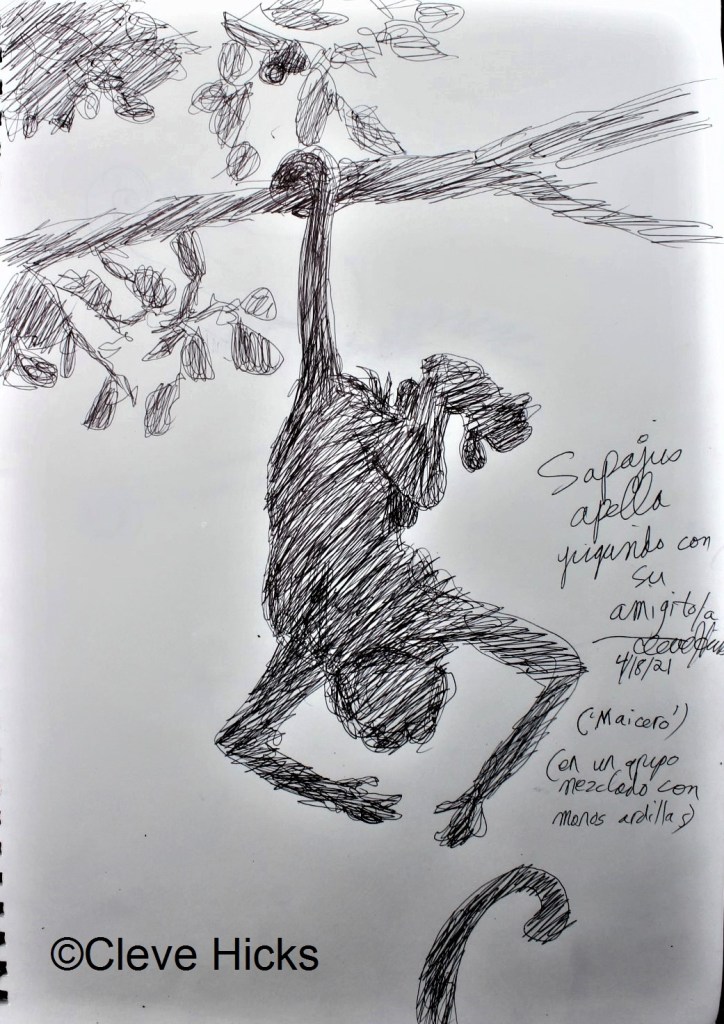
The following day Jorge dropped us off in a more distant patch of forest across a stretch of partially-flooded cowfield. Sonia stayed back at la finca nursing a twisted ankle. After just a half hour’s search, we encountered a mixed species group of squirrel monkeys and sapajus (Sapajus apella fatuellus). Xyomara informed that it was common for these species to travel together. I found this to be a fascinating parallel to similar multi-species monkey affiliations which I have seen in Africa.

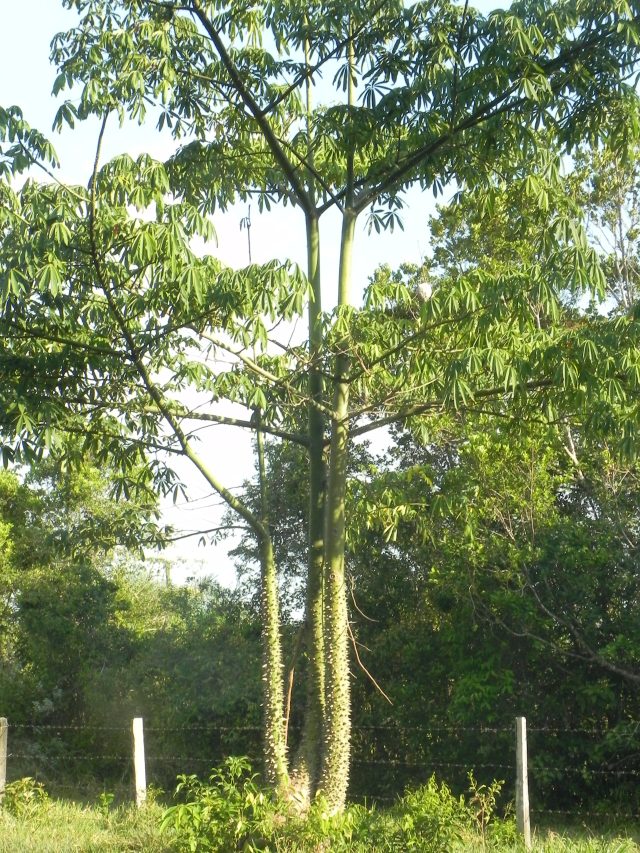
I am always struck by how eerily similar South American forests are to African ones: many of the same guilds have been filled by independently-evolved plants and animals (tamanduas, the smaller resident anteaters, resemble pangolins, while squirrel monkeys have something of the chirpiness of red-tailed guenons about them). There are even some familiar friends here: the spiky-barked, fluffy-seeded kapok (Ceiba pentandra) tree is somehow shared between the two far-flung continents, and in both regions domesticated mangos and papayas pepper the farm-forest fringes. But, back to our monkey encounter…

Sapajus are bulky monkeys possessing moderately prehensile tails. Another species from this genus in Brazil is famous for using stone tools to crack open nuts and stick tools similar to those of chimpanzees; thus their behavior is of particular interest to me. As far as I know, no tool use has yet been documented in Colombian sapajus, but perhaps this is just due to lack of data?

We relaxed on the trail and watched the lively juvenile sapajus play-grappling in the trees above us, as the adults went about the more serious business of feeding. At one point a large adult passed through the canopy above me; simultaneously a worryingly chunky branch came clattering down inches from my head! Xyomara, who had observed the monkey’s behavior, told me that it had likely been deliberately thrown or knocked down in order to intimidate me. If so, could it represent a form of tool use? This led us to a fascinating flurry of questions, speculation and research ideas. Could there be potential here for a future study?

Following our multi-species encounter, we heard the famous gravelly long-call of red howler monkeys (Alouatta seniculus) from the direction of la finca. This rumbling noise must be near-deafening up close! We would head that way tomorrow.

As we slogged back across the muddy pasture under the intense midday heat, we were mobbed by a fearless pair of black and white caicas (Vallenus chilensis). These dramatically-patterned birds were noisily protecting their unseen nest. Diligent in their parenting, they swooped so low over us that I had to duck my head. I was unable to explain to them that as a vegan, I certainly had no intention of pilfering and consuming their precious brood!

Having escaped these airborne anxious parents, we next spotted a troop of squirrel monkeys traveling along what has been termed by Xyomara and her colleagues as a ‘living fence’. These fences, separating adjoining fields, are surrounded by a dense strip of trees. Xyomara’s research has shown that these vegetation-covered boundary markers are crucial for the dispersal of primates and other fauna between neighboring gallery forests. We watched as each monkey reached the gap in the canopy over the gate, paused, gathered its courage and then flung itself arms-akimbo across the gap, much as I have seen the similar-sized red-tailed guenons do in Africa. Xyomara used the opportunity to count numbers: she came up with a minimum of 11 monkeys…

© Copyright Disclaimer. Sketches were made by Cleve Hicks, pictures reproduced with his permission.  Pictures in this post by Sonia Uribe. All pictures used on this web page are protected with copyrights to Xyomara Carretero-Pinzón. If you want to use any of these pictures, please leave a message on the website. Thank you.
Monkey Forest Tales: Some stories from visitors: Exploring the human-wildlife frontier in the Colombian Llanos – Part 1

Over the years, Zocay project had several visitors who came to know the monkeys and experience a bit of their forest life. Some of them had wrote about their experiences, in this post a few following posts you will read the experiences from Cleve Hicks and Sonia Uribe, who visit Zocay Project study area in recent months:

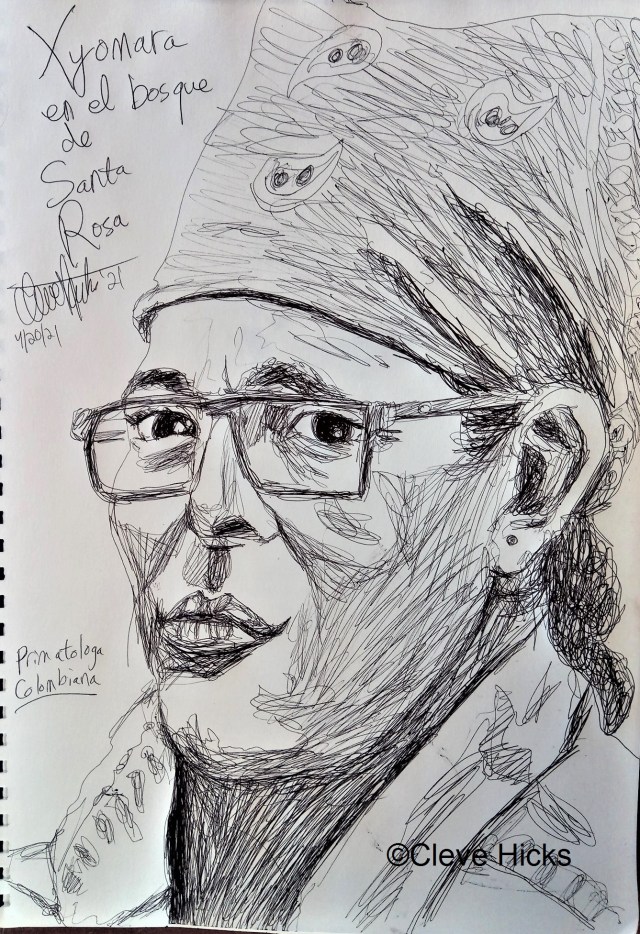
In mid-April, my wife Sonia and I were lucky enough to be invited to la Finca Santa Rosa by our friend the Colombian primatologist Xyomara Carretero-Pinzón. Xyomara has spent almost two decades carrying out research in the network of farms a couple of hours’ bus-ride south of Villavicencio. This involves the regular monitoring of five species of monkeys and examining the impacts of various factors on their survival. Fortunately for these nonhuman primates, cattle ranchers in the area are cooperating with her efforts to protect them as well as the thin stretches of gallery forest that they call home. Xyomara was eager to introduce us to the five species of monkeys that inhabited this network of forest fragments lining streambeds. We would be staying for almost a week at the spacious farm together with the ranchers working there.

On our truck-drive to la finca, we passed through a vast oil palm plantation. The oil palm, Elaeis guineensis, isan old friend from my time working in tropical Africa, where it was semi-domesticated millennia ago. Its rich oil and other parts are used by villagers for everything from cooking to wine-making and medicine. Nevertheless, as a conservationist I was not pleased to see this tree here in los Llanos de Colombia, planted across hundreds of acres in evenly-spaced rows. This destructive monoculture is rapidly replacing tropical forests and native fauna worldwide. According to Xyomara, the local monkeys rarely use this plantation forest, although howler monkeys sometimes pass through it. Lushly green though they are, these eerily monotonous palm plantations can be considered biological wastelands.

We left behind the creeping alien ‘palmscape’ and emerged onto a pasture dotted with grazing horses and cattle, which at first glance could have been located anywhere in the tropics, and hardly a propitious location in which to spot wildlife. Against the horizon, however, we could see strips of verdant forest holding tantalizing promise. Intersecting the landscape was a network of ‘living fences’, barriers between pastures which had been allowed to ‘grow wild’; as we would soon see, these serve as crucial wildlife corridors in this patchy primate paradise. Hunched-over chulos (black vultures, Coragyps atratus) squatted evenly-spaced atop fence posts, regarding us warily with their beady reptilian eyes before flapping off across the fields. Quickly the place came alive around us as the truck rattled down the bumpy country road.

Our driver, fellow scientist Jorge Noriega, pointed across the cow-field to a strange shambling shaggy figure loping across the grass close to the edge of the gallery forest. Were we hallucinating? We squinted our eyes. No, no hallucination … there it was, an oso hormiguero (English: giant anteater; scientific name: Myrmecophaga tridactyla)! We were face to nose-tube with a real South American original, which seemed to have trundled straight out of the pages of one of my treasured childhood books about far-away animals.

Along with armadillos, sloths and tamanduas, giant anteaters are Xenarthrans, one of the sole surviving original denizens of the South American continent. Most of this ancient mammalian lineage, which included elephant-sized ground sloths and armored glytpodonts, vanished about 10,000 years ago. Even earlier in evolutionary time, they were all part of a megafaunal assemblage quite distinct from anything existing in the world today, including giant ‘terror birds’, the rhinoceros-sized Toxodon and those ‘parallel horses’ the litopterns. About 3 million years ago, following the formation of the Isthmus of Panama, this original fauna was reduced when the continent was invaded by the more familiar bears, jaguars and mammoths. Further diminishment would come at the hands of humans arriving at the end of the Pleistocene. But fortunately for them and also for us, these large insectivores with tube-like faces and ostentatiously fanned tails have survived to the present day. Approximating in some ways the scaly-skinned pangolins of Africa and Asia, in diet as well as ungainly shape, giant anteaters nevertheless claim their own territory in terms of sheer evolutionary quirkiness.

 The shaggy edentate watched us warily for a few magical minutes before shuffling back to the forest fringe and vanishing into its narrow green refuge. It was almost as if this otherworldly Xenarthran had appeared to claim its place as one of the region’s rightful endemics in the midst of the herds of bovine and equine invaders. Fortunately, this would not be the last encounter we would have with its ilk.

We pulled up into the driveway of La Finca Santa Rosa, a spacious farmhouse perched at the edge of a forest-lined stream, and were warmly greeted by the family tending the farm, which included two energetic children and a whole pack of rambunctious dogs. They fed us delicious country food (with vegan options!) and we relaxed in comfortable hammocks on the veranda with a lovely view of farmland and forest. Xyomara’s caring relationship with these locals has clearly been a key to her success in sticking with the study site over the years. That evening we prepared ourselves for the morrow’s first primate-watching expedition. We would be accompanying Xyomara on her periodic primate census. Armed with her data book, Sonia’s camera and my art pad, we would spend several days (and even a couple of nights) searching for primates in the various gallery forests crisscrossing the cattle fields.

SONIA: This was a wonderful opportunity to spend time with the ranchers and farmers living at La Finca. We benefited greatly from their deep knowledge of the local flora and fauna. The resident family and the ranch hands regularly updated us on the whereabouts of various species of wildlife, including monkeys, which sometimes passed right by the farm. The teenage daughter and the 4 years old boy could barely contain their passion about wildlife and would excitedly summon us whenever they would spot some outlandishly colored bird species such as a toucan or a flycatcher. 

The locals were also quite knowledgeable about medicinal plants. They proudly showed me their huerta (vegetable plot) which provided them not only with healthy food to eat, but also medicinal plants. When I twisted my ankle, the father of the family, the head rancher, used traditional healing techniques to treat it, which allowed me to return on the next day to the forest and join the search for more monkeys.

© Copyright Disclaimer. Sketches were made by Cleve Hicks, pictures reproduced with his permission.  All pictures used on this web page are protected with copyrights to Xyomara Carretero-Pinzón. If you want to use any of these pictures, please leave a message on the website. Thank you.

Monkey Forest Tales: Celebrating Biodiversity!!!

In today’s post I wanted to celebrate again Biodiversity Day, which we celebrate each year on May 22nd. Biodiversity is defined as the variety of life we have in the planet and Colombia is one of the most biodiverse countries in the world. Despite this our biodiversity is facing several problems and many threats coming from most of the activities we do in our daily lives.

Every decision we made daily, affects in some way the biodiversity of the places where we live and even the biodiversity of places farther, depending on where those products are produced. So, every time we buy our food, or decide to do any action (travel, use electricity or water in our houses, etc.), we are impacting the biodiversity of the areas where those goods are produced. If you are concern about those effects, one small action you can do is to think and research what kind of practices are used to produce those good. It is not always possible to find out and sometimes there is not way to change the way some of those products are produced, but at least you can decide how much impact you want your actions to have by buying or not those products.

Let also celebrate biodiversity by appreciating all the services it gives us, clean air and water, incredible animals to observe, delicious fruits, a variety of crops, etc. Let’s teach our children to appreciate and take care of that diversity by not incentive the use of guns to kill birds or throwing rocks to animals in the streets. Let’s be more rational about the products we use and how we dispose them, so they don’t end up killing wildlife.

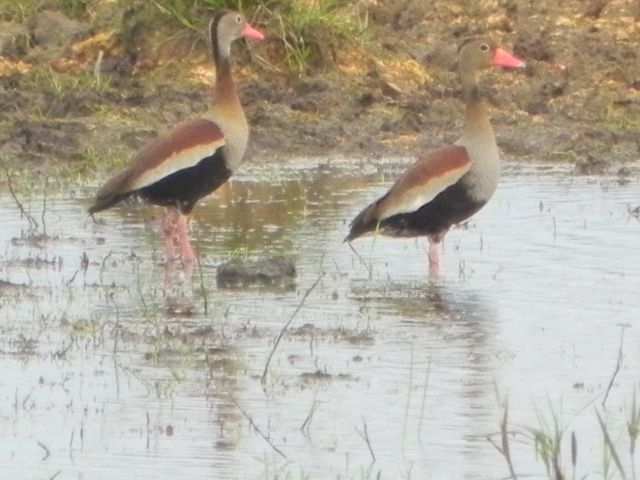
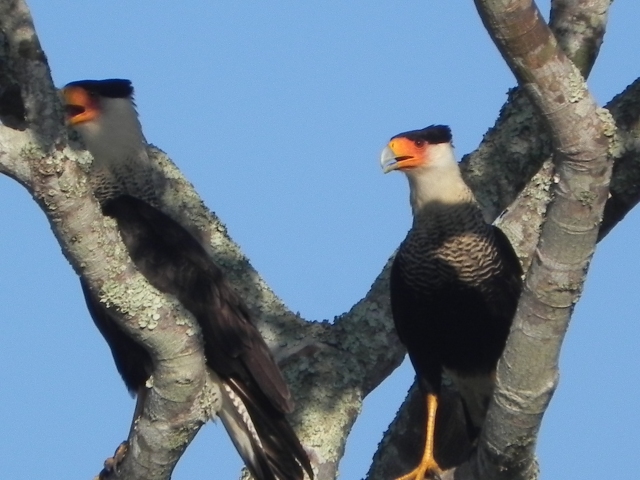
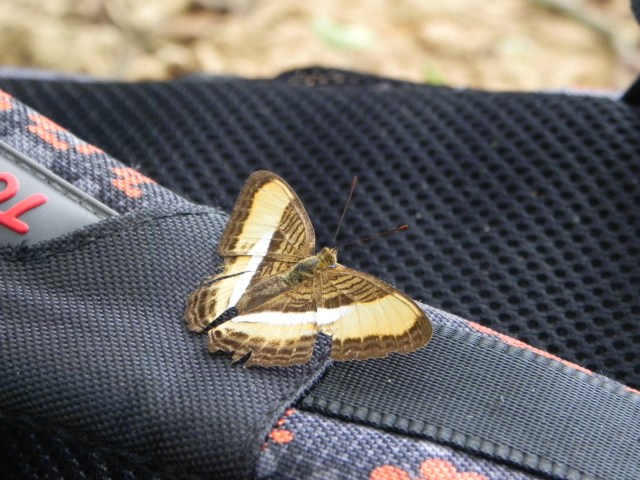
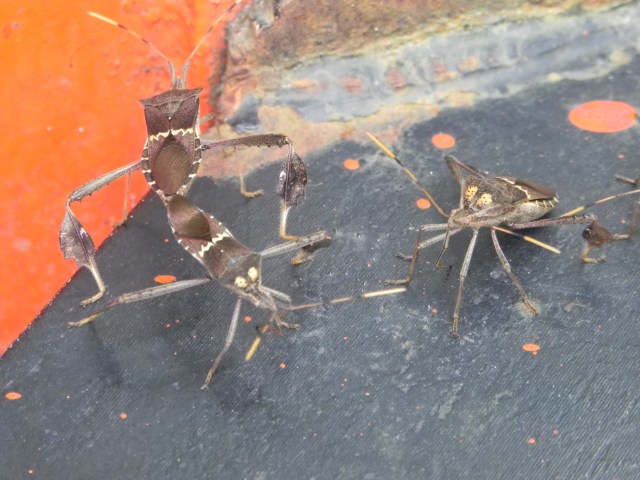
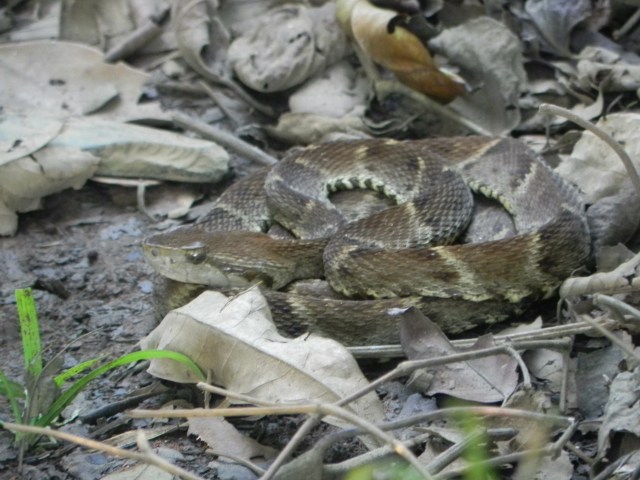
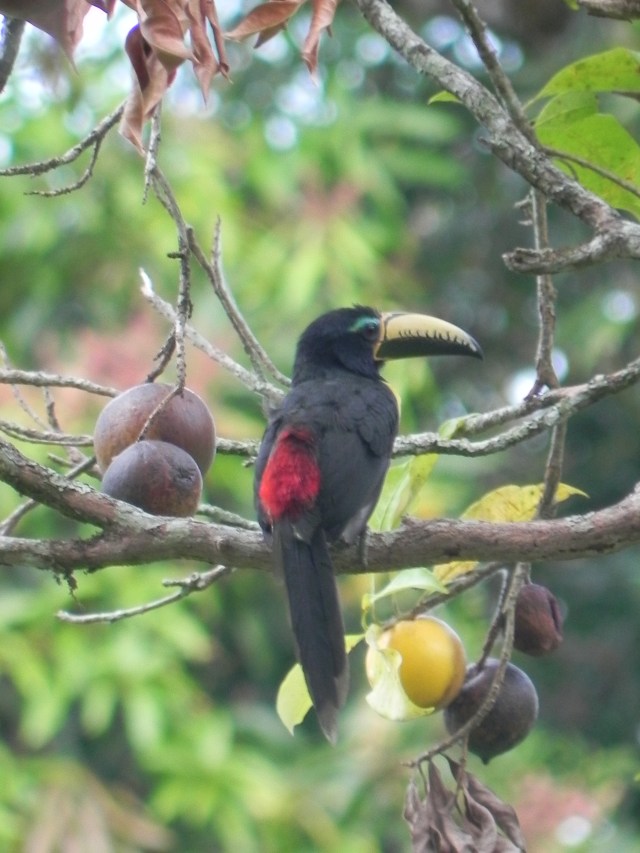
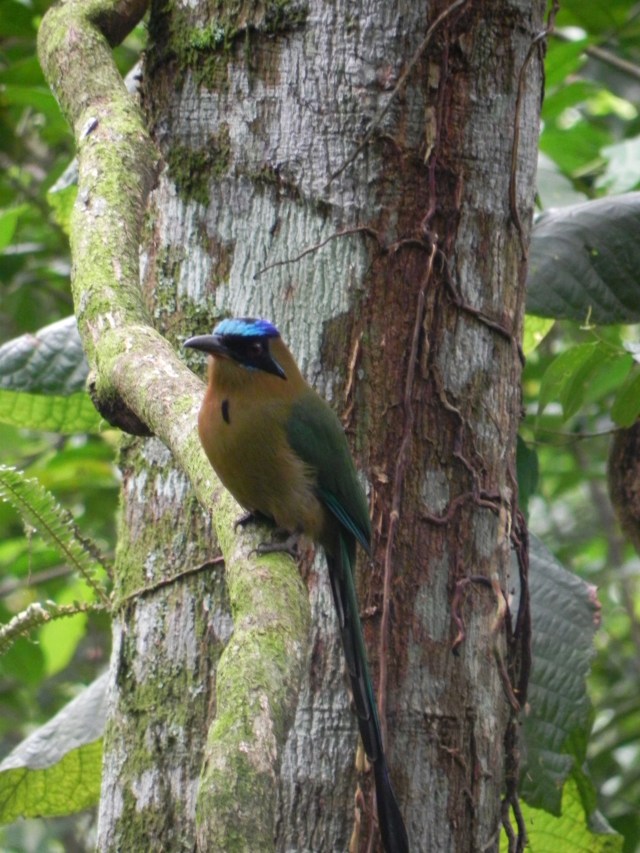
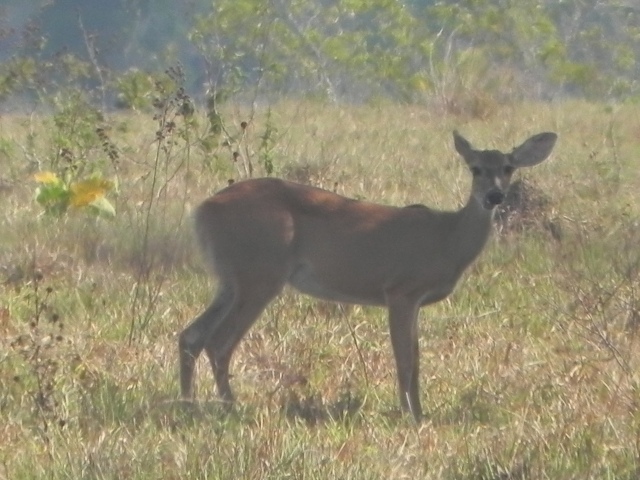
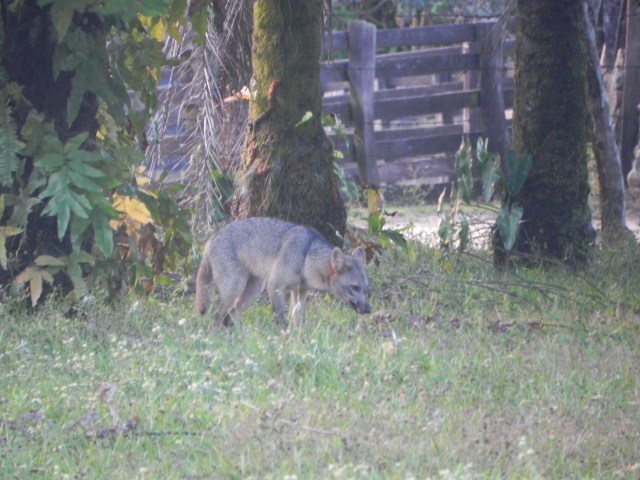
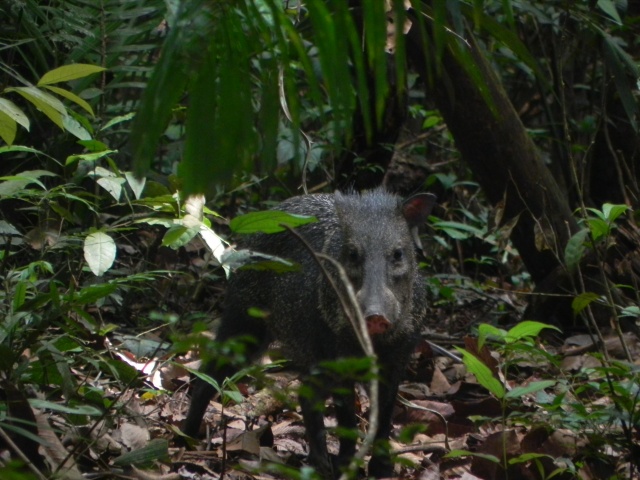
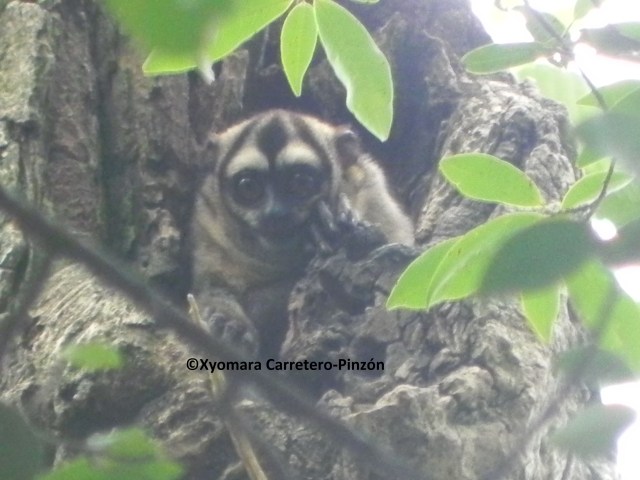
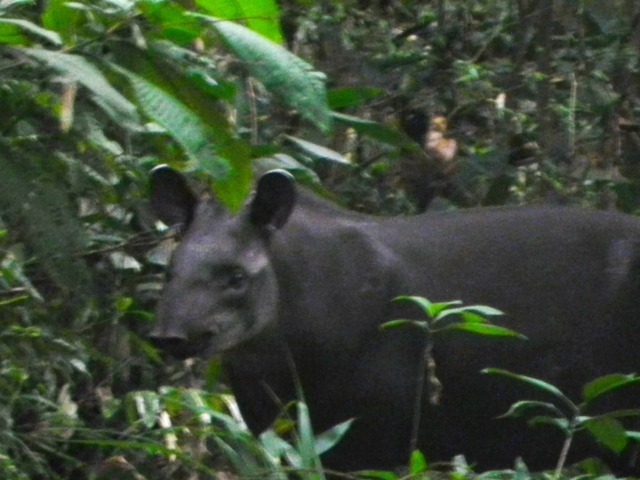
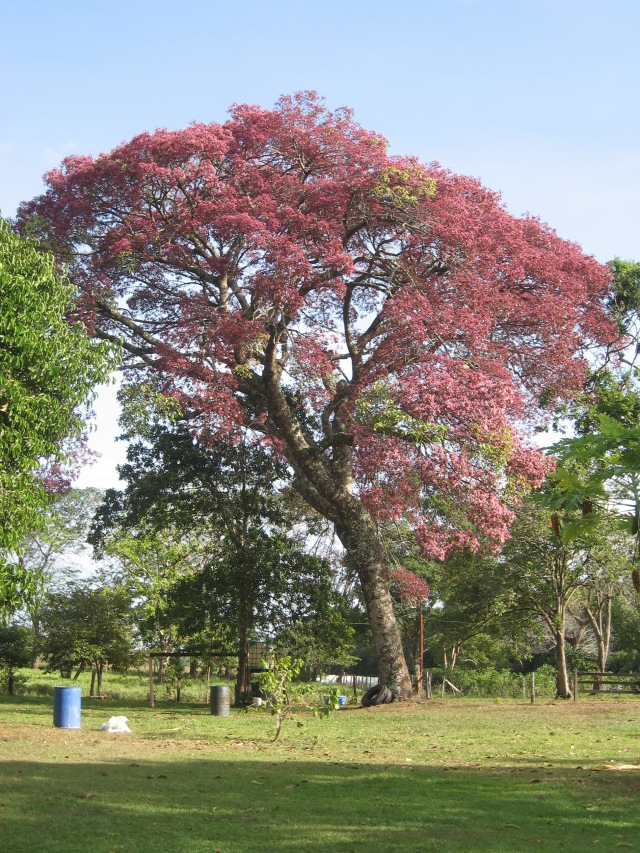
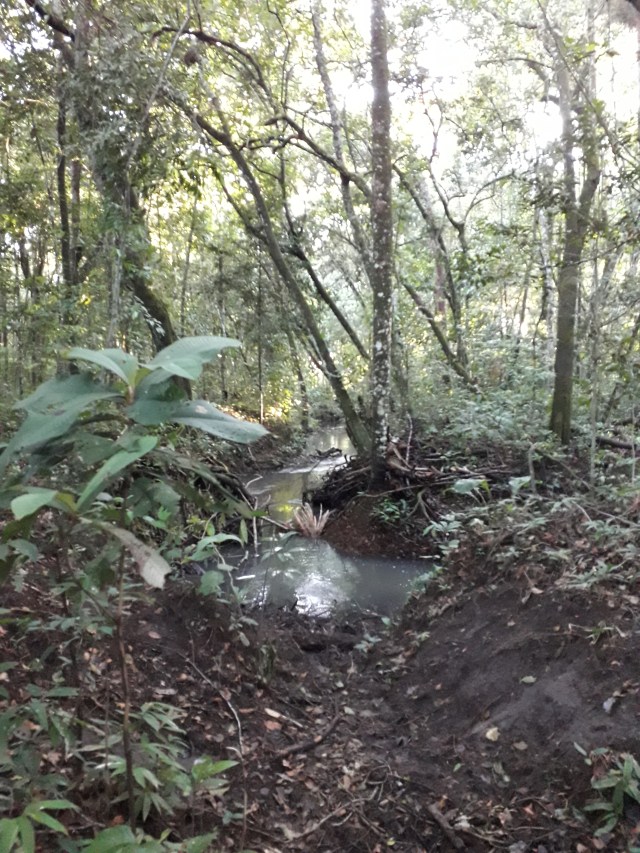
An to celebrate I leave you some pictures of the biodiversity in the study area of this project

© Copyright Disclaimer. All pictures used on this web page are protected with copyrights to Xyomara Carretero-Pinzón. If you want to use any of these pictures, please leave a message on the website. Thank you.
Monkey Forest Tales: Why I leave academy to focus only on research at a local scale?

After doing a doctorate most of us choose a path in academy, usually as a professor in a university. For many years that was also my career path. When I was in the middle of my career as a biology, I had the incredible experience of doing a field semester studying monkeys in Tinigua National Park. It was there that I choose how my future live would look…a university professor with a research project focus in monkeys at my country, Colombia.

Over the years I worker towards that goal, made a master and a doctorate and was lucky enough to start a small research project that growth with time and have allow me to learn about monkey living in a fragmented landscape surrounded by several human activities…

After finishing my doctorate, as well as so many others, I apply for jobs and post doc position that could lead me towards my goal of became a university professor. It was while doing my first and only post doc that I realized that academy wasn’t for me. Pressure and unethical practices of publishing as well as living in a culture that was completely different than mine and in a language that take years to master, lead to make think on my priorities in life and what I wanted for my future. Although it is different for everyone and it’s a decision that only you can make for your own life. Academy system and culture had led many good researchers and me to look for better options outside of universities.

Although I still teach one on one undergraduate students, while I supervise their undergraduate thesis, as well as publishing from time to time. I do not have the pressure of “publish or perish” that academy system promotes so much. And from time to time I saw post doc offers that make think about going back to academy. But the true is that I enjoy helping student without the pressure and publishing only when I want to not because I must. I also can go to the field to see monkeys anytime I want without a schedule and just enjoy the forest and monkeys by what they really are not what they can give me as research subjects. I must admit I miss the dynamic discussion with peers that universities give you…

So, although most of the time Zocay Project runs with limited funds I like the work at a small scale with few farmers and creating small impact on the wildlife in the study area. It becomes challenging and lonely sometimes, but it has been rewarding especially over the past few year when I saw the impact the project had on some of the local people behaviors. So, despite all the changes in my career and the challenges those changes had brought, leaving academy was a good decision for me and my project. So, if you are in a point in your life when you need to make a decision that affect your career path, just make sure you think about what make you happy as well as what kind of impact you want your life make. Good luck!

© Copyright Disclaimer. All pictures used on this web page are protected with copyrights to Xyomara Carretero-Pinzón. If you want to use any of these pictures, please leave a message on the website. Thank you.
Monkey Forest Tales: How to choose a journal for publishing your data?

In our last post we talk about the challenges of analyzing and writing from our data. The next step is to decide where are you going to publish your findings. Although this step usually you need to start thinking about it before your actually write your paper. Because the way you write depends on the audience you want to address and that matters when you choose the journal too.

Most journal audiences are driven to a certain journal depending on the scope and sometimes specificity of the journal. I used to think that because I was working with primates the only journals I will be able to publish on were primatological journals, but that is not true. It all depends on the way you write, the audience you want to reach and the applicability of your research to other fields.

So if you are starting on this publishing path of academy, one of the things you need to start thinking when you are choosing in which journal you want to publish your data is to define the type of audience you are publishing for. Is your data only applicable to primates or can be something that applies to other group of animals?

Also, is your data applied for a specialized type of audience or can be for a wider audience. What is your preference for a journal?  In which language you want to publish? The language is an important consideration, especially for those of us who doesn’t have English as our native language. It can imply an additional cost to publishing your results if you need to use a translator or a proof editor before you submit your paper.

Another consideration that a lot of us doesn’t think about much is the cost of publishing. A lot of journals in science have a fee that need to be paid if you want to publish a paper in those journals. Also some journal have fees for figures in color and if your figure is important to be publish it in color, taht is a cost you have to consider. This is usually a constraint for most researchers in developing countries which not only make research with limited funds, but also never have money allocated to publishing papers.

As you see, there are many considerations when you are choosing were to publish your paper. With time you get better at writing for different audiences, although I found it is usually challenging to do so. Also, with time you get better at writing in English as your second or third language. As usual my better advice is to be patience, ask yourself or your advisor about the audience of the journal you want to publish on and be persistent during the process that usually is long and sometimes requires more time than you expected. Good luck with your future publications.

© Copyright Disclaimer. All pictures used on this web page are protected with copyrights to Xyomara Carretero-Pinzón. If you want to use any of these pictures, please leave a message on the website. Thank you.

Monkey Forest Tales: What is next after fieldwork: analysis and writing

One of the topics that, in my experience, most of the undergraduate students are afraid of and enjoy less is what we all need to do as scientist after a nice and sometimes long fieldwork…analysis and writing of those field data. I must confess than even for me is one of the parts of doing science that I find more challenging.

After sometimes a long fieldwork collecting interesting data on monkeys, in my case, one tedious part that follows is to put all that information in a spreadsheet which facilitate its analysis. Over the years each of us develop our own method to tabulate and introduce that information, however, is not easy to learn how to do it and because we all think differently each one develops their own method. In my case I found that is easier for me if I have only one spreadsheet with multiple columns that later I can filter to extract the specific information I want to analyze for answering a specific question. For others is just introducing only the information to answer that specific question and letting the other information stay in the field notebooks.

My primatological education is old school, this means I was taught to write down almost everything that happened in the field when following monkeys. Therefore, data tabulation means a lot of detailed data. Most of the researchers today just collect data related to their specific question without paying much attention to other information and behaviors that sometimes are rare and only occasionally seen.

After tabulation of all the field data follows the analysis of that data, another challenging part of the process that is not always easy for students and in the past also for me. My analytical skills only improved over time and still learning new ways of analyzing my data. So, if you are starting don’t worry you will improve with time, a lot of reading and practice.

Writing is the last part of the scientific process, to present and explain your findings. This is also another challenging part, especially if you are doing it not in your native language. Again, this is a skill you improve with time, a lot of reading and practice. Same as for novelist writers the best advice you can receive to improve your writing is to read, read a lot and don’t be afraid to show your writing to others before you submit your article. Sometimes when you are too focus on your science you forget how to explain to others in a clear and concise language.

For all those students and early career researcher like me, the only advice I can give is to be patience with your self and as some very wise researcher once told me it will never be perfect by 80 % is always better than nothing. Keep researching and keep writing. It is a continuous learning process for all of us in science.

© Copyright Disclaimer. All pictures used on this web page are protected with copyrights to Xyomara Carretero-Pinzón. If you want to use any of these pictures, please leave a message on the website. Thank you.
Monkey Forest Tales: Lessons from collaborating and sharing with people in the study area

Over the years at the study site, I had the opportunity to share and collaborate with many researchers, visitors, students and volunteers. These interactions had always left some lessons for me, the project and my way of supervising students. In today’s post I will like to share some of those lessons to people thinking to start a new project.
Working with people have multiple stages and factor influencing. On one hand you have your interactions with local people, which is dynamic and changes over time, depending on cultural believes and sometimes your gender. With students, colleagues, visitors and volunteers your interactions are also dynamic and sometimes challenging. Although I had in general very good students, some of them have been more challenging than others, not only because of their different priorities in life, but also because is not easy for all to write an undergraduate thesis. We all have different strengths and weakness…
Collaborations are also complex, especially if you don’t establish clear roles and responsibilities from the beginning, this is particularly difficult at the beginning of any project when you are not sure for how long the project will last and how much you can actually do. Visitors and volunteers interactions are also dynamic due to different backgrounds and cultures, especially when you receive foreigners.
From all these interactions over the years and other experiences I had working with other projects and institutions, there are some lessons that I want to share, especially with hose of you who want or are starting a new project in the field:
• Probably the most important lesson I learned and this applied with everyone, is to establish clear rules from the beginning, not only about the behavior in the study area and treatment with the local people (especially if you need to have some security issues in mind). But also, about the data collection, data analysis and data publishing (especially with students and colleagues) so you won’t have any problems later. Make clear rules and define as clearer as possible all responsibilities, roles and how to solve any disagreements to avoid problems.
• Listen and share your experiences. This not only enrich your live but also change any preconceptions you may have about how people from other backgrounds and cultures are.
• Be flexible. Although it is not always possible in certain situations. Being flexible with you and others working with you always will make our life easier, especially in the field.
• Be patience. This is a skill that I continuously try to cultivate as it is not in my nature, but it is extremely important when working with monkeys and people. You also need to exercise this skill with yourself as not always you will have the time and resources to do all that you want to do for your project.
• Be persistent. There will always be problems to solve and challenges to overcome. And sometimes you could think that you have no more energy to continue your project, but as with everything in life the things that are important to us are the one in which we need to persist to make them happen.
Hope these lessons can help you in your future projects and if you ever want to share or talk about those challenges, please feel free to contact me. I found that usually sharing those struggles help us found the energy and solutions that are elusive to us…
© Copyright Disclaimer. All pictures used on this web page are protected with copyrights to Xyomara Carretero-Pinzón. If you want to use any of these pictures, please leave a message on the website. Thank you.
Monkey Forest Tales: How to star to start samplings in a new field site?

Finca El Silencio, Cumaral, Meta, Colombia

During the last week I was talking with the owners in a new farm (El Silencio, for more info here) to start doing some new samplings focus on Brumback’s night monkeys. While there some students approach me and ask about what it is need it to start samplings in a new field site.

A lot of the logistics depends on the type of question you will try to answer, the animals of study, amount of time you require to answer your question and the type of field site you are going to sample. For example, places with continuous forest inside of national parks, will require several months of permit arrangements as well as travel arrangements as most of these areas are far from central areas or near to cities, at least most national parks in Colombia.

Areas like the Zocay Project where samplings are in private farms, also requires some planning in terms of logistics for traveling, accommodation and food. But mainly it will require a previous visit to know the place and see if it is suitable for your study as well as to know and personally talk with the landowner and sometimes farms workers, depending on the question.

But, probably the most important part, especially if you want to sample for long term is to talk with the landowners about the objectives of your project as well as talk about the expectations that they may have about you work and how that can benefit them and their farm. Additionally, to be honest about your project aims and how you are going to use the information, it is important that you build trust with the landowner, workers and local people in general. Trust can be challenging to build depending on the are and the history of that area, but if you go constantly to the area, talk and listen to the people and treat them with the same respect that you want to be treat it, you not only will build trust but a long time friendship that benefit both.

It is important to understand from the beginning the kind of project you want to do. In the case of Zocay Project as the main objective is to monitor monkey populations in the long term, it means for several years, and as monkeys usually live more than 20 years, you have to have this time frame in mind if that is the purpose of your project. Initially Zocay project was conceived as a short- term density project of 6 months, but the interest and willingness of the landowners and the trust we built together had allowed this project to last 16 years in the farm in which it was start it

Zocay Project had included different farms in different years depending on the willingness of landowners and resources with some years in which we have survey new farms for short periods of time while other had been surveys for several years. Both cases had produced important data used to understand the monkeys population dynamics in fragmented areas of the piedmont of Colombian Llanos.

So, if you want to include a new field site in  you project or just start a project in a new area, the most important part is to build trust with the people you are going to work nearby and be aware of the logistic, history of the area and questions you want to answer and a lot of patience…

© Copyright Disclaimer. All pictures used on this web page are protected with copyrights to Xyomara Carretero-Pinzón. If you want to use any of these pictures, please leave a message on the website. Thank you.