
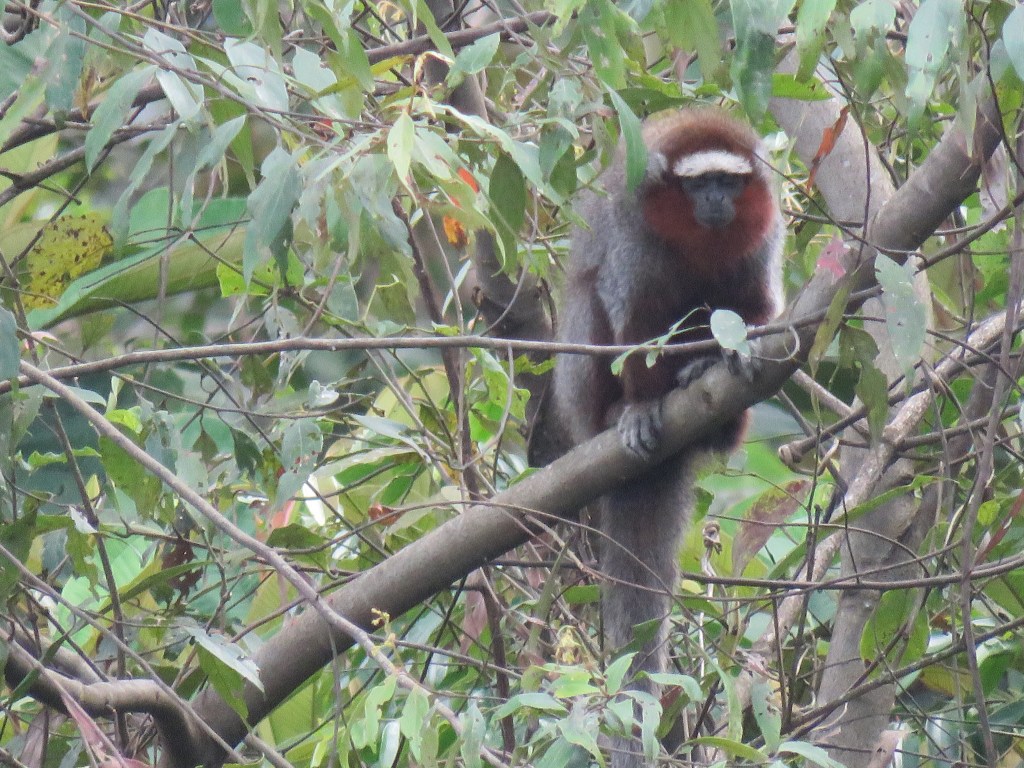
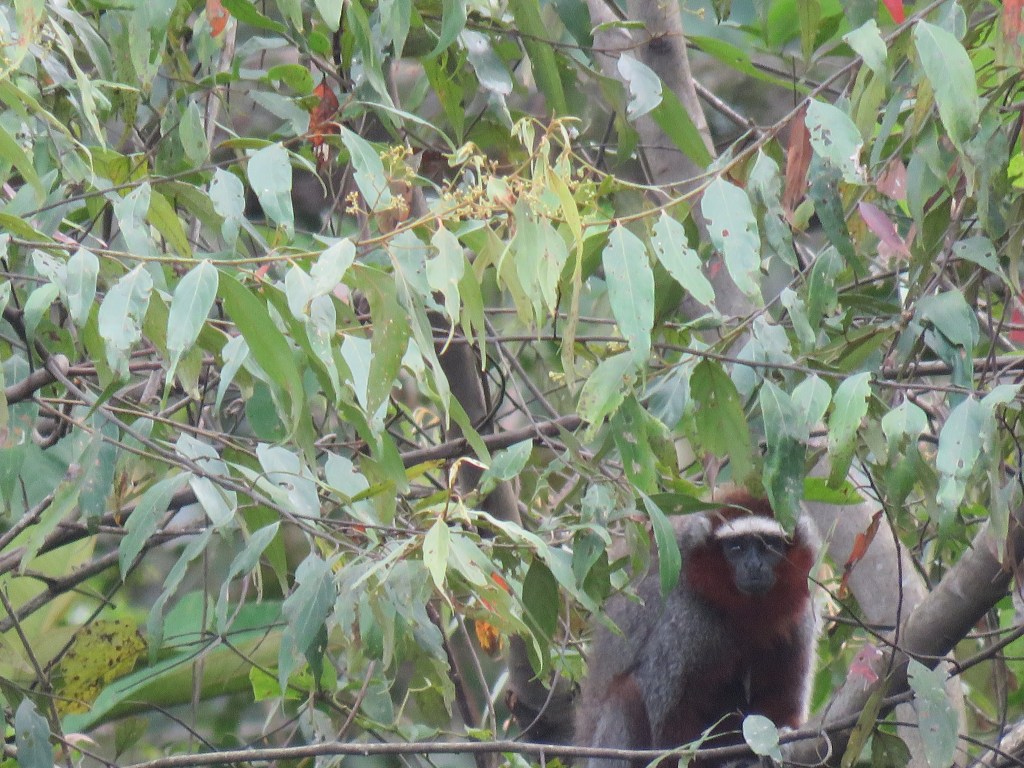


In today’s post, we continue with our series of articles based on information we had been collecting in the study area over the past 21 years. We are going to talk about a chapter in which we use data of densities, behavior and conservation of ornate titi monkeys (Plecturocebus ornatus). This chapter was again a collaboration with Dr. Thomas Defler, who had incentivized my work with this endemic species.
In this chapter we describe the densities of titi monkeys in forest fragments of different sizes (i.e. how many individuals of a species are found in a delimited area). This work describes the work we both do in one of the largest forest fragments in the department of Meta, a forest fragment of more than 1000 hectares. For this fragment, ornate titi monkeys have higher densities in the edges of the forest fragment than in the interiors. This seems to be related to a more diversity of plants found also in the forest fragment edges. We also found that forest fragment size, i.e. how big the forest is, is not a determinant of the density and group size of this species as we thought it could be.
Ornate titi monkeys show a high ecological plasticity, which means that this species is adaptable ecologically to fragments and this adaptability seems to be related with the use of forest edges that this species does. We also reported the presence of small infants (babies) during the dry season in the area (December – March). Also we reported a small list of plants of which this species eats their fruits, that can be used in reforestation projects.
Español: Un capítulo acerca de las densidades, comportamiento y conservación del mono zocay
En el blog de hoy continuamos con nuestra serie de artículos basados en la información que hemos venido colectando en el área de estudio del Proyecto Zocay en los últimos 21 años. Vamos a hablar de un capítulo de libro en el cual usamos datos de densidades, comportamiento y conservación del mono zocay (Plecturocebus ornatus). Este capítulo también fue una colaboración con el Dr. Thomas Defler, quien ha motivado mi trabajo con esta especie endémica.
En este capítulo describimos las densidades de los monos zocay en fragmentos de bosque de diferentes tamaños (es decir, qué tantos individuos de la especie se encuentran en un área delimitada). Este trabajo describe el trabajo que ambos hicimos en uno de los fragmentos de bosque más grandes en el departamento del Meta, un fragmento de bosque de más de 1000 hectáreas. Para este fragmento, los monos zocay tiene densidades más altas en los bordes del fragmento de bosque que en el interior. Esto parece estar relacionado con una mayor diversidad de plantas en el borde del fragmento de bosque. También encontramos que el tamaño del fragmento de bosque, es decir que tan grande es un bosque, no es un determinante de la densidad y tamaño del grupo de monos zocay, como nosotros pensábamos.
Los monos zocay muestran una alta plasticidad ecológica, lo que significa que esta especie es adaptable ecológicamente a los fragmentos y esta adaptabilidad parece estar relacionada con el uso de los bordes de los fragmentos de bosque que esta especie hace. También reportamos la presencia de bebes de la especie durante la época seca en el área (Diciembre a Marzo). También reportamos una lista pequeña de plantas de las que la especie come frutos que puede ser usada en proyectos de reforestación.
If you want to support our activities, please visit https://fineartamerica.com/art/xyomara+carretero or get in contact with us at xcarretero@gmail.com if you want to collaborate, donate or volunteer in our activities. You can also support our activities by buying our ornate titi monkeys stuff dolls https://www.instagram.com/p/Ctm_sEORvk8/?igshid=MzRlODBiNWFlZA== and our new journals in Amazon https://www.amazon.com/X-Carretero/dp/B0CWD1DBJM/ref=mp_s_a_1_1?
© Copyright Disclaimer. All pictures used on this web page are protected with copyrights to Xyomara Carretero-Pinzón. Pictures in this blog are also protected with cpyrights to Cesar Angel. If you want to use any of these pictures, please leave a message on the website or contact xcarretero@gmail.com
 zocayproject