Monkey Forest Tales: A collaborative chapter on population density and habitat availability of ornate titi monkeys (Español abajo)

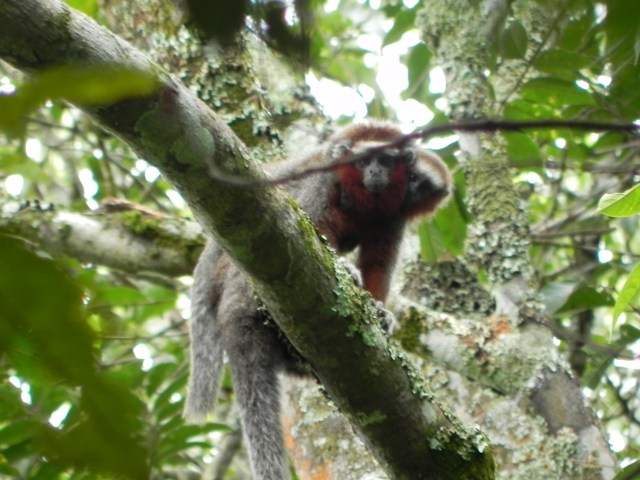
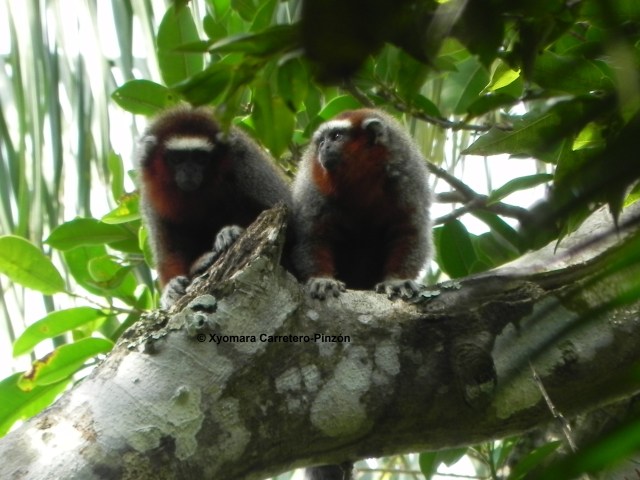
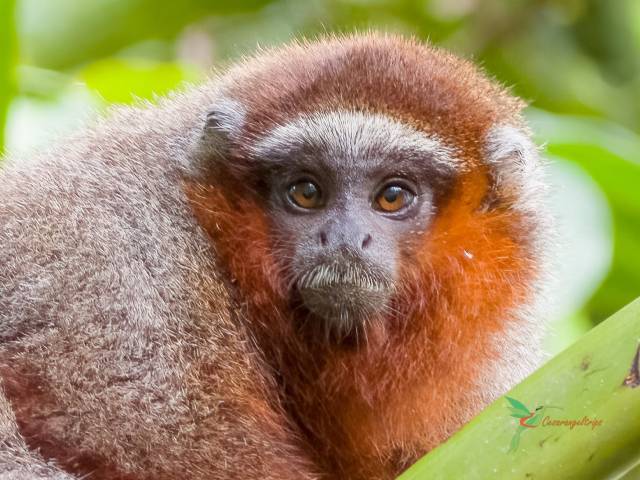
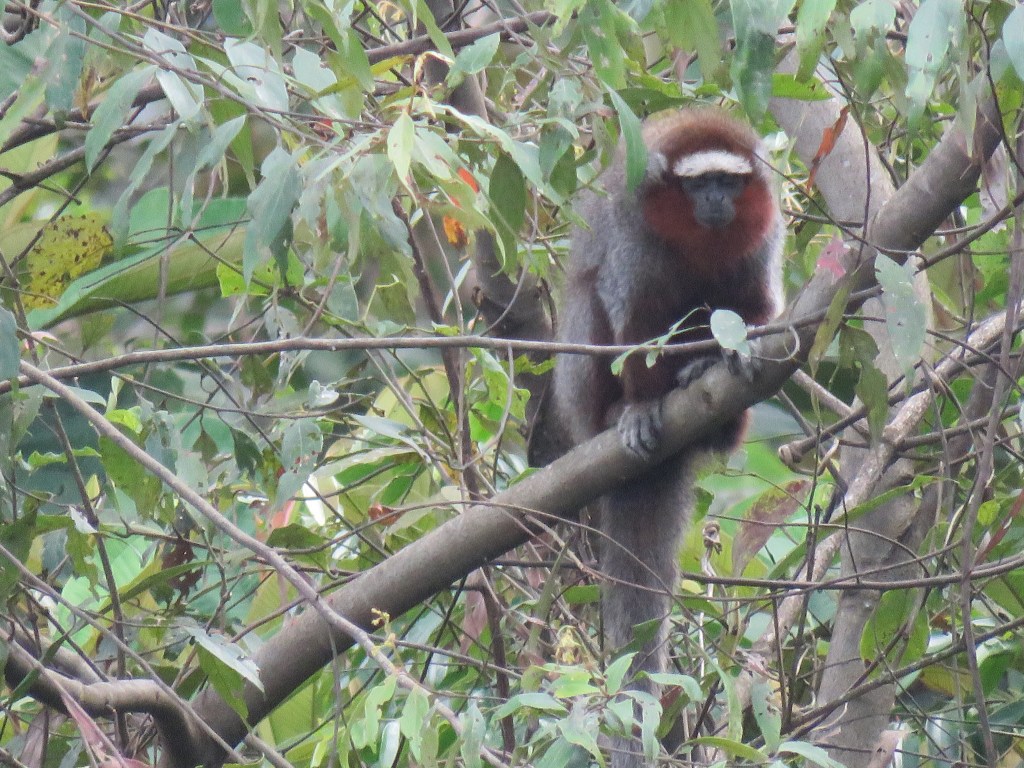
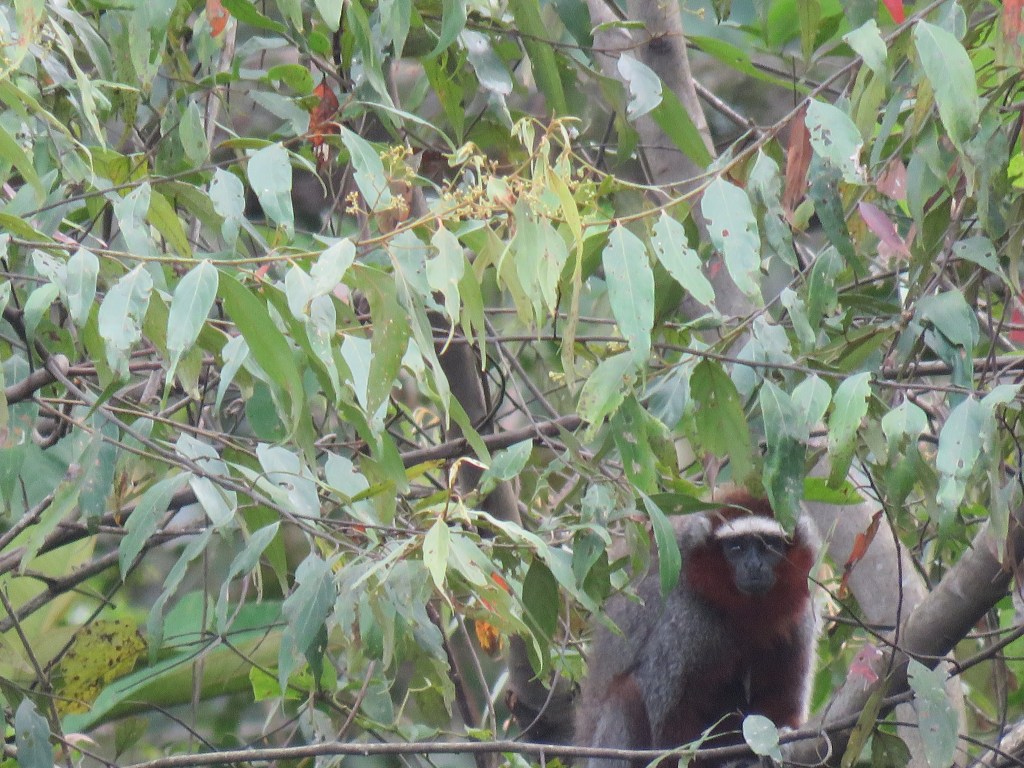
On the first post of this new year, we continue con our series of publications resulting from our work in Zocay Project study area over the past 21 years. Today’s post is about a chapter aimed at evaluating the population density and habitat availability of ornate titi monkeys (Plecturocebus ornatus). This is a collaborative chapter with Dr. Thomas Defler.

In this chapter we did the first evaluation of the habitat availability (how many forests are available) inside the distribution area of this endemic species. We found that the distribution of the species in official conservation areas is about 49.074,79 km2; however, the total area is highly fragmented by agricultural crops and other activities. Therefore, the actual area available is less than 39.404,454 km2 (35% of habitat reduction). This is based on data from 2001 to 2008. Densities in forest fragments between 16 ha and 1050 ha was between 57.94 ind/km2 and 1.073 ind/km2. We didn’t find a strong correlation between those densities and the size of the fragment. There is a tendency for higher densities in smaller fragments. Group sizes also showed a tendency to be high (4 to 5 individuals) in smaller fragments. These results are probably caused by less opportunities for animals to move between forest fragments.

This chapter was my first attempt to evaluate how much habitat is available as forest to this endemic primate species of Colombian Llanos, the ornate titi monkey (Plecturocebus ornatus). This was also the first time that education programs and connectivity measures were suggested. This chapter also lead to our paper last year about the current geographic distribution of the species and the change of conservation status for the ornate titi monkey from Vulnerable to Endangered, where we again suggest education and connectivity as two of the main conservation actions for this species. These two pillars education and connectivity are two of the main focus of our project this year.

Español: Un capítulo colaborativo sobre densidad poblacional y hábitat disponible para el mono zocay

En el primer blog de este nuevo año, continuamos con nuestra serie de publicaciones resultado de nuestro trabajo en el área de estudio del Proyecto Zocay por los últimos 21 años. El blog de hoy es acerca de un capítulo colaborativo con el objetivo de evaluar la densidad poblacional y el hábitat disponible del mono zocay (Plecturocebus ornatus). Este es un capítulo colaborativo con el Dr. Thomas Defler.

En este capítulo hicimos la primera evaluación del hábitat disponible (qué tanto bosque está disponible) dentro del área de distribución de esta especie endémica. Encontramos que la distribución de la especie en áreas de conservación es cerca de 49.074,79 km2; sin embargo, el área total es altamente fragmentada por cultivos agrícolas y otras actividades. Por los tanto, el área real disponibles es menor a 39.404,454 km2 (35% de reducción del hábitat). Esto se basa en datos de 2001 a 2008. Las densidades en los fragmentos de bosque entre 16 ha y 1050 ha fue entre 57.94 ind/km2 y 1.073 ind/km2. No encontramos una fuerte correlación de estas densidades con el tamaño del fragmento. Existe una tendencia a densidades más altas en fragmentos más pequeños. El tamaño de los grupos también mostró una tendencia a ser más alta (4 a 5 individuos) en fragmentos más pequeños. Estos resultados son probablemente causados por menos oportunidades para animales para moverse entre fragmentos de bosque.

Este capítulo fue mi primer intento para evaluar qué tanto hábitat está disponible como bosque para esta especie endémica de especies de primates de los Llanos Colombianos, el mono zocay (Plecturocebus ornatus). Esta fue también la primera vez que los programas de educación y medidas de conectividad fueron sugeridos. Este capítulo también llevo a nuestro artículo del año pasado acerca de la distribución geográfica actual y el cambio del estado de conservación del mono zocay de Vulnerable a En Peligro, donde nuevamente sugerimos la educación y conectividad como dos de las principales acciones de conservación para esta especie. Estos dos pilares, educación y conectividad, son dos de los principales enfoques de Nuestro Proyecto este año.

If you want to support our activities, please visit https://fineartamerica.com/art/xyomara+carretero or get in contact with us at xcarretero@gmail.com if you want to collaborate, donate or volunteer in our activities. You can also support our activities by buying our ornate titi monkeys stuff dolls https://www.instagram.com/p/Ctm_sEORvk8/?igshid=MzRlODBiNWFlZA== and our new journals in Amazon https://www.amazon.com/X-Carretero/dp/B0CWD1DBJM/ref=mp_s_a_1_1?© Copyright Disclaimer.

All pictures used on this web page are protected with copyrights to Xyomara Carretero-Pinzón. Pictures in this post belongs to Xyomara Carretero-Pinzón and Cesar Angel. If you want to use any of these pictures, please leave a message on the website or contact xcarretero@gmail.com

Monkey Forest Tales: A collaboration chapter about how Colombian squirrel monkeys (Saimiri albigena) cope with fragmentation

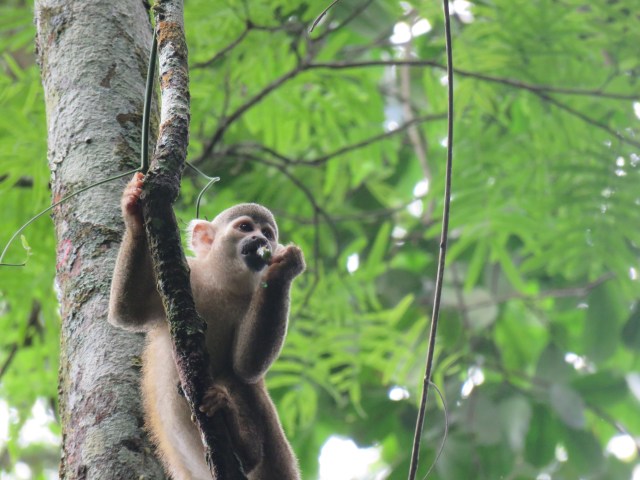
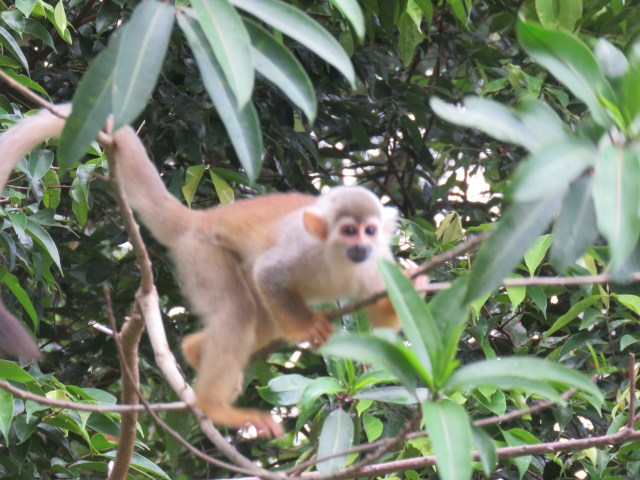
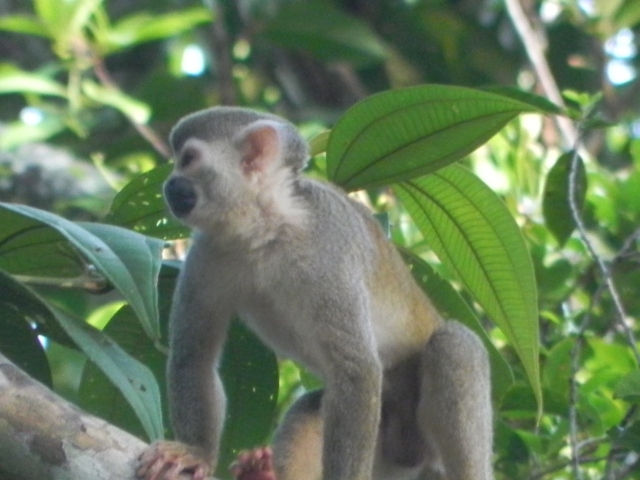
In today’s post, we continue with our series of articles based on information we had been collecting in the study area over the past 21 years. We are going to talk about a collaborative chapter in which we analyze data from groups of Colombian squirrel monkeys living in a continuous area and groups living in our study area, a fragmented area. Data from two groups, one of which live in the continuous area while the other lives in the fragmented area was used to compare their diet, activity patterns and home range (territory). In addition, data comparing Colombian squirrel monkey’s group composition in both areas were also analyzed. Data from this chapter came from my undergraduate and master thesis, the first one done at Tinigua national park and the second at Zocay Project study area.

We found that diet composition varies although percentage of time used to consume different food items remain similar for arthropods (insects and spiders), fruits and flowers but not for leaves. Leaves were not observed being consumed in the fragmented area. Proportion of time spent consuming each food item was higher for all food items except for young leaves in the fragmented areas compared with the continuous area. Group composition and size were reduced in fragmented areas as well as home range. However, average daily range is higher in fragmented areas. On the other hand, stationary foraging is reduced in fragmented areas compared with the continuous area, while moving and foraging activity increased. Additionally, resting activity is reduced in fragmented areas, while moving increases for the same area when compared with the continuous area. Therefore, the Colombian squirrel monkey’s strategy in fragmented landscapes is to spend more time feeding, increasing the proportion of pioneer species chosen for the diet that are found in forest edges and living fences. The use of living fences in their home ranges increases the space available for food resources.

Español: Un capítulo colaborativo acerca de cómo los monos ardilla (Saimiri albigena) manejan la fragmentación

En el blog de hoy continuamos con nuestra serie de artículos basados en la información que hemos venido colectando en el área de estudio del Proyecto Zocay en los últimos 21 años. Vamos a hablar de un capítulo colaborativo en el cual analizamos datos de grupos de monos ardilla viviendo en zonas continuas y grupos viviendo en nuestra área de estudio, un área fragmentada. Datos de dos grupos, uno viviendo en un área continua y el otro en un área fragmentada fueron usados para comparar su dieta, patrones de actividad y rango de hogar (territorio). Además, datos comparando la composición de los grupos de monos ardilla en las dos áreas también fue analizado. Los datos de este capítulo provienen de mi tesis de pregrado y maestría, el primero realizado en el parque nacional Tinigua y el segundo en el área de estudio del Proyecto Zocay.

Encontramos que la composición de la dieta varia pero el porcentaje de tiempo usado para consumir diferentes ítems permanece similar para artrópodos (insectos y arañas), frutos y flores, pero no para hojas. Las hojas fueron consumidas en el área fragmentada. La proporción de tiempo usada consumiendo cada ítem fue mayor para todos los alimentos, excepto las hojas, en la zona fragmentada comparada con la zona continua. La composición y tamaño de los grupos fue reducido en la zona fragmentada, así como el rango de hogar. Sin embargo, el promedio de las distancias recorridas diariamente es más alta en la zona fragmentada. Por otro lado, el forrejeo estacionario es reducido en áreas fragmentadas comparado con el área continua, mientras que la actividad alimentarse mientras se mueven es mayor. Además, la actividad de Descanso es reducida en el área fragmentada, mientras que el movimiento se mayor en esta área comparado con el área continua. Por lo tanto, la estrategia de los monos ardilla colombianos es pasar más tiempo alimentándose, incrementando la proporción de plantas pioneras escogidas para su dieta y que se encuentran en los bordes de los bosques y en las cercas vivas. El uso de las cercas vivas como parte de su rango de hogar incrementa el espacio disponible para los recursos alimenticios.

If you want to support our activities, please visit https://fineartamerica.com/art/xyomara+carretero or get in contact with us at xcarretero@gmail.com if you want to collaborate, donate or volunteer in our activities. You can also support our activities by buying our ornate titi monkeys stuff dolls https://www.instagram.com/p/Ctm_sEORvk8/?igshid=MzRlODBiNWFlZA== and our new journals in Amazon https://www.amazon.com/X-Carretero/dp/B0CWD1DBJM/ref=mp_s_a_1_1?© Copyright Disclaimer. All pictures used on this web page are protected with copyrights to Xyomara Carretero-Pinzón. If you want to use any of these pictures, please leave a message on the website or contact xcarretero@gmail.com

Monkey Forest Tales: A recent publication: new information on the geographic distribution and conservation status of ornate titi monkeys (Español abajo)

In today’s post, we are going to talk about our recent publication on ornate titi monkeys (Plecturocebus ornatus). As some of you may remember from several posts from last year, we were reviewing the geographic distribution of the endemic ornate titi monkeys. This new paper presents all our results on these samplings. You can find the article here. There are three main results from this paper that I want to highlight:

A change in the northern limit of the distribution. Ornate titi monkeys currently are only found up to Río Guacavia, therefore its distribution is mainly in Meta department.

It´s altitudinal limit is still up to 500 m a.s.l

I suggested a change in its conservation status from Vulnerable to Endangered under criteria A4c: the estimated and inferred population reduction due to continuous deforestation within its distribution

Some of the main recommendations from this study are:

Efforts to protect riparian forest in private reserves and cattle ranching areas would benefit the connectivity inside the species’ range.

More connectivity is necessary in some parts in the center of its range, where cattle ranching is one of the main activities.

Living fences can increase connectivity of forest fragments remaining in cattle ranching areas

Efforts to create management plans for regional and municipal protected areas where P. ornatus need to be done

Other strategies such as silvopastoral practices in cattle ranching areas can also improve connectivity in these landscapes.

In the southern part of its range, efforts are needed to focus on protecting the two national parks, Tinigua and Sierra de La Macarena, which are suffering the highest deforestation rate in the country

Connectivity and sustainable activities in the surrounding areas of the national parks should be prioritized

More effective control of deforestation around Tinigua and Sierra de La Macarena national parks should be implemented

Economic alternatives including regenerative tourism, primate-watching and environmentally friendly agricultural practices would provide opportunities to conserve areas surrounding Tinigua and Sierra de La Macarena national parks and private nature reserves in other parts of the range of P. ornatus.

Although it was not mentioned in the paper, I want to highlight that it is important to increase the general public awareness about the importance of this endemic species in the department of Meta. Therefore, Zocay Project started in October an education activity that consist on an education tent called “El Zocay y sus amigos” (The ornate titi monkey and its friends”) in which games and mask painting is done with kids during town festivals, We started in Acacias, thanks to the support of the promotion and sustainable development secretary from Acacias mayor office, with the support of the biologist Yesid Rojas. We hope we can take this activity to another towns in the department in the following months and during the next year.

Español: Una publicación reciente: nueva información sobre la distribución geográfica y estado de conservación del mono zocay

En el blog de hoy vamos a hablar sobre nuestra más reciente publicación sobre el mono zocay (Plecturocebus ornatus). Como algunos de ustedes pueden recordar de varios blogs del año pasado, estabamos revisando la distribución geográfica del mono zocay, mico endémico colombiano. Este nuevo artículo muestra los resultados de esos muestreos. Pueden encontrar el articulo aca. Hay tres resultados principales de este artículo que quiero resaltar:

Un cambio en el límite norte de la distribución. El mono zocay actualmente solo se encuentra hasta el Río Guacavia, por lo que su distribución es principalmente en el departamento del Meta.

Su límite altitudinal aún es 500 m sobre el nivel del mar

Sugerí un cambio en su estado de conservación de Vulnerable a En Peligro bajo el criterio A4c: reducción estimada e inferida de la población debido a continúa deforestación dentro de su distribución

Algunas de las principales recomendaciones de este estudio son:

Los esfuerzos para proteger los bosques riparios en reservas privadas y áreas ganaderas pueden beneficiar la conectividad dentro del rango de distribución de la especie.

Más conectividad es necesaria en algunas partes del centro del rango de distribución, donde la ganadería es una de las principales actividades económicas.

Las cercas vivas pueden incrementar la conectividad de los fragmentos de bosque que quedan en las zonas ganaderas

Se deben hacer esfuerzos para crear planes de manejo para las áreas protegidas a nivel municipal y regional donde P. ornatus esta presente

Otras estrategias como prácticas silvopastoriles en zonas ganaderas también pueden mejorar la conectividad en estos paisajes.

En la parte sur del rango de distribución, los esfuerzos se deben enfocar en proteger los dos parques nacionales, Tinigua y Sierra de La Macarena, que están sufriendo las tasas de deforestación más altas del país

Conectividad y actividades sostenibles en las áreas alrededor de los parques deben ser priorizadas

Control más efectivo de la deforestación alrededor de los parques nacionales Tinigua y Sierra de La Macarena debe ser implementado

Alternativas económicas incluyendo turismo regenerativo, observación de primates y prácticas agrícolas ambientalmente amigables pueden proporcionar oportunidades para conservar áreas alrededor de los parques nacionales Tinigua y Sierra de La Macarena y en reservas privadas en otras partes del rango de P. ornatus.

Aunque no fue mencionado en el artículo, quiero resaltar que es importante incrementar el conocimiento del público general acerca de la importancia de esta especie endémica en el departamento del Meta. Por lo que el Proyecto Zocay inicio en octubre una actividad educativa que consiste en una Carpa Educativa llamada “El Zocay y sus amigos” en la que se hacen juegos y se pintan mascaras con los niños durante los festivales de los pueblos. Empezamos en Acacias, gracias al apoyo de la secretaria de fomento desarrollo sostenible de la Alcaldía de Acacias, con el apoyo del biólogo Yesid Rojas. Esperamos poder llevar esta actividad a otros municipios en el departamento en los próximos meses y durante el próximo año.

If you want to support our activities, please visit https://fineartamerica.com/art/xyomara+carretero or get in contact with us at xcarretero@gmail.com if you want to collaborate, donate or volunteer in our activities. You can also support our activities by buying our ornate titi monkeys stuff dolls https://www.instagram.com/p/Ctm_sEORvk8/?igshid=MzRlODBiNWFlZA== and our new journals in Amazon https://www.amazon.com/X-Carretero/dp/B0CWD1DBJM/ref=mp_s_a_1_1?

© Copyright Disclaimer. All pictures used on this web page are protected with copyrights to Xyomara Carretero-Pinzón. Pictures in this blog from Cesar Angel, Francisco Gomez, Xyomara Carretero-Pinzón and Gabriela Luna. If you want to use any of these pictures, please leave a message on the website or contact xcarretero@gmail.com
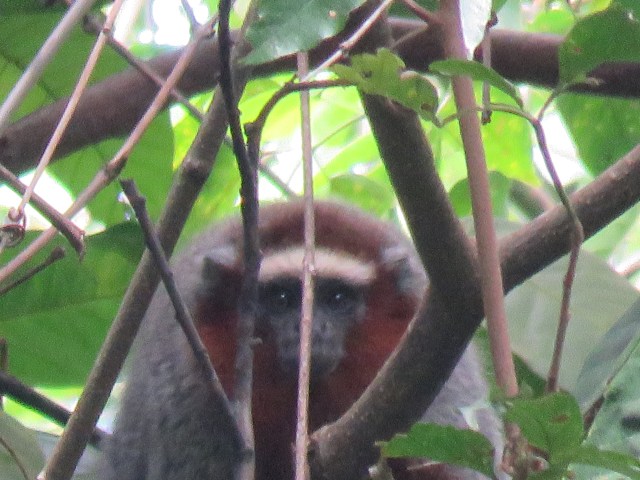
Monkey Forest Tales: A chapter about densities, behavior and conservation of Ornate Titi Monkeys (Español abajo)

In today’s post, we continue with our series of articles based on information we had been collecting in the study area over the past 21 years. We are going to talk about a chapter in which we use data of densities, behavior and conservation of ornate titi monkeys (Plecturocebus ornatus). This chapter was again a collaboration with Dr. Thomas Defler, who had incentivized my work with this endemic species.

In this chapter we describe the densities of titi monkeys in forest fragments of different sizes (i.e. how many individuals of a species are found in a delimited area). This work describes the work we both do in one of the largest forest fragments in the department of Meta, a forest fragment of more than 1000 hectares. For this fragment, ornate titi monkeys have higher densities in the edges of the forest fragment than in the interiors. This seems to be related to a more diversity of plants found also in the forest fragment edges. We also found that forest fragment size, i.e. how big the forest is, is not a determinant of the density and group size of this species as we thought it could be.

Ornate titi monkeys show a high ecological plasticity, which means that this species is adaptable ecologically to fragments and this adaptability seems to be related with the use of forest edges that this species does. We also reported the presence of small infants (babies) during the dry season in the area (December – March). Also we reported a small list of plants of which this species eats their fruits, that can be used in reforestation projects.

Español: Un capítulo acerca de las densidades, comportamiento y conservación del mono zocay

En el blog de hoy continuamos con nuestra serie de artículos basados en la información que hemos venido colectando en el área de estudio del Proyecto Zocay en los últimos 21 años. Vamos a hablar de un capítulo de libro en el cual usamos datos de densidades, comportamiento y conservación del mono zocay (Plecturocebus ornatus). Este capítulo también fue una colaboración con el Dr. Thomas Defler, quien ha motivado mi trabajo con esta especie endémica.

En este capítulo describimos las densidades de los monos zocay en fragmentos de bosque de diferentes tamaños (es decir, qué tantos individuos de la especie se encuentran en un área delimitada). Este trabajo describe el trabajo que ambos hicimos en uno de los fragmentos de bosque más grandes en el departamento del Meta, un fragmento de bosque de más de 1000 hectáreas. Para este fragmento, los monos zocay tiene densidades más altas en los bordes del fragmento de bosque que en el interior. Esto parece estar relacionado con una mayor diversidad de plantas en el borde del fragmento de bosque. También encontramos que el tamaño del fragmento de bosque, es decir que tan grande es un bosque, no es un determinante de la densidad y tamaño del grupo de monos zocay, como nosotros pensábamos.

Los monos zocay muestran una alta plasticidad ecológica, lo que significa que esta especie es adaptable ecológicamente a los fragmentos y esta adaptabilidad parece estar relacionada con el uso de los bordes de los fragmentos de bosque que esta especie hace. También reportamos la presencia de bebes de la especie durante la época seca en el área (Diciembre a Marzo). También reportamos una lista pequeña de plantas de las que la especie come frutos que puede ser usada en proyectos de reforestación.

If you want to support our activities, please visit https://fineartamerica.com/art/xyomara+carretero or get in contact with us at xcarretero@gmail.com if you want to collaborate, donate or volunteer in our activities. You can also support our activities by buying our ornate titi monkeys stuff dolls https://www.instagram.com/p/Ctm_sEORvk8/?igshid=MzRlODBiNWFlZA== and our new journals in Amazon https://www.amazon.com/X-Carretero/dp/B0CWD1DBJM/ref=mp_s_a_1_1?

© Copyright Disclaimer. All pictures used on this web page are protected with copyrights to Xyomara Carretero-Pinzón. Pictures in this blog are also protected with cpyrights to Cesar Angel. If you want to use any of these pictures, please leave a message on the website or contact xcarretero@gmail.com