
Monkey Forest Tales: News from the field: samplings for our ornate titi monkey distribution project and Colombian squirrel monkey babies counts.

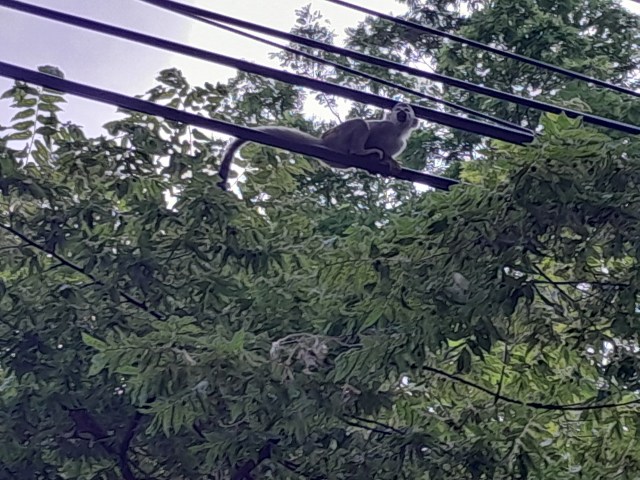
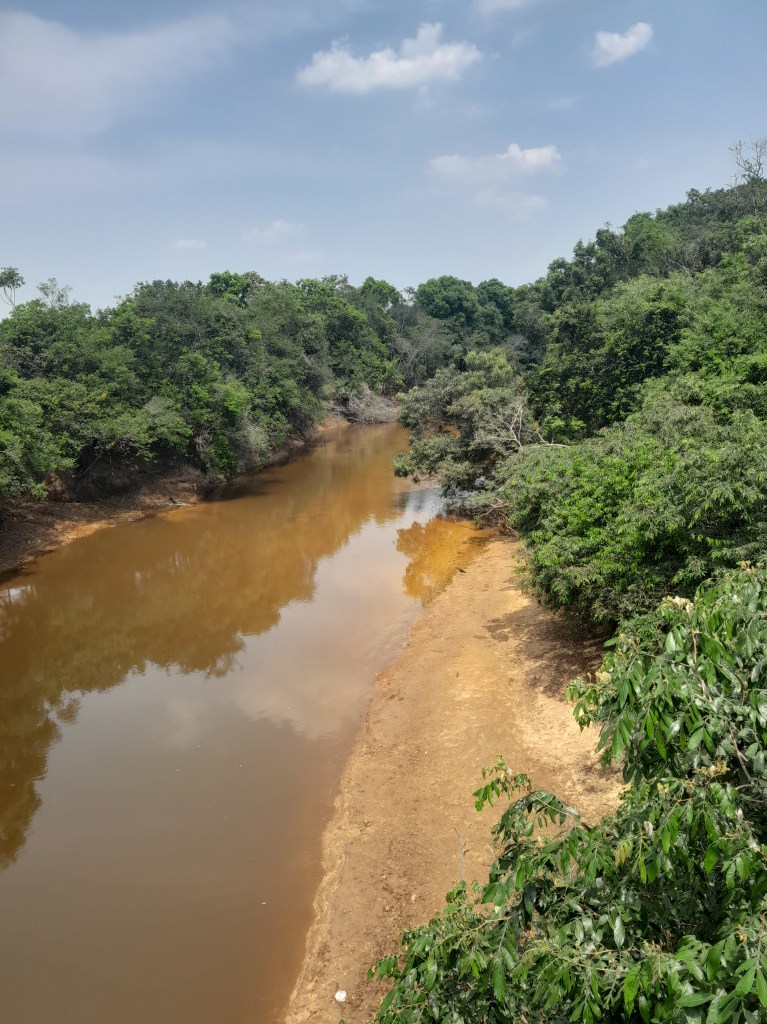
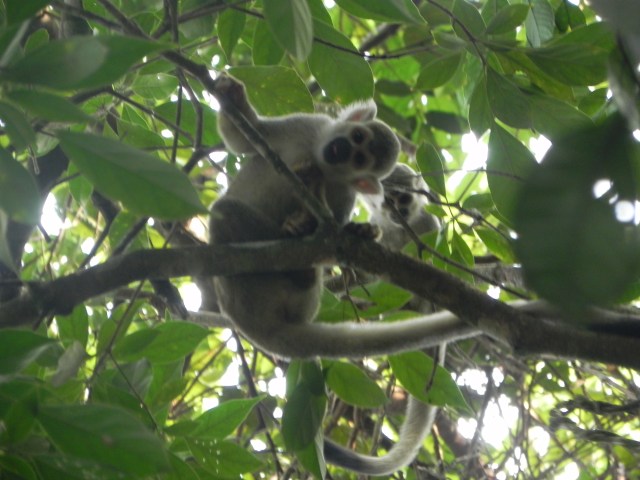
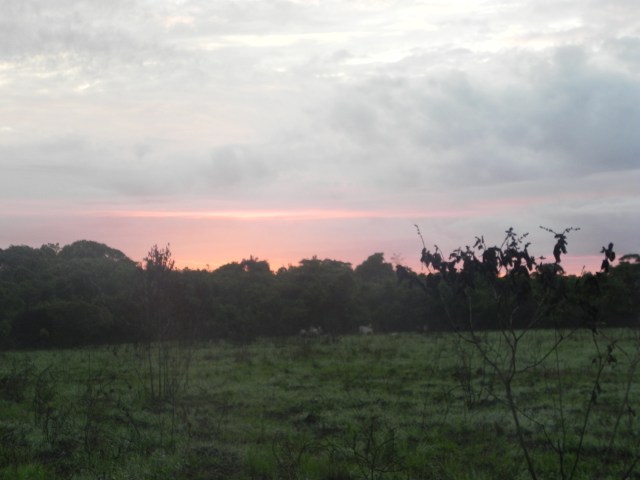
In February, we continue our annual Colombian squirrel monkeys baby counts and we started our ornate titi monkey’s distribution project samplings in Upia- Meta rivers confluence and Metica river source. Although there were just a few days of sampling, work was intense and lots of distance were covered. Deforestation on both areas is widespread and monkeys are using living fences alongside primary, secondary and tertiary roads as corridors. Colombian squirrel monkeys are still having babies, with some females with infants of around one month and other still pregnant as usual for this species, in all sites visited. Ornate titi monkeys are more elusive up to now in our samplings with some local people reporting them occasionally in some areas but not in others.
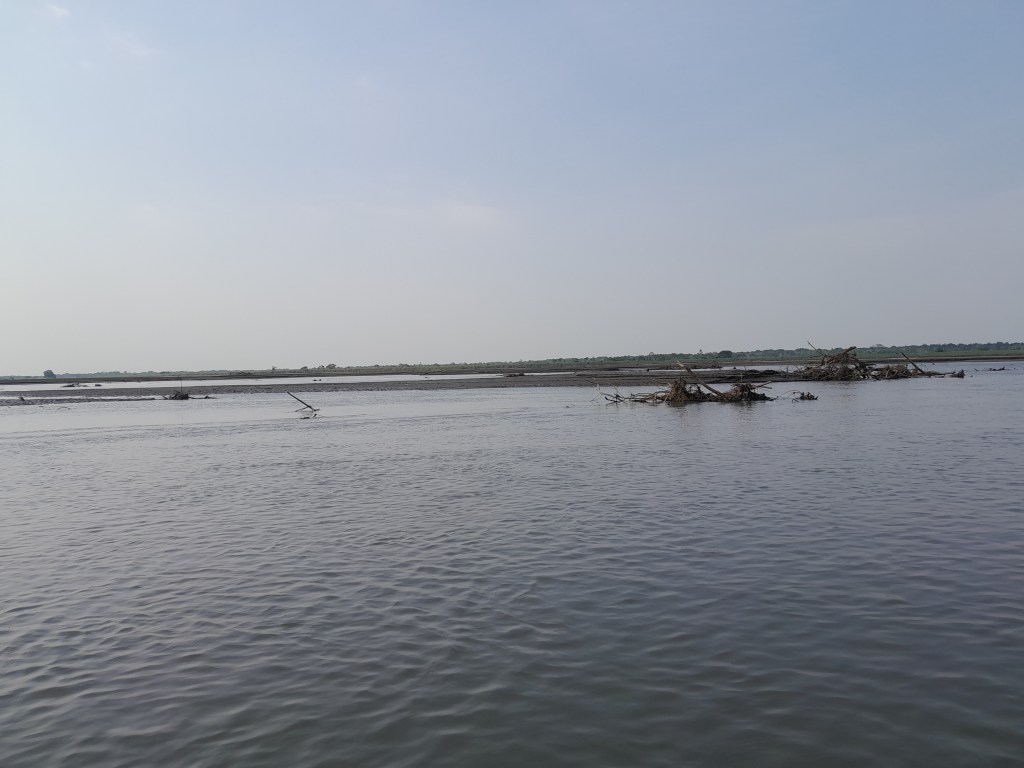
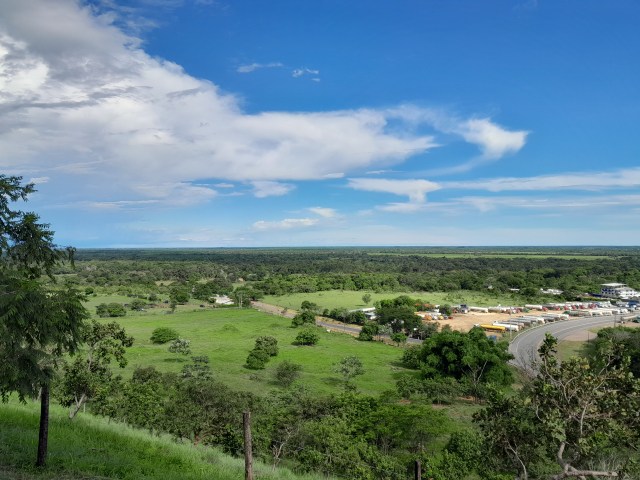
During the first month of the year, Colombian Llanos had its drier season and with El Niño phenomenon, this month all rivers in the region had very low level, making navigability very difficult and access to some forest fragments near to rivers complicated by river or land, a challenge we had to sort during this month samplings.
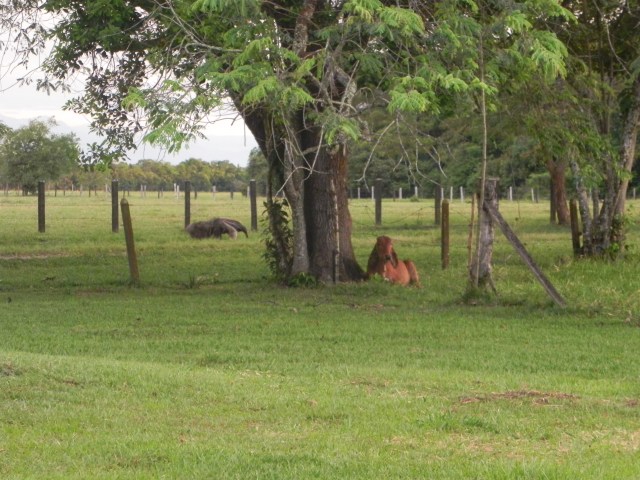
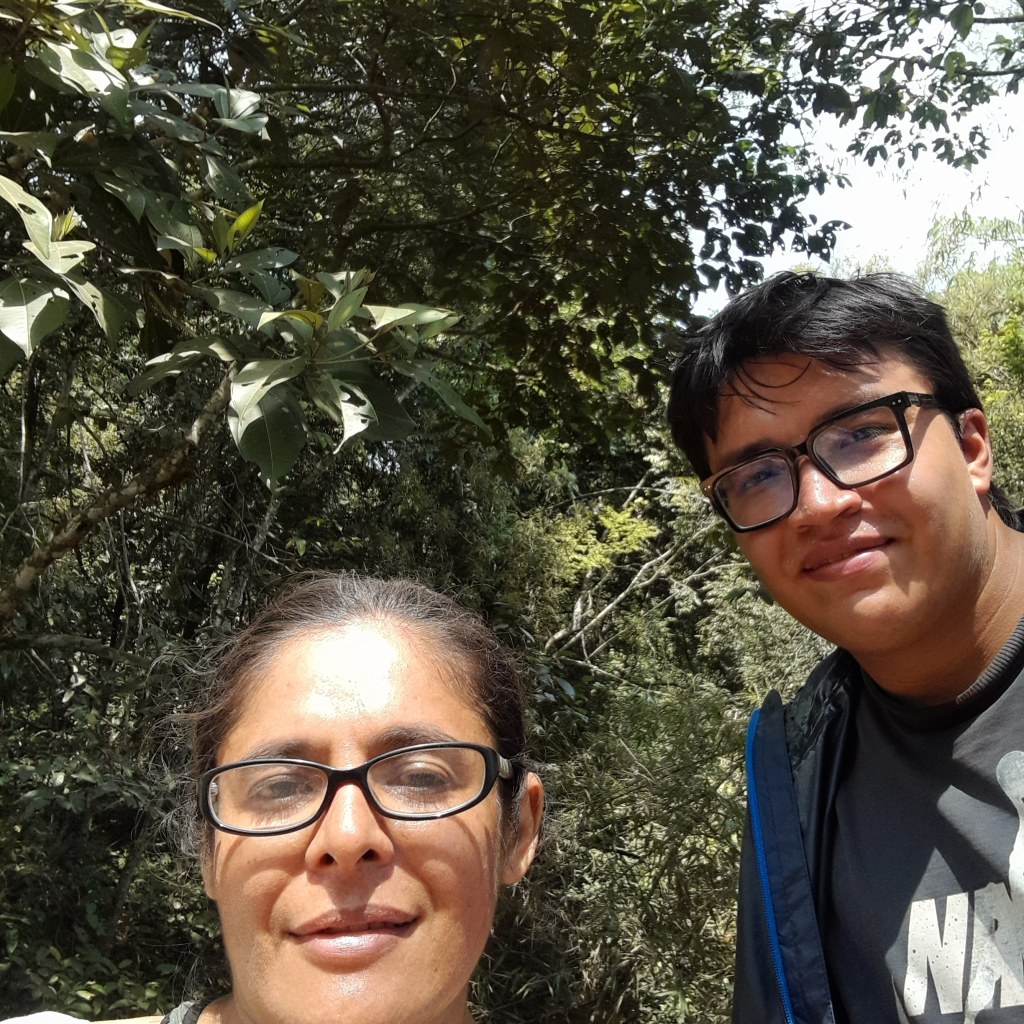
During this field trip we also register red howler monkeys (Alouatta seniculus), black capped capuchins (Sapajus apella fatuellus), and crab-eating fox (Cerdocyon thous) using open areas and living fences. Some prints of capybaras were also recorded on Meta riverbanks. We were also fortunate to had great people helping us with our samplings, especially Stella, Jose, Sr. Vanegas and Francisco, who support several aspects of our samplings during this month.

If you want to support our activities, please visit https://fineartamerica.com/art/xyomara+carretero or get in contact with us at xcarretero@gmail.com if you want to collaborate, donate or volunteer in our activities. You can also support our activities by buying our ornate titi monkeys stuff dolls https://www.instagram.com/p/Ctm_sEORvk8/?igshid=MzRlODBiNWFlZA== and our new journals in Amazon https://www.amazon.com/X-Carretero/dp/B0CWD1DBJM/ref=mp_s_a_1_1?dib=eyJ2IjoiMSJ9.X-DZnsRxEDXfTBPZsuG4GiwWwBCqmoeCJ_WW-bEm_Z85wKyUyBvy76iMm0z4k4oY9YD81Pz4e_ZYHYz8QK7T3BNo_mX6d-Mo7FroQLkxo6yy0k6KPwMjP8GC27PVXa-39FSo87QCzagOOnEgz-IfS8ADg0gEc9feWAkXyRNpRpuqWEv9qnKE2ALCzsyAt4aM0O-PM4L6U1PSn1neUX7axw.vI1S0GofRHMSCqMV41jOdEmaxXHCJCHL6ya-uAHsxTo&dib_tag=se&keywords=X.+Carretero+Journal&qid=1709327306&sr=8-1
© Copyright Disclaimer. All pictures used on this web page are protected with copyrights to Xyomara Carretero-Pinzón. If you want to use any of these pictures, please leave a message on the website.

Monkey Forest Tales: Women and girls in science celebration day

On February 11th it was women and girls in science celebration day, a day to increase awareness to all the wonderful girls and women who through our lives and history had make an impact in the world for us to be able to be whatever we want to be. Something that we usually don’t say, or at least I rarely said it, is that most of us who live the life we always dream to live, probably have a mother or some family member who overcome a lot of challenges and showed us that whatever was possible if you try it. So, thank you mom and aunt Julia for showing me that if I wanted I can get it, despite all the challenges life put in your way.
Over the years, several women and sometimes little girls had incentivized me to be better in what I do. Most of them had been students, volunteers, and colleagues of different ages and at different stages in their careers and life. But all of them have something in common, a certain combination of curiosity and fire for do anything possible to make their dreams come true. Curiosity to try and ask questions that other didn’t and a tenacity to continue despite many people telling them they cannot do it.
I had also been lucky to have many men in my life who supported me over the years and give me enough confidence to be able to do what I love the most in life, work with monkeys!! Starting with my father and then all my academic advisor who had been all man. To all of them thank you too.
Now that I had mention people who had inspired me and supported me, my message to all the girls and young women who dream to work in science is first to surround yourself with people who support you and motivate you, fine passion inside and outside of you, don’t give up and even when times looks a bit dark, there is always something or someone who appears in your life in the right moment. And finally, something that I hear once from Jane Goodall, “you’ll have to work hard, take advantage of opportunities and never give up” something that her mother told her when she was a little girl and tell her she wanted to go to Africa. This phrase had resonated with me over the years and that is why I still do what I love (see monkeys in their habitat, in case you had forgotten), even when sometimes it looks that I will need to give up, something appears, or someone gives me a hand an offers me a new opportunity that in some way keep me going.
Finally, to all students, volunteers and colleagues who had share part of your life with me, thank you for helping me to keep going…Happy Girls and Women in Science Day!!!
If you want to support our activities, please visit https://fineartamerica.com/art/xyomara+carretero or get in contact with us at xcarretero@gmail.com if you want to collaborate, donate or volunteer in our activities. You can also support our activities by buying our ornate titi monkeys stuff dolls https://www.instagram.com/p/Ctm_sEORvk8/?igshid=MzRlODBiNWFlZA==
© Copyright Disclaimer. All pictures used on this web page are protected with copyrights to Xyomara Carretero-Pinzón. If you want to use any of these pictures, please leave a message on the website.
Monkey Forest Tales: Problem of common names

In today’s post we want to discuss a common practice that sometimes generates interpretation and identity problems in science, common names. Common names are the names that local people give to animals in a region or country. Sometimes those names came from other regions, countries or even continents as it’s the case of common name for our jaguar that usually is tiger. This is reflection of colonial times when Spanish people who arrive to America called jaguars “tigers” as it is a big cat as the original tiger of Asia. Some of these common names remains in our minds and cultures for centuries and changing these common names to more appropriate names for our species is not always easy. Our last example is one that have been changing over the years although there are areas in which jaguar are still called tigers.
But why we wanted to discuss about this? Our reason is because in this website and many publications product of all work done in this project had one of these confusing common names that we notice recently. As I mentioned several times in this website, I had been studying monkeys for over 25 years, during this time monkey’s taxonomy had changed over the last decade and with taxonomy some common names also changed to be more accurate to reflect that taxonomy. The case we are talking about is dusky titi monkey or ornate titi monkeys (Plecturocebus ornatus). In 1995 when I learned primate taxonomy this species was a subspecies of dusky titi monkeys, todays known as Callicebus moloch, a species from Peruvian Amazon very similar to another specie also called dusky titi Callicebus cupreus from Ecuatorian Amazon, from which Plecturocebus ornatus was a subspecies, until 2016. The reason for using this common name to different species is that at some point all these species were considered the same species, although they have different names in local languages. Therefore, when I started this project ornate titi monkeys were still dusky titi monkey until 2016, by Byrne and collaborators, when a new taxonomy for the whole subfamily Callicebinae.
So, as you see sometimes changing common names cost us a bit of time, but in order to be more precise and follow the IUCN red list classification in this website we are going to use ornate titi monkey as the common name to our endemic Zocay, as it is known in Spanish. A good practice in science is to be updated in taxonomy, even if the focus of your research is focus on other disciplines inside biology as this is a field in which changes are continuous and make exciting discoveries almost everyday.
If you want to support our activities, please visit https://fineartamerica.com/art/xyomara+carretero or get in contact with us at xcarretero@gmail.com if you want to collaborate, donate or volunteer in our activities. You can also support our activities by buying our ornate titi monkeys stuff dolls https://www.instagram.com/p/Ctm_sEORvk8/?igshid=MzRlODBiNWFlZA==
© Copyright Disclaimer. All pictures used on this web page are protected with copyrights to Xyomara Carretero-Pinzón. If you want to use any of these pictures, please leave a message on the website.
Monkey Forest Tales: It’s baby season again!

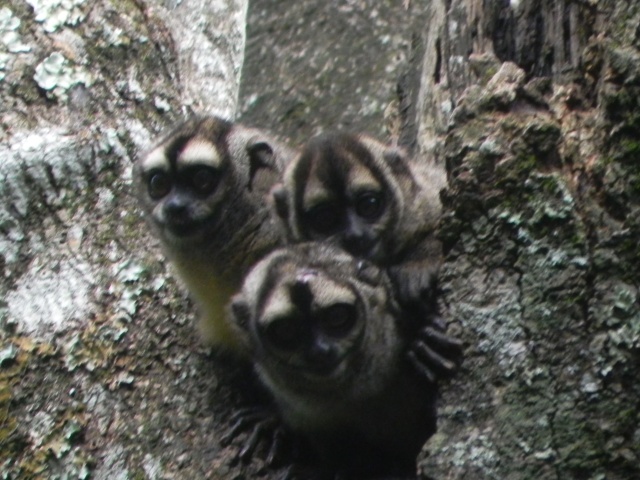
Today’s post is about the best part of my work, every year at the beginning of each year, my work and energy are focus on counting baby monkeys, especially Colombian squirrel baby monkeys. So as usual we start our year in Zocay Project by counting babies of Colombian squirrel monkeys, as well as ornate titi monkeys and Brumback night monkeys. All these species have babies between December and March.
The beginning of 2024 started with some new babies of all these species in San Martin, Cumaral and Villavicencio area. In following months, we also recount some of these groups as well as do our counting in Villanueva area. Also, we observed some of the older females in our Colombian squirrel monkey’s groups healthy and some seems to be pregnant and still reproducing.
But why is so important to us to count those babies? A way to know if a population is stable, growing or decreasing is by knowing how many babies born each year and more important how many of those babies survive that year and continue growing until they become adults and reproduce themselves. So as one of our main objectives is to know what is happening with monkey’s populations in the areas where we work, that is why the beginning of every year is so important for us. It is also important to do this counting every year because monkeys have long lives, therefore for a baby to grow to be an adult several years need to pass and you need be able to count and try to follow up those babies as many years as possible to be able to know what happens with their lives.
We also finished this month the field season from our collaborative project with Dr. Martha Ortiz about patch and landscape-scale effects on Brumback night monkey’s presence and abundance. Now it is time for our analysis part, more news on this project in following months.
We also started our logistic arrangements to our trips to areas that are limits of ornate titi distribution to confirm those limits and again we are grateful to Chalcraft Little Fund for their support to our work. We are also planning to expand our work on ornate titi monkeys as conservation for this species in the ground is highly need it. So, in following months we will give you more news about new activities and projects related with ornate titi monkeys and monkeys conservation, in general. Stay tuned and if you want to help, please don’t hesitate to contact us.
If you want to support our activities, please visit https://fineartamerica.com/art/xyomara+carretero or get in contact with us at xcarretero@gmail.com if you want to collaborate, donate or volunteer in our activities. You can also support our activities by buying our ornate titi monkeys stuff dolls https://www.instagram.com/p/Ctm_sEORvk8/?igshid=MzRlODBiNWFlZA==
© Copyright Disclaimer. All pictures used on this web page are protected with copyrights to Xyomara Carretero-Pinzón. If you want to use any of these pictures, please leave a message on the website.
Monkey Forest Tales: Planning Zocay Project activities for 2024

Happy New Year to everyone!! In our first post of 2024, we want to let you know some of our plans for this new year. Zocay Project 20th birthday is this year, and we are very excited and grateful with all farmers and people who had helps us over the past two decades to make this project a success. So, we are planning a few surprises for all of you very soon!!!
We are also excited to announce that this year we continue with our project to improve our knowledge of Ornate titi monkey (Plecturocebus ornatus) distribution limits. We are grateful with our donors from Chalcraft Fund Primate Grant manage through Rewild. We are also grateful with all people from private reserves that had reach out to us reporting their observation of this beautiful species on their land. In the following months we will keep you updated with all new areas visited and all advances in this new project.
This year we also continue with our monitoring of primate populations in fragments of San Martín area as well as some areas in Villavicencio, Cumaral and Villanueva, with some of our first trips starting next week. We area starting Colombian squirrel monkey babies’ season again and babies of some other species had been reported recently too. In collaboration with Cumaral Biodiversa we will continue supporting their effort to monitor Brumback night monkeys (Aotus brumbacki) nest in their territory.
Hopefully this year will be also successful on new publications about our results that we expect will improve not only our knowledge of primate populations living in forest fragments but also some recommendations and conservation actions to better improve those populations. We also plan to participate the Latin American Congress of Primatology that this year will be in Colombia. Also, we hope to continue collaborating with Nature Trips to train local guides for primate watching in Vista Hermosa area.
If you want to support our activities, please visit https://fineartamerica.com/art/xyomara+carretero or get in contact with us at xcarretero@gmail.com if you want to collaborate, donate or volunteer in our activities. You can also support our activities by buying our dusky titi monkeys stuff dolls https://www.instagram.com/p/Ctm_sEORvk8/?igshid=MzRlODBiNWFlZA==
© Copyright Disclaimer. All pictures used on this web page are protected with copyrights to Xyomara Carretero-Pinzón. If you want to use any of these pictures, please leave a message on the website.

Monkey Forest Tales: Balance of Zocay Project activities in 2023 – Part 2: projects and collaborations (continuation)

In today’s post we want to continue mentioning some of our collaborations and projects from 2023. This year also give us the opportunity to know and support an incredible nature tourist project lead by Cesar Angel and his company Nature Trips Colombia that is supporting nature tourism projects in Vista Hermosa area where ornate titi monkeys are used as an umbrella species to incentivize sustainable economic alternatives in an area that suffers from violence over the past decades.
Additionally we continue supporting Cumaral biodiversa and El Silencio farm in their effort to monitor and map Brumback night monkey’s nest in Cumaral town. We also support them in their efforts to learn more about the wildlife they have in their territory through camera traps.
A few days back, we also received great news for our project about the ornate titi monkey’s distribution. We received funds from Little Chalcraft Fund, manage by Rewild, to make specific surveys on the north, east and south part of ornate titi monkey distribution limits next year. So stay tuned in the following months for news on these trips and more ornate titi monkey (Plecturocebus ornatus) news.
We are also in conversations with two organizations at national and international level to increase our impact on primate conservation. More news on these collaborations in the following months. We are also reconnecting with El Caduceo reserve in San Martin to monitor primates there
Finally, this year had leave us with multiple learnings about the impact we can and must have on primates and their habitats as well as multiple new friendships, renewed collaborations and friendships and more plans for future years.
If you want to support our activities, please visit https://fineartamerica.com/art/xyomara+carretero or get in contact with as at xcarretero@gmail.com if you want to collaborate, donate or volunteer in our activities. You can also support our activities by buying our dusky titi monkeys stuff dolls https://www.instagram.com/p/Ctm_sEORvk8/?igshid=MzRlODBiNWFlZA==
© Copyright Disclaimer. All pictures used on this web page are protected with copyrights to Xyomara Carretero-Pinzón. If you want to use any of these pictures, please leave a message on the website.

Monkey Forest Tales: Zocay Project balance of 2023- Part 2: collaborations and projects

In today’s post we are going to talk about the second part of our year’s balance for this ending year 2023. This second part is about collaborations and project. This was a year full of both of them.
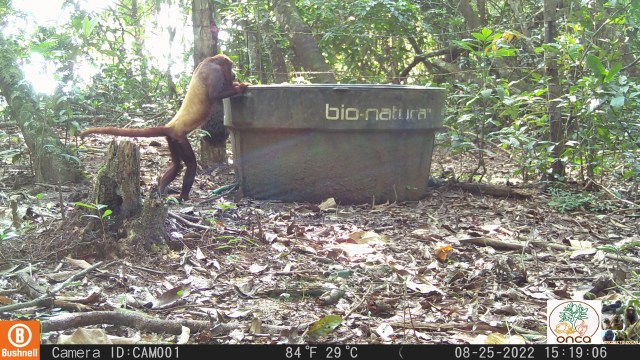
As mentioned in our last post we collaborate with Onca foundation in our camera trap project. This project is already finished but we will be writing a paper with the main results of this project in following months. If you want to know some of the exciting recommendations result from this project visit our post about it here.
However, this wasn’t our only collaboration this year, additionally we collaborate with SUSA group from Universidad de Los Llanos, especially with Dr. Martha Ortiz with who we are developing a landscape scale project about the effects of landscape variable on Brucmback night monkeys (Aotus brumbacki) presence in fragmented landscapes, hopefully at the beginning of next year we will give you some news on the results of this exciting project. In this project we also continue collaborating with Cumaral Biodiversa and Finca El Silencio in Cumaral town where groups of this species usually are found close to the urban area.

This year we also support an incredible and dedicated student from Nuevo Gimnasio School in Villavicencio who study Colombian squirrel monkeys behaviour who is feed by tourist and local people. If you want to know more about his experience, read here.
We also launched a citizen science project to complement the data we had been collected for a couple of years now about dusky titi monkeys (Plecturocebus ornatus), an endemic species of Colombia, which distribution area is mostly in fragmented areas. We area also waiting for some funding to clarify some of its distribution limits, so hopefully we will have some exciting news about this project in the following months. For now, we want to thank all private reserves and organizations that already send us its data to make this project possible. If you want to collaborate, share your data with us or volunteer with us in this project please see our post about this exciting project here.
We also continue collecting data about primate populations living in fragmented areas of San Martin and Villanueva towns, and Villavicencio city where we continue doing group’s counting and, in some areas of San Martin town, we continue monitoring groups that had been observed now for almost two decades in terms of demographic and ecological data. This data is focus on the monkey species present in each zone. We are grateful with all landowners that allowed us to make samplings in their lands for almost two decades.
If you want to support our activities, please visit https://fineartamerica.com/art/xyomara+carretero or get in contact with as at xcarretero@gmail.com if you want to collaborate, donate or volunteer in our activities. You can also support our activities by buying our dusky titi monkeys stuff dolls https://www.instagram.com/p/Ctm_sEORvk8/?igshid=MzRlODBiNWFlZA==
© Copyright Disclaimer. All pictures used on this web page are protected with copyrights to Xyomara Carretero-Pinzón. Video in this post reproduced with permission from Jose Vasquez. If you want to use any of these pictures, please leave a message on the website.

Aotus brumbacki group filmed by Jose Vasquez in a farm of San Marin town

Monkey Forest Tales: Balance of Zocay Project activities in 2023 – Part 1: events participation

In today’s post we are going to start our year’s balance for this ending year 2023. This year was an intense and dynamic year for us with multiple participations in conferences and talks with different audiences, from scientific to kids. As well as assistance to regional events and technical discussions.
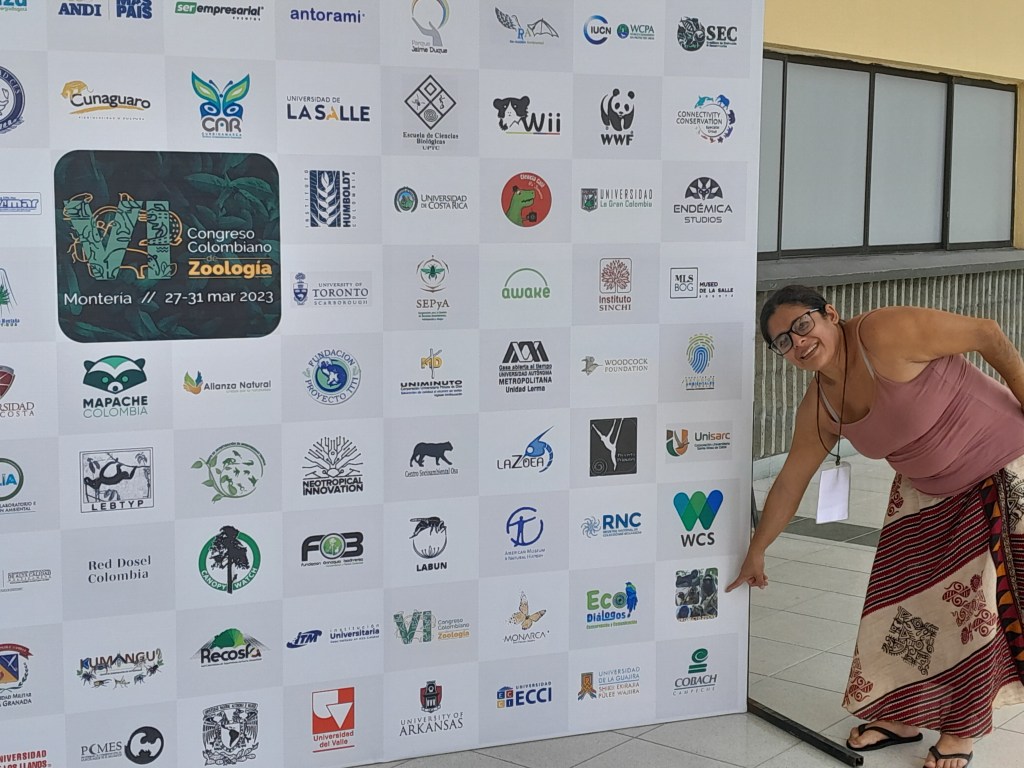
Our first event was our participation, in collaboration with Onca Foundation, to the VIth congress of zoology in which we presented the preliminary results of our camera trap project. This project aimed to establish wildlife use of water sources used for cattle in private farms. Use of water sources, artificial and natural, by wildlife include a wide variety of mammals, birds and reptiles. Some recommendations from this project can be found in Spanish and English here
Our next event was our participation in a vaccination campaign of farm dogs in our study area. This campaign was an international campaign to reduce the impact of domestic dog’s diseases on wildlife. Some studies had found transmission of diseases from domestic dogs to wild canids and felids in areas where both speciez enter in contact. Therefore, prevention and vaccination of domestic dogs and cats are important tool to reduce this disease prevalence in wildlife.
We also participate in a couple of talks with kids from Police School in Villavicencio to celebrate environmental and biodiversity day. These talks were focused on monkeys present in Villavicencio city as well as a small story for small kids to learn about dusky titi monkeys and its importance.

We also participate in regional symposium of biodiversity in the Orinoquia region organized by National Parks of Colombia, where biodiversity experiences from the Orinoquia region were presented.
Finally, we participate in a virtual forum to celebrate Dr Chuck Snowdown contributions to primatology, where we share our experience and lessons learned over the past 28 years of studying monkeys in Colombia, here.
In our next post, we will share our projects and collaborations in 2023. We are grateful with all people who invite us to participate on these events.
If you want to support our activities, please visit https://fineartamerica.com/art/xyomara+carretero or get in contact with as at xcarretero@gmail.com if you want to collaborate, donate or volunteer in our activities. You can also support our activities by buying our dusky titi monkeys stuff dolls https://www.instagram.com/p/Ctm_sEORvk8/?igshid=MzRlODBiNWFlZA==
© Copyright Disclaimer. All pictures used on this web page are protected with copyrights to Xyomara Carretero-Pinzón. If you want to use any of these pictures, please leave a message on the website.
Monkey Forest Tales: Considerations for long term studies in private lands

First I want to apologize for this post delay, but to be complete honest with you, it was hard to find a topic to talk about. However, during past days I had the opportunity to share my experience and knowledge with a potential future biologist. While talking with him I realize that part of Zocay Project success is that we had persisted working in private lands by a combination of good decisions and hard work, especially during early years, and being able to adapt ourselves to talk with people of different backgrounds over the years.
Those initial good decisions build trust between landowners and researchers/ students because we were able to sit and listen to each other, share our knowledge and agreed on management actions that benefit them and the wildlife inhabiting their land. This couldn’t be possible without the hard work of some students and my persistence, despite all challenges, to continue working in those farms.
Being able to talk with people of different backgrounds is extremely important when working close to people, not matter if it is landowners, farm workers, peasant or indigenous communities. Our skills to talk and explain scientific concept to people is part of the success of any long term project.
Another important factor is to be able to secure financial support, probably the most difficult part and one that for sure I didn’t master yet.
Additional factors that influence your success on a long term project is your personal motivation. For me, being close to monkeys and forest as well as trying to understand how they persist and survive despite all threats surrounding them are my constant motivations to continue as long as the landowners allow me to be in their farms.
So, if you are thinking about implementing a long term project not matter the context or species you study, first build trust with people living in the area and listen their concerns, work together to find solutions and consult each other opinions when making management decisions. Stay motivated and never loose your passion for what you are doing.
If you want to support our activities, please visit https://fineartamerica.com/art/xyomara+carretero or get in contact with as at xcarretero@gmail.com if you want to collaborate, donate or volunteer in our activities. You can also support our activities by buying our dusky titi monkeys stuff dolls https://www.instagram.com/p/Ctm_sEORvk8/?igshid=MzRlODBiNWFlZA==
© Copyright Disclaimer. All pictures used on this web page are protected with copyrights to Xyomara Carretero-Pinzón. If you want to use any of these pictures, please leave a message on the website.
Monkey Forest Tales: What make you an expert or specialized on a specific topic, ie. primatology?

Today’s post we are going to discuss some of the challenges we faced when we apply for jobs different from typical academic job or outside of academy, although some surprises can be found also when applying to academic institutions too. And you need to support your experience.
Typical answers to the question: What make you an expert or specialized on a specific topic? Could be time you had been working/ studying that specific topic inside and/or outside of academy or a certificate or diploma about that specific topic. In the case of primatology, despite of a few masters that are focused on primates most people working in primatology came from different backgrounds and different careers such as biology, ecology, psychology, anthropology, veterinary and even medicine. Therefore, a diploma on primatology usually is not what you have to demonstrate that you specialize yourself or are an expert in primatology. Most of us who had been in academy and had been working for several years with primates have our publications to support our claims of that specialization on primatology.
However, some jobs require that you upload certificates and job letters but not publications for their applications, this is particularly true in countries like Colombia in which everything need to be certified by a diploma and most of the time you also add job certifications to your applications. So, in these cases how do you support that you have experience in primatology? Well if you are lucky enough of had worked on projects involving primates, you will have that supported experience. Volunteer work also help when the organization in which you make your volunteering give you a letter.
However what surprise me a lot and make me write this post is how despite your publications, letter of support from paid work and volunteer work explicitly saying you worked with primates, for some institutions, even some academic institutions these doesn’t represent a proof of support that you have experience in primatology. I had to say that at the beginning my first reaction was anger, I didn’t spend more than 25 years working with monkeys in the field and publishing for the last 15 years for someone to tell me I don’t have experience working in primatology. But then, I also notice that it was evident they didn’t take the time to read all the supporting documentation. This also make me think of how perverse the system is that governments and institutions had created to bureaucratize job offers.
An additional problem of these type of systems, at least in Colombia, is the belief at government level that post doctorate is another type of study that gives you a diploma. This is not new; we had several reports of universities in the country promoting post doctorate programs in which you paid for a diploma instead of institutions paying you for your work as in other countries.
This kind of systems only promotes more corruption and even normalize it inside and outside of academy. So, my advice, especially for people in Colombia is to continue publishing despite not always being recognized as experience, ask for support letters from all jobs you have and ask them to make explicit the kind of work you did for them and think twice before applying to public jobs with bureaucratized systems.
If you want to support our activities, please visit https://fineartamerica.com/art/xyomara+carretero or get in contact with as at xcarretero@gmail.com if you want to collaborate, donate or volunteer in our activities. You can also support our activities by buying our dusky titi monkeys stuff dolls https://www.instagram.com/p/Ctm_sEORvk8/?igshid=MzRlODBiNWFlZA==
© Copyright Disclaimer. All pictures used on this web page are protected with copyrights to Xyomara Carretero-Pinzón. If you want to use any of these pictures, please leave a message on the website.