
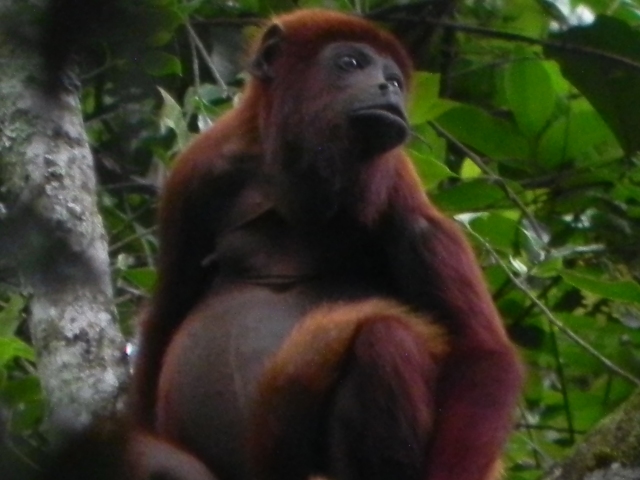
Monkey Forest Tales: A collaborative article to understand why monkeys in Latin America and lemurs in Madagascar prefer to use trees instead of the ground to move (Español abajo)

In today’s post, we continue with our series of articles based on information we had been collecting in the study area over the past 20 years. We are going to talk about an article in which researchers working in Latin America and Madagascar used information collected in many places where monkeys and lemur are found in the wild to better understand why in Latin America and Madagascar primates use mainly trees instead of on the ground to move, which is more used by primates in Asia and Africa. This kind of article requires information from many species and places and researchers collaborate and share their information to answer questions related to wider conceptual questions, such as how terrestriality (moving on the ground instead of on trees) evolves?

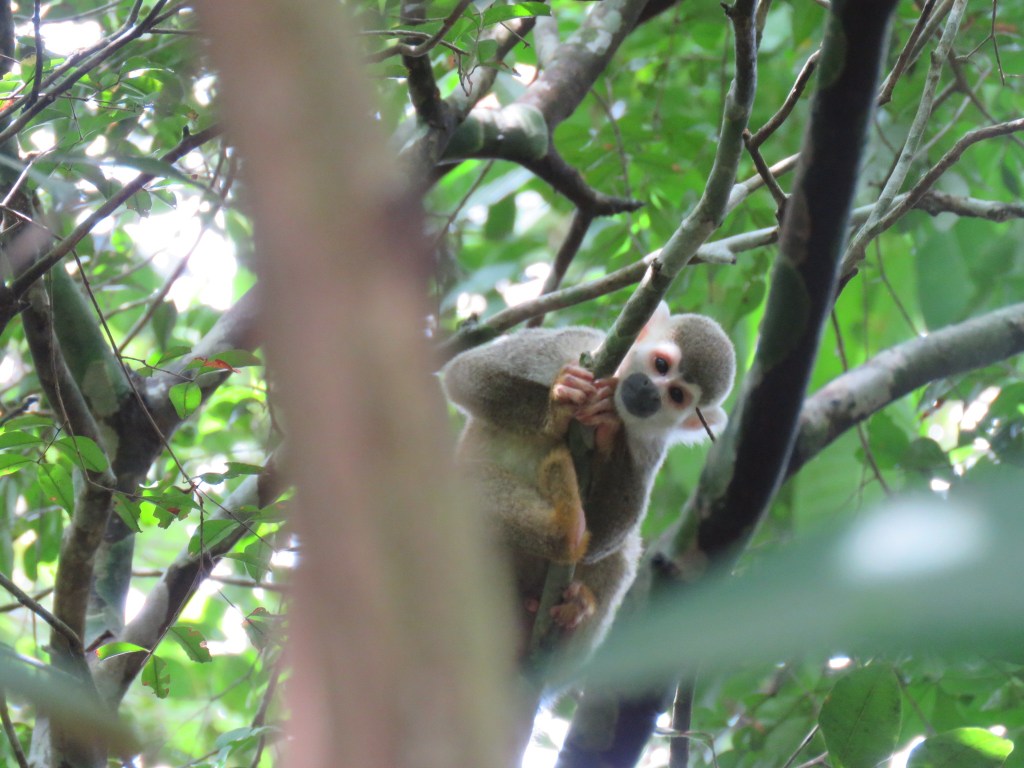
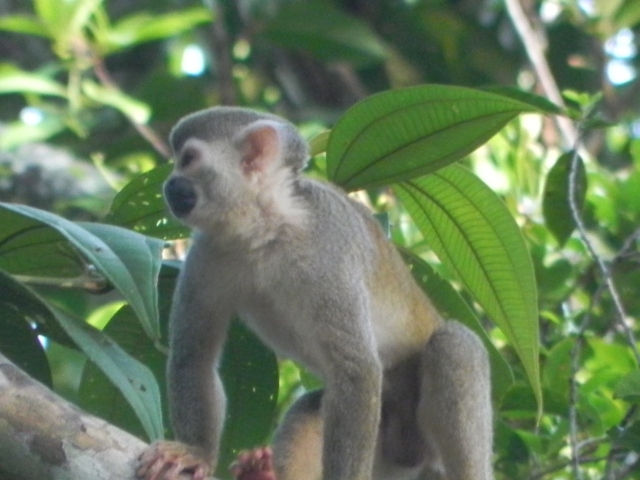
For this article, we share information we collected as part of my master thesis on ecology and behavior of Colombian squirrel monkeys in the study area. This study found that monkeys and lemurs tend to use the ground more in areas with less canopy cover (areas where there are less big trees, such small fragments) and higher temperatures (hotter sites). Also, the species that use more the ground are species that eat more items and not only fruits, for example Colombian squirrel monkeys that eat a lot of insects and spiders and flowers and not only fruits (and bananas as many would think!!). Species that live in larger groups also use the ground more.

Over the years, we also have seen other species using the ground for many activities such as searching for food, movement, play and even interacting with other species. Most of these behaviors are sometimes influenced by lack of trees where the monkeys can move from one fragment of forest to another, that is why it is so important to connect forest fragments with trees. The use of the ground in animals in the study area is not always a natural behavior but something the monkeys need to do because we didn’t give them any other option.

Español: Un artículo de colaboración para entender por qué los monos en Latino América y lemures en Madagascar prefieren usar árboles en vez del suelo para moverse

En este blog, continuamos con nuestra serie sobre artículos basados en la información que hemos estado colectando en el área de estudio en los últimos 20 años. Vamos a hablar de un artículo en el que investigadores trabajando en Latino América y Madagascar usando información colectada en muchos sitios donde monos y lemures se encuentran en vida silvestre para entender mejor porqué en Latino América y Madagascar los primates usan principalmente árboles en vez de en el suelo para moverse, que es más usado por primates en Asia y Africa. Este tipo de artículos requieren información de muchas especies y lugares y los investigadores colaboran y comparten su información para responder preguntas relacionadas con preguntas conceptuales amplias, tales como ¿Cómo la terrestrialidad (moverse en el suelo en vez de sobre los árboles) evoluciona?

Para este artículo, nosotros compartimos información que colectamos como parte de mi tesis de maestría sobre la ecología y comportamiento de los monos titi (frailes) en la zona de estudio. Este estudio encontró que los monos y lemures tienden a usar el suelo más en áreas con menos cobertura del dosel (áreas donde hay menos árboles grandes, como fragmentos pequeños) y altas temperaturas (sitios calientes). También, las especies que usan más el suelo son especies que comen más ítems y no solo frutos, por ejemplo, los monos titis que comen muchos insectos, arañas y flores y no solo frutos (y bananos como muchos pueden pensar). Las especies que viven en grupos grandes también usan el suelo más.

A lo largo de los años, también hemos visto otras especies usando el suelo para muchas actividades tales como buscar alimentos, movimientos, jugar e incluso interactuando con otras especies. La mayoría de estos comportamientos son algunas veces influenciados por la falta de árboles donde los monos puedan moverse de un fragmento de bosque a otro, que es porque es tan importante conectar fragmentos de bosque con árboles. El uso del suelo por animales en el área de estudio no siempre es un comportamiento natural sino que algunas veces los monos necesitan hacerlo porque no tienen ninguna opción.

If you want to support our activities, please visit https://fineartamerica.com/art/xyomara+carretero or get in contact with us at xcarretero@gmail.com if you want to collaborate, donate or volunteer in our activities. You can also support our activities by buying our ornate titi monkeys stuff dolls https://www.instagram.com/p/Ctm_sEORvk8/?igshid=MzRlODBiNWFlZA== and our new journals in Amazon https://www.amazon.com/X-Carretero/dp/B0CWD1DBJM/ref=mp_s_a_1_1?

© Copyright Disclaimer. All pictures used on this web page are protected with copyrights to Xyomara Carretero-Pinzón. If you want to use any of these pictures, please leave a message on the website or contact xcarretero@gmail.com

Monkey Forest Tales: news from the field

In today’s post we are going to talk about some of our recent news from the field. This month field season was a little bit longer due to a small anonymous donation to our field surveys. We continue with our samplings of Colombian squirrel monkey’s babies (Saimiri albigena) in Villavicencio and San Martin. We also had the opportunity to see other primate species during our surveys.

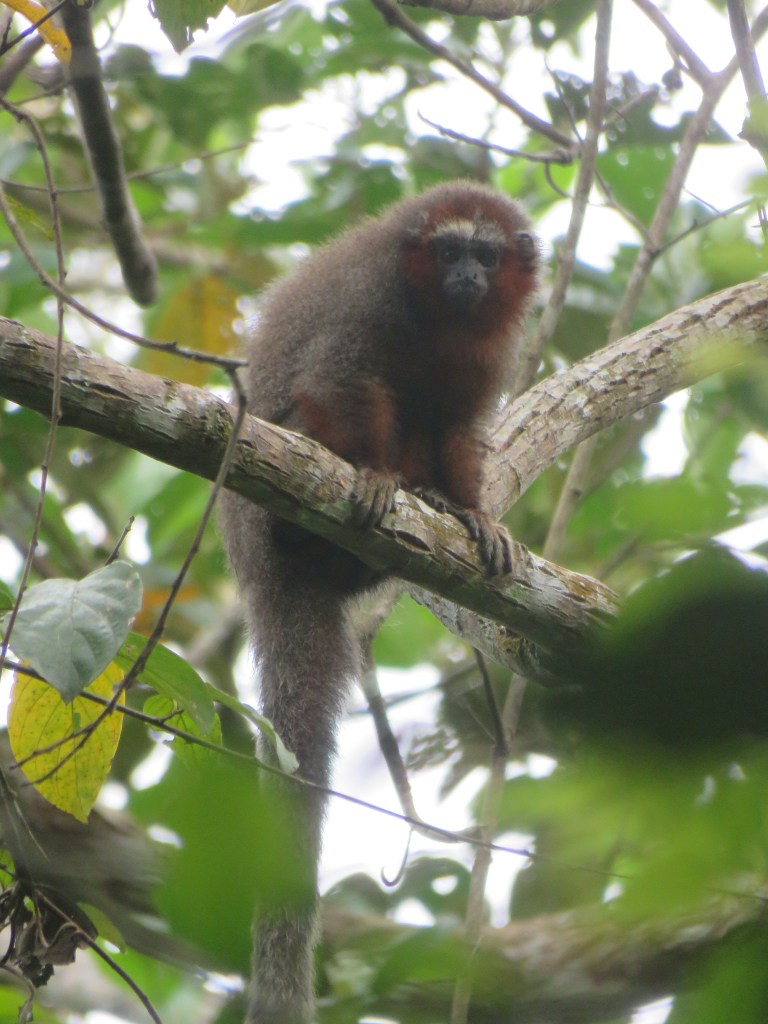
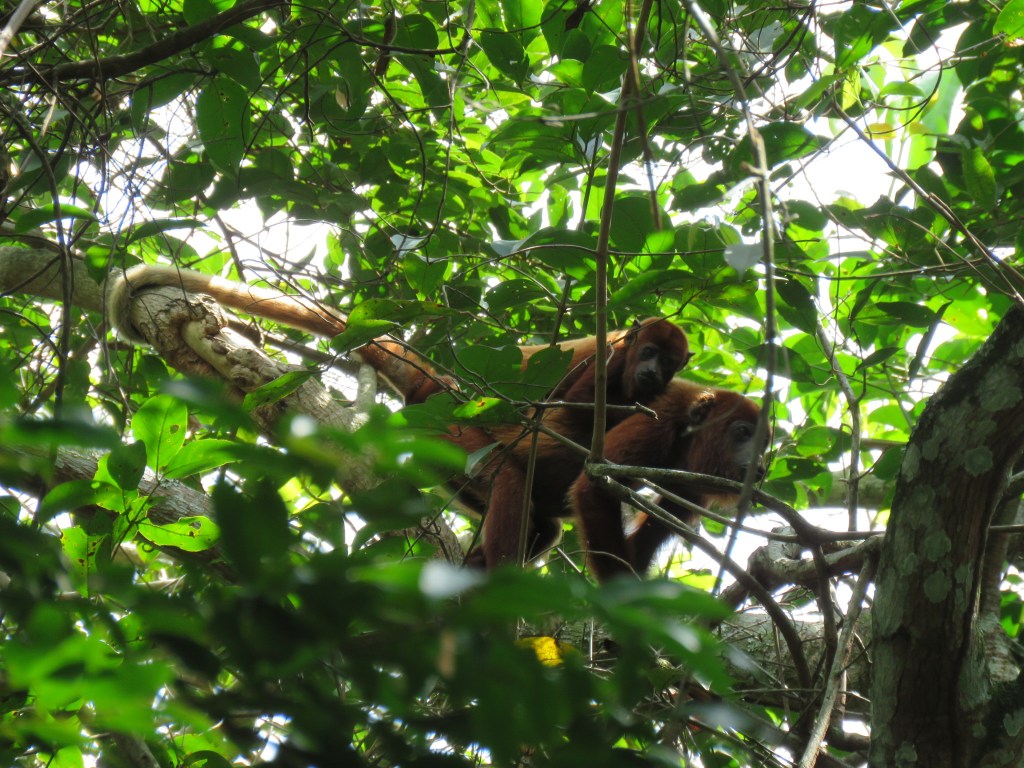
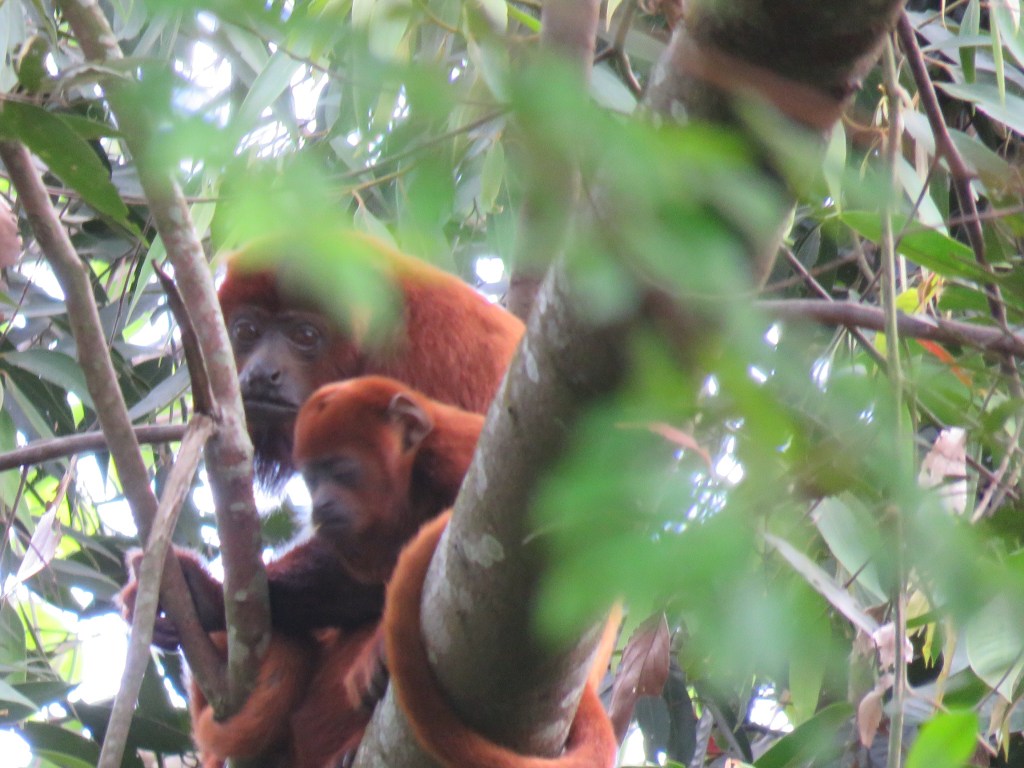
During these surveys we try to count as many monkey groups of black-capped capuchins (Sapajus apella), red howler monkeys (Alouatta seniculus) and ornate titi monkeys (Plecturocebus ornatus) as possible. We also have the opportunity to spend time observing Colombian squirrel monkey’s babies during their first months of their lives. At the moment, Colombian squirrel monkeys have babies from one to three months old. So, some of the older babies are starting to move a little bit away from their mother’s body, starting to bite branches and trying to bite fruits, showing interest in their environment. However, this also means that Colombian squirrel monkey’s babies living in the city, also explore human structures while growing up in the city. Unfortunately, this means that in cities babies bite not only tree branches as well as electricity cables, which is a huge risk for this endemic species of Colombian primate.

It is time for ornate titi monkey’s babies too, however the ornate titi monkey’s groups we had seen up to now didn’t have any. However, we saw one six month old black capped capuchin baby in one of the groups we saw in San Martin. No babies had been observed for red howler monkeys. We will continue surveying monkey groups in both areas and will be able to make an additional sampling in Villanueva next month. Information about when and how many babies are born every year is important information to know the birth rate of monkey’s population. Over the years we have tried to compiled information about as many groups as possible of all monkey’s species in San Martin area, however resources are not always easy to get, so in some years we had not been able to collect all the information necessary, an effort we will try to correct this year and if possible, in the following years.

If you want to support our activities, please visit https://fineartamerica.com/art/xyomara+carretero or get in contact with us at xcarretero@gmail.com if you want to collaborate, donate or volunteer in our activities. You can also support our activities by buying our ornate titi monkeys stuff dolls https://www.instagram.com/p/Ctm_sEORvk8/?igshid=MzRlODBiNWFlZA== and our new journals in Amazon https://www.amazon.com/X-Carretero/dp/B0CWD1DBJM/ref=mp_s_a_1_1?© Copyright Disclaimer. All pictures used on this web page are protected with copyrights to Xyomara Carretero-Pinzón. If you want to use any of these pictures, please leave a message on the website or contact xcarretero@gmail.com
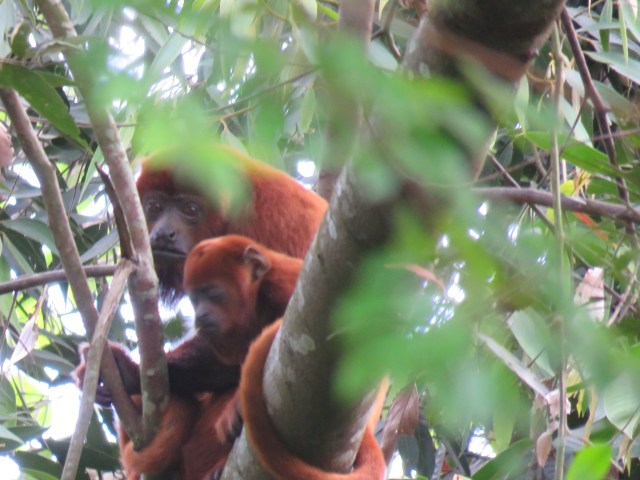
Monkey Forest Tales: More results from nocturnal monkeys (Español abajo)

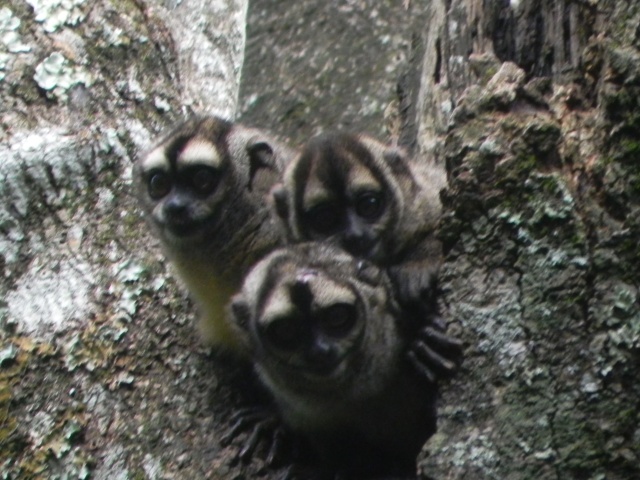
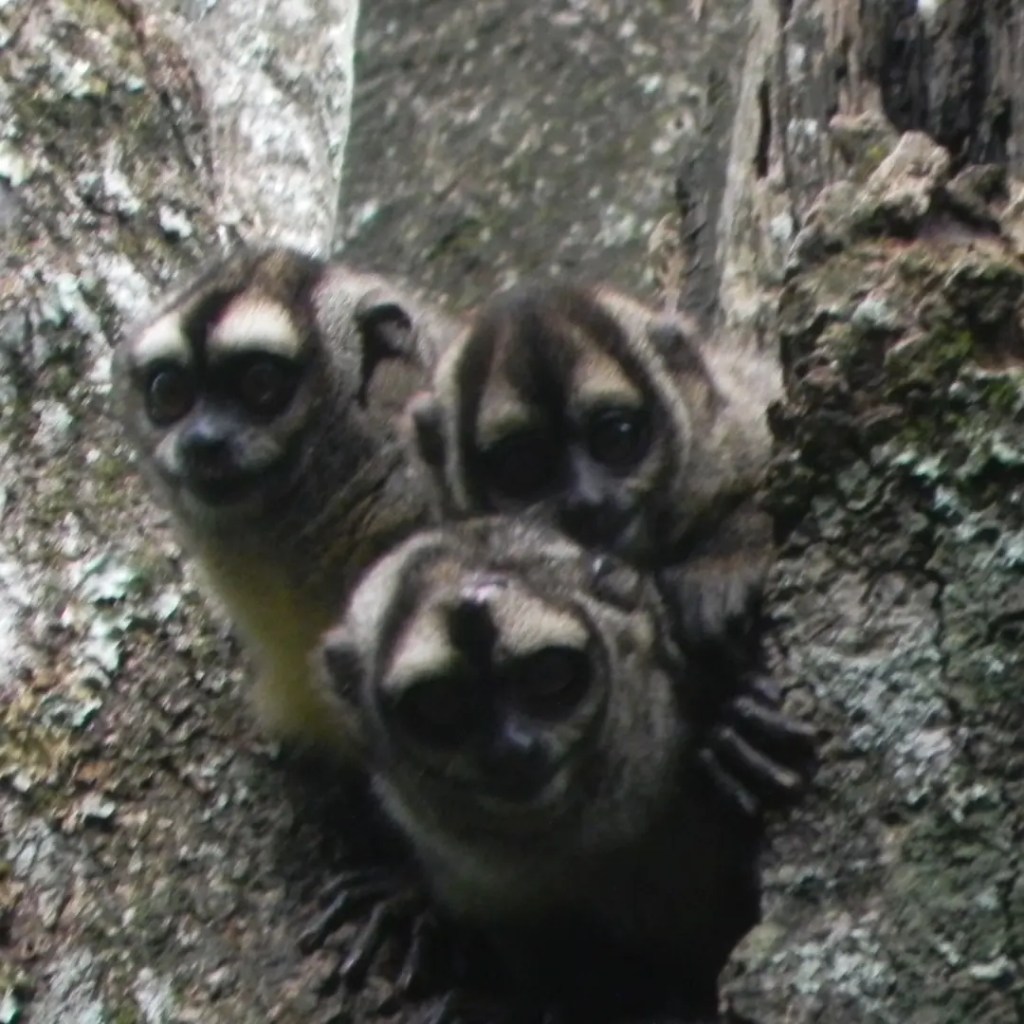
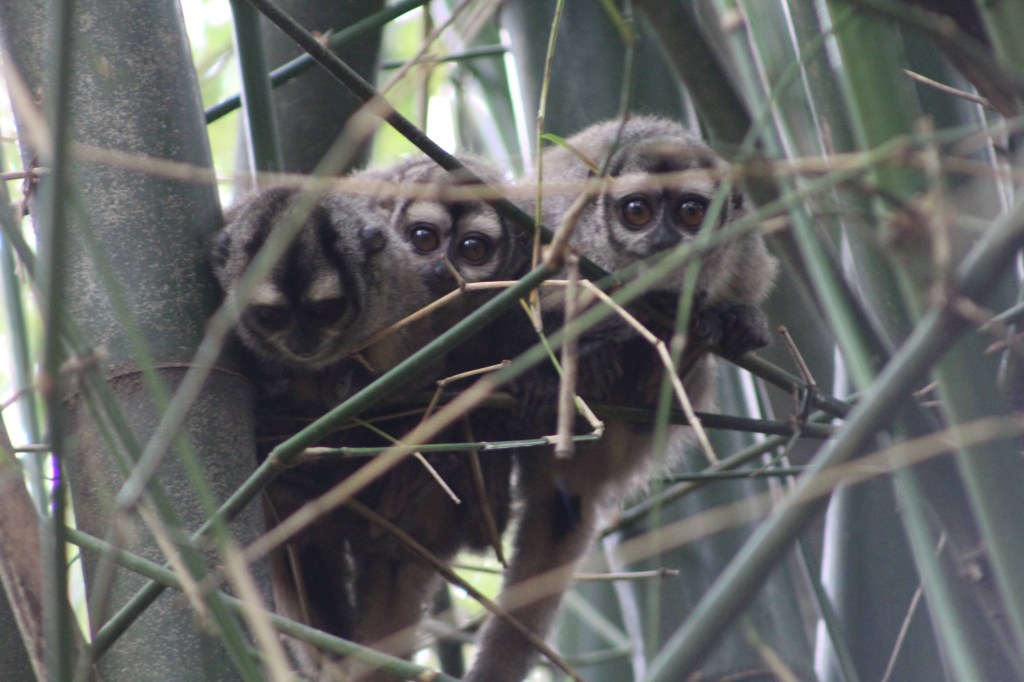
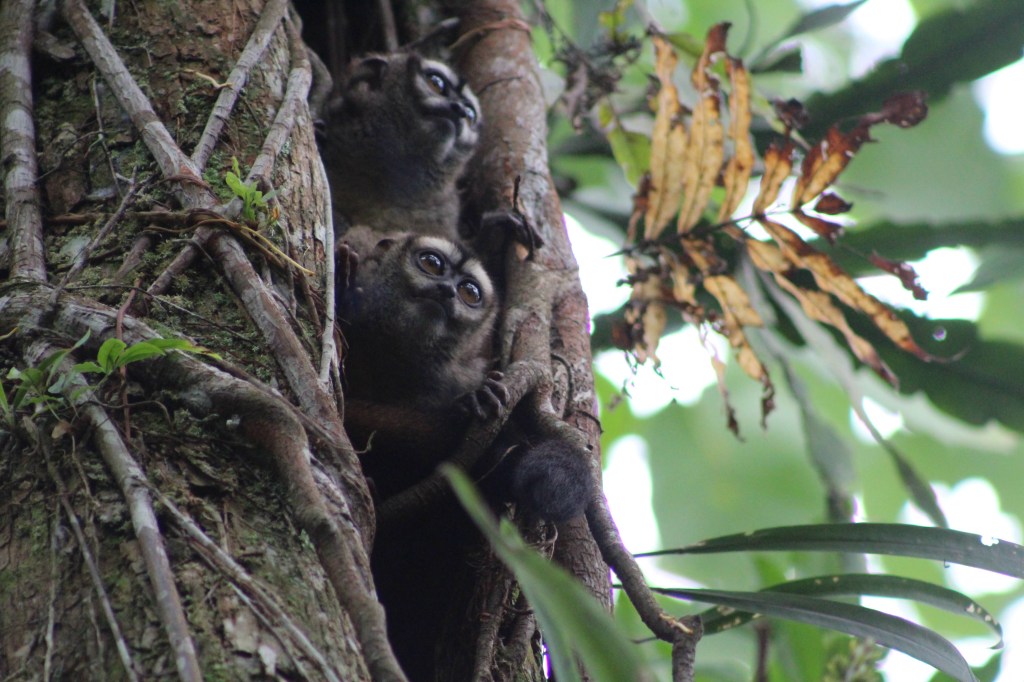
We continue to our series of blogs about some of our recent published results, this time again about Brumback nights monkeys (Aotus brumbacki). Despite the difficulties we had following and even finding these monkeys who move at night, over the years we have been able to make a few observations about what they eat and that is the focus of the short note we are going to talk about today. You can find the note here. In this note we collected observations done during surveys and random encounters with night monkeys. Every time any student, local people or I observed a night monkey group eating any fruit or flower or found a fecal sample, we registered information to identify the tree from which the monkeys were eating. This note has a preliminary list of plants that Brumback night monkey consumed. Why is it important to have a list of plant species consumed by these monkeys? This list can help us to choose plant species useful to regenerate and reforest areas close to places where monkeys live. It also can help us to choose plants to enrich living fences used by monkeys and other animals to move between forest fragments. Have you seen nocturnal monkeys eating fruits or flowers? Share with us your observations!EspañolContinuamos con nuestra serie de blogs acerca de nuestros resultados recientemente publicados, esta vez sobre los monos nocturnos llaneros (Aotus brumbacki). A pesar de las dificultades para seguir e incluso encontrar estos monos que se mueven en la noche, a lo largo de los años hemos podido hacer algunas observaciones sobre lo que comen y ese es el enfoque de la nota de la que vamos a hablar hoy. Puede encontrar la nota aca.

En esta nota reunimos las observaciones realizadas durante muestreos y encuentros al azar con grupos de monos nocturnos. Cada vez que un estudiante, persona local o yo observamos un grupo de mono nocturno comiendo cualquier fruto o flor o cada vez que encontramos heces de estos micos, registramos información para identificar el árbol del que los monos estaban comiendo. Esta nota tiene una lista preliminar de plantas de las cuales los monos nocturnos llaneros se alimentan. ¿Por qué es importante tener una lista de especies consumidas por estos monos? Esta lista puede ayudarnos a escoger las especies de plantas útiles para regenerar y reforestar áreas cercanas a lugares donde los monos viven. También puede ayudarnos a escoger las plantas para enriquecer cercas vivas usadas por los monos y otros animales para moverse entre fragmentos de bosque. ¿Alguna vez has observado a los monos nocturnos comiendo frutos o flores? ¡Comparte tus observaciones con nosotros!If you want to support our activities, please visit https://fineartamerica.com/art/xyomara+carretero or get in contact with us at xcarretero@gmail.com if you want to collaborate, donate or volunteer in our activities. You can also support our activities by buying our ornate titi monkeys stuff dolls https://www.instagram.com/p/Ctm_sEORvk8/?igshid=MzRlODBiNWFlZA== and our new journals in Amazon https://www.amazon.com/X-Carretero/dp/B0CWD1DBJM/ref=mp_s_a_1_1?© Copyright Disclaimer. All pictures used on this web page are protected with copyrights to Xyomara Carretero-Pinzón. If you want to use any of these pictures, please leave a message on the website or contact xcarretero@gmail.com

Monkey Forest Tales: more about our results (Español abajo)

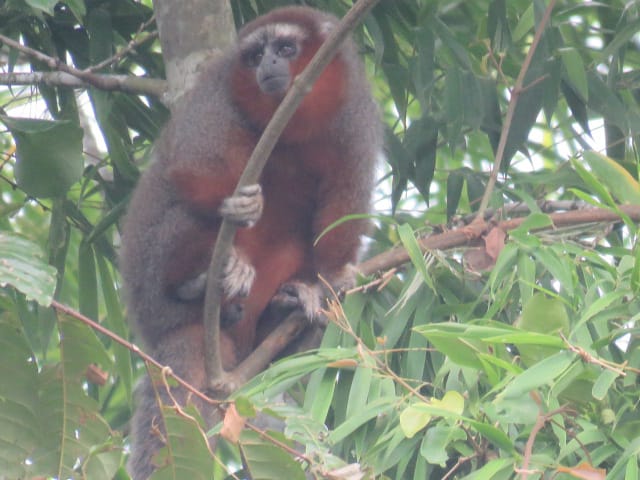
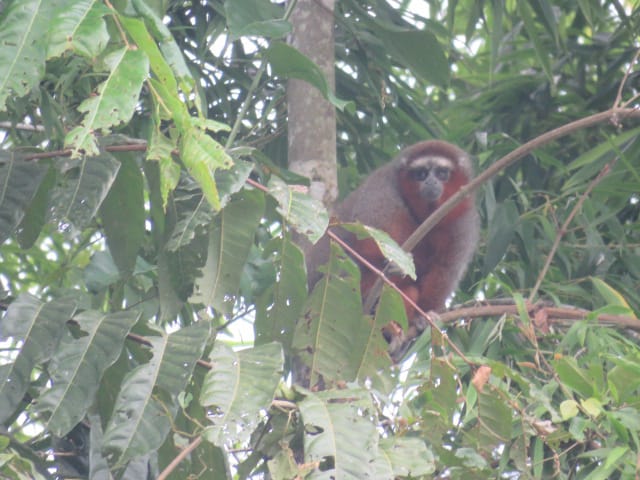
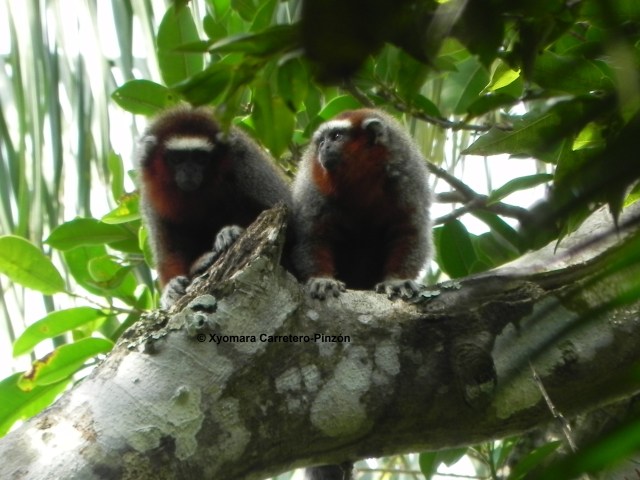
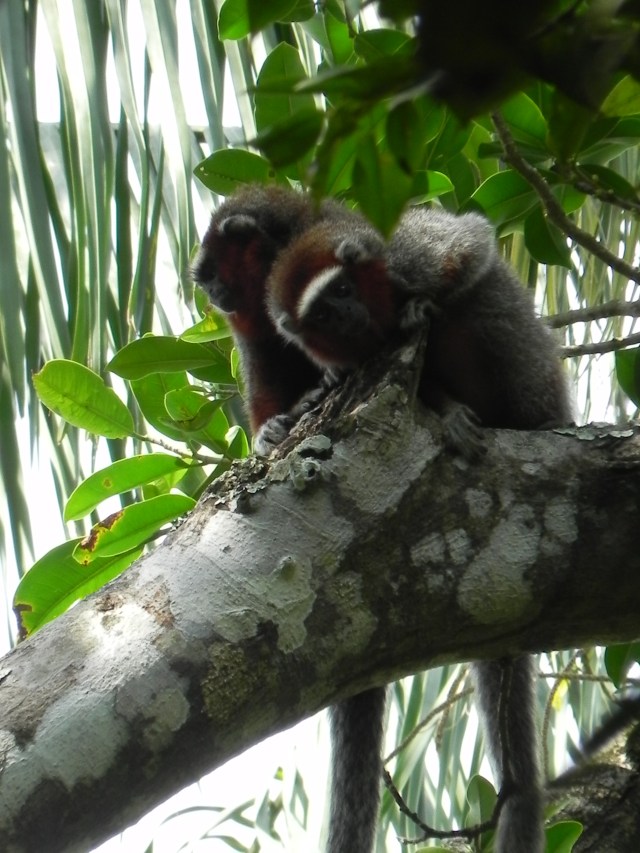
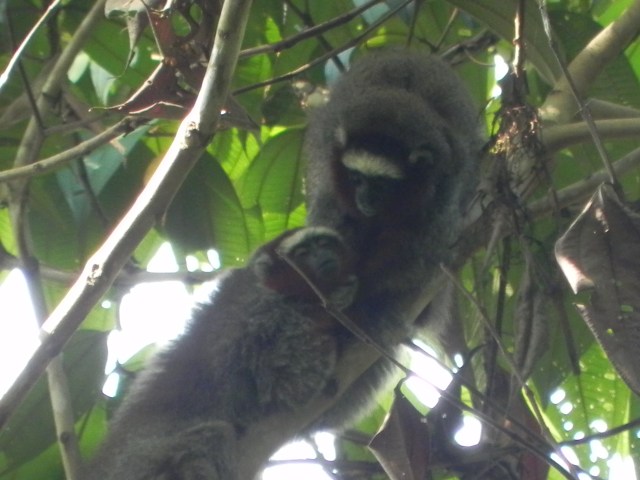
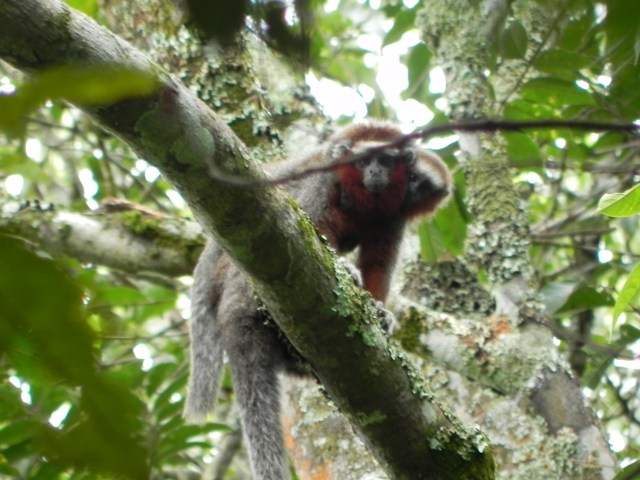
In today’s post we continue with our series of posts about our recent publications. Today in the turn for a paper done with one of my students who did a nice work focus on ornate titi monkeys (Plecturocebus ornatus) back in 2017 that was published recently in Primate Conservation journal. You can find the original paper in this link.

This work aimed to answer two questions: 1) How different was the time spent in different activities by a group of ornate titi monkeys living in a forest fragment surrounded by a more fragmented landscape (i.e. basically a landscape with less forest in it) compared to another group in a less fragmented landscape (i.e. a landscape with more forest in it) and 2) How different were they diet in those same groups?

Basically, we found that time spent feeding and moving were different between the groups, showing more time spent feeding in the group living in a more fragmented landscape. However, both groups eat mostly fruit. The group in the more fragmented landscapes also eats more leaves and arthropods (i.e. insects and spiders) than the group in the less fragmented landscape. These findings showed us that alterations in the landscape are affecting the time that ornate titi monkeys spent doing different activities, but especially the time they spent looking for food and eating. In terms of conservation of this endemic species of Colombia, there are to important applications of these results. First, considering the landscape around the forest fragments in which ornate titi monkeys is important to ensure that their behavior is not changed and second, we included a list of plants of which this species eat its fruits, and those plants can be used in regenerating and reforestation projects to increase connectivity of forest fragments in which this species inhabits.

Más acerca de nuestros resultados

En el blog de hoy continuamos nuestra serie de blogs acerca de nuestras últimas publicaciones. Hoy el turno es para un artículo realizado con una de mis estudiantes quien hizo un trabajo muy bonito enfocado en el mono zocay (Plecturocebus ornatus) en el 2017, que fue recientemente publicado en la revista Primate Conservation. Puede encontrar el enlace al artículo aca.

Este trabajo se enfocó en dos preguntas: 1) Qué tan diferente es el tiempo empleado en las diferentes actividades por un grupo de mono zocay viviendo en un fragmento rodeado por un paisaje más fragmentado (es decir, básicamente un paisaje que tiene menos bosque), comparado con otro grupo en un paisaje menos fragmentado (es decir, con más bosque). 2) qué tan diferente es la dieta (lo que comen) de esos mismos grupos.

Básicamente, encontramos que hay diferencias en el tiempo empleado por los dos grupos en alimentarse y moverse, con el grupo en el paisaje más fragmentado dedicando más tiempo a alimentarse. Sin embargo, los dos grupos se alimentan principalmente de frutos. El grupo en el paisaje más fragmentado también comió más hojas y artrópodos (insectos y arañas) comparado con el grupo del paisaje menos fragmentado. Estos resultados muestran que las alteraciones en el paisaje están afectando el tiempo que los monos zocay gastan para buscar comida y consumirla. En términos de conservación para esta especie endémica colombiana existen dos aplicaciones importantes de estos resultados. Primero, considerar el paisaje alrededor de los fragmentos en los cuales están los monos zocay es importante para asegurar que su comportamiento no cambie, y segundo, incluimos una lista de plantas de las que los monos zocay consumen sus frutos y esas plantas pueden ser usadas para proyectos de regeneración y reforestación para incrementar la conectividad de lo fragmentos de bosque en los que esta especie habita.

If you want to support our activities, please visit https://fineartamerica.com/art/xyomara+carretero or get in contact with us at xcarretero@gmail.com if you want to collaborate, donate or volunteer in our activities. You can also support our activities by buying our ornate titi monkeys stuff dolls https://www.instagram.com/p/Ctm_sEORvk8/?igshid=MzRlODBiNWFlZA== and our new journals in Amazon https://www.amazon.com/X-Carretero/dp/B0CWD1DBJM/ref=mp_s_a_1_1?

© Copyright Disclaimer. All pictures used on this web page are protected with copyrights to Xyomara Carretero-Pinzón. Pictures rights in this post belongs to Cesar Angel, Francisco Gomez and Xyomara Carretero-Pinzón. If you want to use any of these pictures, please leave a message on the website or contact xcarretero@gmail.com

Monkey Forest Tales: About some of our findings and field news (Español abajo)

In today’s post we are going to talk a bit about some of our published findings. It will be a series of blog posts in which we are talking about some of our results, however this doesn’t mean that if you want to compare our results with yours, you don’t have to read the whole paper. The purpose of doing this exercise is to practice how to present our results in a simpler way. Also, when we have some news about our work in the field we will share this news with you, but as we are not spending that much time in the field at the moment, we are going to try to talk about what we have published up to know.We are going to start with a short note that we mention a couple of posts before about the nest sites from Brumback night monkeys (Aotus brumbacki). You can access the complete note in this link. In this note we describe some features of the nest of this endemic Colombian species that we observed over the past 20 years in San Martín, Villavicencio and Cumaral. We describe the plant species in which these nests were observed as well as the height and we describe some features of the landscapes surrounding the forest fragments where these nests were found. We found a wide diversity of hole trees, alive and dead palms, Guadua and bamboo stands and even house roofs. This is important to know because this species is found in an area of Colombia that has a lot of deforestation and hole trees, and palm trees are not always easy to find. These are nocturnal monkeys that need a safe, dark and dry site to spend the day. In small forest fragments these kinds of structures (hole trees, especially) are not abundant because they are easy to fell down during big storms with a lot of wind. Have you ever seen nocturnal monkeys’ nest? Where in Colombia? Share your observations in the commentsIn the past weeks, we had been monitoring some of the Colombian squirrel monkey’s groups (Saimiri albigena) in Villavicencio area. As we mentioned in one of our blogs in January, this is the baby’s season for this species, and we are happy to say that a couple of new babies were born and the ones we saw last month are growing. There are also a few females with really big bellies, close to birth date. It is always a challenge and a joy to observe these beautiful monkeys during this time of the year. Definitely one of the times in which I feel more joy to be able to witness new life in this planet that we all share…Acerca de algunos de nuestros resultados y noticias del campoEn el blog de hoy vamos a hablar un poco sobre nuestros resultados publicados. Será una serie de blogs en los cuales hablaremos acerca de algunos de nuestros resultados, sin embargo, esto no quiere decir que, si quieres comparar nuestros resultados con los tuyos, no tengas que leer el artículo completo. El propósito de hacer este ejercicio es practicar cómo presentar nuestros resultados en una forma más sencilla. También, cuando tengamos algunas noticias sobre nuestro trabajo en el campo, compartiremos esas noticias con ustedes, pero cómo no estamos pasando tanto tiempo en el campo en este momento, vamos a tratar de hablar de lo que hemos publicado hasta ahora.Vamos a iniciar con una nota que mencionamos hace un par de blogs anteriores sobre los nidos del mono nocturno llanero (Aotus brumbacki). Pueden acceder a la nota completa en este enlace. En esta nota describimos algunas características de los nidos de esta especie endémica colombiana que hemos observado en los últimos 20 años en San Martín, Villavicencio y Cumaral. Describimos las especies de plantas en las que los nidos fueron encontrados, así como su altura, y describimos algunas características del paisaje alrededor de los fragmentos de bosque donde los nidos fueron encontrados. Encontramos una gran diversidad de árboles con huecos, palmas vivas y muertas, guaduales o bambusales e incluso techos de casas. Esto es importante de conocer porque esta especie se encuentra en un área de Colombia que tiene mucha deforestación, y los árboles con huecos y las palmas no son fáciles de encontrar. Estos son monos nocturnos que necesitan un lugar seguro, oscuro y seco para pasar el día. En fragmentos de bosque pequeños estos tipos de estructuras (árboles con huecos, especialmente) no son abundantes debido a que es fácil que se caigan durante tormentas grandes con mucho viento. ¿Alguna vez has visto nidos de monos nocturnos? ¿Dónde en Colombia? ¡Comparte tus observaciones en los comentarios!En las semanas pasadas, hemos estado monitoreando algunos de los grupos de monos titis (Saimiri albigena) en el área de Villavicencio. Como lo mencionamos en uno de los blogs de enero, está es la época de nacimientos para esta especie y estamos felices de decirles que hay nuevos bebes y los que nacieron el mes pasado están creciendo. También hay algunas hembras con grandes barrigas, próximas a tener bebes. Siempre es un reto y una alegría observar estos hermosos monos durante este periodo del año. Definitivamente uno de los momentos en los que siento más felicidad de tener la oportunidad de presenciar nueva vida en este planeta que todos compartimos…If you want to support our activities, please visit https://fineartamerica.com/art/xyomara+carretero or get in contact with us at xcarretero@gmail.com if you want to collaborate, donate or volunteer in our activities. You can also support our activities by buying our ornate titi monkeys stuff dolls https://www.instagram.com/p/Ctm_sEORvk8/?igshid=MzRlODBiNWFlZA== and our new journals in Amazon https://www.amazon.com/X-Carretero/dp/B0CWD1DBJM/ref=mp_s_a_1_1?© Copyright Disclaimer. All pictures used on this web page are protected with copyrights to Xyomara Carretero-Pinzón. Pictures in this post from Martha L. Ortiz and Xyomara Carretero-Pinzón. If you want to use any of these pictures, please leave a message on the website or contact xcarretero@gmail.com

Monkey Forest Tales: Importance of sharing our findings in academic and non-academic environments

In today’s post we are going to discuss why is so important that we share our results and findings in academic and non-academic environments. This is especially important to students finishing their undergraduate thesis. The reason why is this so important is because most of the results and findings from student’s work can improve the decision-making process and policy implementation of conservation and managing actions. Additionally, all information, even basic information, that a lot of student’s research produce becomes accumulative information that can be used to understand how to conserve those species studied. No publishing that information, including not presenting any part of that in a scientific conference, makes that information less available and sometimes difficult to access for people looking for that type of results to better make decisions on conservation

How to choose those academic and non-academic environments? Well, that will depend on the type of results and findings and the kind of impact that you wish those results will make. It also depends on your resources and connections. Choosing an academic conference will depend on your topic and resources you have available to choose a national or international conference.

Over the years I had been in several academic conferences and, probably in fewer occasions, also in non-academic environments (trainings, community meetings, stake-holder’s meetings). My efforts to share my results had leads me to this blog also. How I make the decision to go to a conference or not, usually depends on financial resources and how much the topics on the conference interest me and make me excited to hear about other people’s results. On some occasions I had been fortunate enough to get funding but at the beginning a lot of my conference’s expenses where cover by myself and if you want a career that involves the academy world, it is a consideration you need to take in account. A lot of fellowships and grants to cover advanced degrees such as master’s and doctorates are given to people who assist to conferences and have publications. So, if you want to be a professor in a university, this is one of the many activities in which you have to involve yourself, conferences and publishing articles.

As mention in my last blogs, resources for this year research are reduced so, we will try to share with you some of the main results of our research as part of publishing, hopefully, in a more simpler way our findings as well as giving you some little updates on our limited fieldwork for this year…More soon!!!

If you want to support our activities, please visit https://fineartamerica.com/art/xyomara+carretero or get in contact with us at xcarretero@gmail.com if you want to collaborate, donate or volunteer in our activities. You can also support our activities by buying our ornate titi monkeys stuff dolls https://www.instagram.com/p/Ctm_sEORvk8/?igshid=MzRlODBiNWFlZA== and our new journals in Amazon https://www.amazon.com/X-Carretero/dp/B0CWD1DBJM/ref=mp_s_a_1_1?

© Copyright Disclaimer. All pictures used on this web page are protected with copyrights to Xyomara Carretero-Pinzón. If you want to use any of these pictures, please leave a message on the website or contact xcarretero@gmail.com
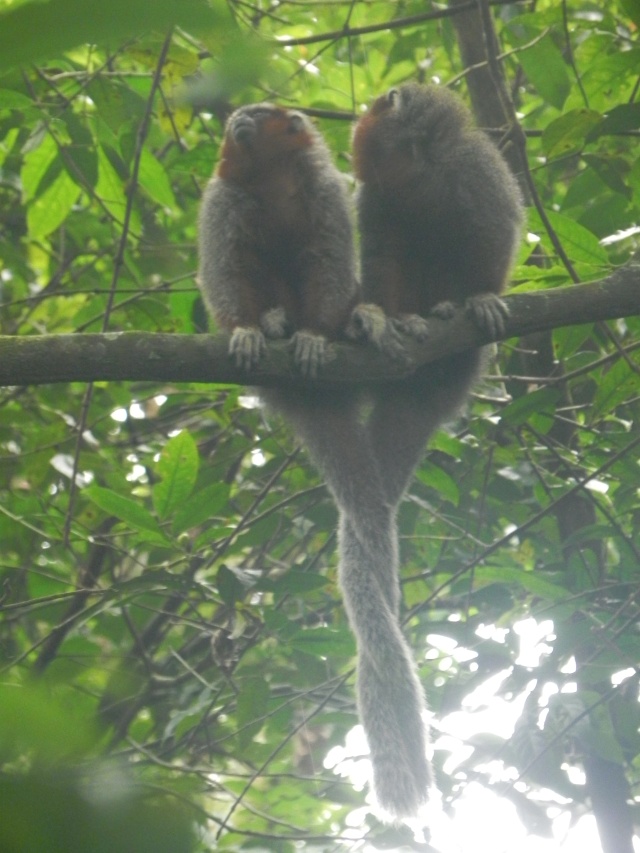
 

Monkey Forest Tales: Its babies season again

In today’s post we are talking about some news from the field. As every year, at the beginning of the year, Colombian squirrel monkeys (Saimiri albigena) started its birth season and despite our limited budget for this year, we started our counting of Colombian squirrel monkeys. And new babies are born in some of the groups we had been monitoring over the years. It is always exciting when we see Colombian squirrel monkeys at this time of the year, and we notice new babies. For now, some group already had a few babies while other groups did not have births, yet. Hopefully will be able to continue monitoring these groups over the following months to see the progress of those new babies. We also were able to notice some of the babies from last year season made it to their first year that is also great to see as mortalities seems to be high in the first year in some groups.We also continue looking for funding opportunities to continue working with this and other groups of monkeys in all our areas of study. Our efforts are also focused on trying to publish all the information product of our fieldwork and we are happy to share with you that part of our work with Brumback night monkeys (Aotus brumbacki) was published. We describe the diversity of nest site used by this species in areas around San Martín, Acacias, Villavicencio, Cumaral and Restrepo. This was a collaboration with Dr. Martha Ortiz-Moreno from Los Llanos University, a regional university located in Villavicencio. If you want to read this publication please go to https://doi.org/10.47603/mano.v9m2.394

We are finishing two additional publications: another one on Brumback night monkeys and variables affecting their presence and abundance and one on ornate titi monkey (Plecturocebus ornatus) activity patterns and diet in fragmented landscapes. More news on these papers soon…

If you want to support our activities, please visit https://fineartamerica.com/art/xyomara+carretero or get in contact with us at xcarretero@gmail.com if you want to collaborate, donate or volunteer in our activities. You can also support our activities by buying our ornate titi monkeys stuff dolls https://www.instagram.com/p/Ctm_sEORvk8/?igshid=MzRlODBiNWFlZA== and our new journals in Amazon https://www.amazon.com/X-Carretero/dp/B0CWD1DBJM/ref=mp_s_a_1_1?© Copyright Disclaimer. All pictures used on this web page are protected with copyrights to Xyomara Carretero-Pinzón. If you want to use any of these pictures, please leave a message on the website or contact xcarretero@gmail.com

Monkey Forest Tales: Planning for 2025

In today’s post, the first of 2025 we are going to talk about our plans for this new year work. This year started with a big challenge; we didn’t get funding for our proposed activities that will also was going to help us to continue our monitoring of primate populations in small fragments located in private land. Every time I face this rejection make me wonder if one of the reasons for these rejections had something to do with being working in private lands or because all the species with which we work are categorized as Vulnerable or Low Concern and therefore, they seem to have more time for them before they need urgent help. It also makes me wonder about my communication skills and how much I still need to learn about funding applications, despite rejections being part of science it is still difficult to get through the fist shock of each grant rejection. However, we still have plans for this 2025 and will continue applying for grants over the following months to try to achieve our plans.We are planning to continue monitoring primate populations in small fragments located in private lands as demography data and birth and death mortalities for the three endemic species in our study area doesn’t exist and it is data difficult to get due to monkey’s long-life span. Despite the 20 year we had being in the study area, some years we don’t have good enough data, and it is important for the conservation of our species of study.

We also want to implement a couple of pilot projects using ornate titi monkeys as flag species: one focus on education of small children and the second focus on connecting small fragments through living fences. As I mention in our last post of 2024, one of the main messages from our ornate titi monkey distribution project is the need to connect and protect every single forest fragment present in the distribution area of this endemic species, especially in the north, as it is highly fragmented and the two National Parks in which the species is present seems to be not very effective if its deforestation rates continue to increase as it had done over the past decade.These two pilot projects hopefully can be replicated to other areas of the distribution of ornate titi monkeys, which also are need it of connectivity measures that help not only ornate titi monkeys but other charismatic species. One of these areas in which we hope to start working during the new year is Vista Hermosa, where local tourism guides are very interested in help to protect ornate titi monkeys.

A more desktop type of project we like to work on during this year are some of our management data that needs to be publish as well as a connectivity project based on the information we collected over the past two years for two of the endemic species in our study area, Colombian squirrel monkeys (Saimiri albigena) and ornate titi monkeys (Plecturocebus ornatus), both categorized as Vulnerable. Hope fully we will get funding to make all these plans possible in the new year…

If you want to support our activities, please visit https://fineartamerica.com/art/xyomara+carretero or get in contact with us at xcarretero@gmail.com if you want to collaborate, donate or volunteer in our activities. You can also support our activities by buying our ornate titi monkeys stuff dolls https://www.instagram.com/p/Ctm_sEORvk8/?igshid=MzRlODBiNWFlZA== and our new journals in Amazon https://www.amazon.com/X-Carretero/dp/B0CWD1DBJM/ref=mp_s_a_1_1?© Copyright Disclaimer. All pictures used on this web page are protected with copyrights to Xyomara Carretero-Pinzón. If you want to use any of these pictures, please leave a message on the website or contact xcarretero@gmail.com
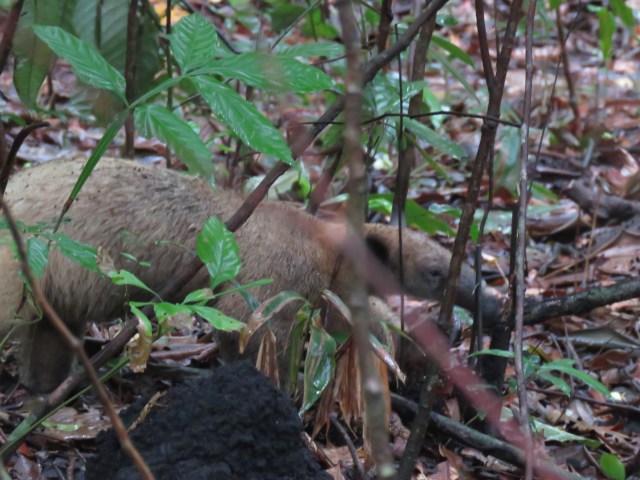
Monkey Forest Tales: Balance of 2024

Today’s is our last post of the year, and we want to make a balance of this year work. It had been an exciting year, our 20th year celebration in San Martin was a small gathering of people who supported this year in different years and at different levels. We also receive lots of messages from people who couldn´t make it but were excited for us. We also had the fortune to received support for one of our main goals of this year, a revision of ornate titi monkey distribution, Plecturocebus ornatus, so again thank you to Little Chalcraft Fund and Primate Conservation Inc. for supporting our activities in this project, we will have more news on the final result of this project in following months. With this project we also were able to witness the current situation of this and other endemic species in areas of their distribution limits as well as witness some of the threats that continuous increase in some areas such as deforestation.

We continue with our primate population monitoring in Villavicencio, San Martin and Villanueva towns. This is probably one of the main parts of our work that would like to get more support in the next year. It seems that 20 year is a long term however with monkeys living over several decades, we are still collecting data to see how well the population is, despite of being stable until now.

We also were able to finish a challenging and very interesting project on Brumback nocturnal monkeys, Aotus brumbacki, in collaboration with Dr. Martha L. Ortiz from Los Llanos university to establish variables at different scales influencing the presence and relative abundance of this endemic primate. A project that proved to be challenging physically and logistically. We are working in this project results publication at this moment.

We also were successful this year to present our work in different scenarios which is an important part of doing science. Hopefully our message of urgency to connect and protect forest fragments regardless of their size in private lands had been heard…probably one of the things in which we will need to work more in the new year.

Merry Christmas and Happy New Year!!!

If you want to support our activities, please visit https://fineartamerica.com/art/xyomara+carretero or get in contact with us at xcarretero@gmail.com if you want to collaborate, donate or volunteer in our activities. You can also support our activities by buying our ornate titi monkeys stuff dolls https://www.instagram.com/p/Ctm_sEORvk8/?igshid=MzRlODBiNWFlZA== and our new journals in Amazon https://www.amazon.com/X-Carretero/dp/B0CWD1DBJM/ref=mp_s_a_1_1?© Copyright Disclaimer. All pictures used on this web page are protected with copyrights to Xyomara Carretero-Pinzón. If you want to use any of these pictures, please leave a message on the website or contact xcarretero@gmail.com

Monkeys Forest Tales: news from the field

In today’s post we continue with some news about our fieldwork, this month we are finishing our project about the distribution limits of ornate titi monkeys (Plecturocebus ornatus). In our last fieldtrip we finished to survey the eastern limits of this endemic primate with very few observations. Changes in soil and vegetation could be part of the reason why this species is not found in the most eastern part of this area, however another reason could be related with the high transformation of this region. Meta department had extensive areas dedicated to cattle ranching and agriculture. This department have crops of plantain, cacao, corn, rice and manioc, and fruits such as passion fruit, papaya, pineapple, guava and watermelon, as well as the extensive areas dedicated to palm oil plantations. This transformation had a high impact in the forest fragments persisting in these landscapes, with extensive areas cover only by palm oil plantations, some with living fences used by primates, but other areas without any structures that improves landscape connectivity.

Our observations during this project also highlighted the need for canopy bridges to help primates to cross high traffic roads. Some part of the main roads in Meta department had canopy bridges used by primate species from the area, however remote roads didn’t have any and it is evident that at least in some areas these structures are necessary. Use of living fences and fragments next to roads is common for all primate species present in the area and this proximity to roads increase their risk to car collisions. Data on the frequency of these collisions and species who are more prone to these accidents is scarce. We also observe groups of feral dogs close to roads and traveling towards forest fragments that also represent a threat to primate species.So, as it is common for me while I’m in the field, every fieldtrip leaves with more questions than answers and a feeling of more uncertainty about the future of the primate species living in fragmented landscapes. Hopefully we will be able to continue with this project for more years and as much as possible contribute to the survivorship of primate species in this area of Colombia.

If you want to support our activities, please visit https://fineartamerica.com/art/xyomara+carretero or get in contact with us at xcarretero@gmail.com if you want to collaborate, donate or volunteer in our activities. You can also support our activities by buying our ornate titi monkeys stuff dolls https://www.instagram.com/p/Ctm_sEORvk8/?igshid=MzRlODBiNWFlZA== and our new journals in Amazon https://www.amazon.com/X-Carretero/dp/B0CWD1DBJM/ref=mp_s_a_1_1?© Copyright Disclaimer. All pictures used on this web page are protected with copyrights to Xyomara Carretero-Pinzón. If you want to use any of these pictures, please leave a message on the website or contact xcarretero@gmail.com