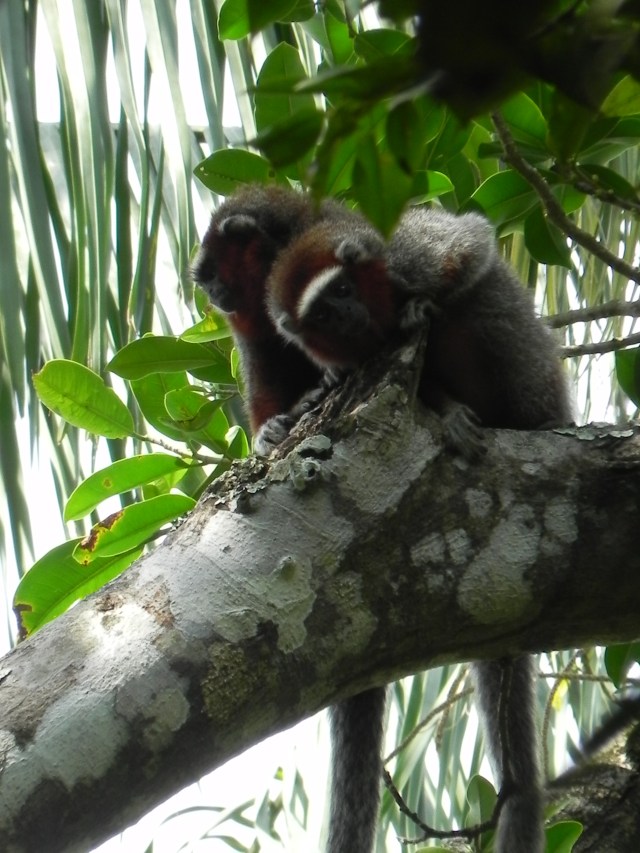
Monkey Forest Tales: Zocay Project balance of 2023- Part 2: collaborations and projects

In today’s post we are going to talk about the second part of our year’s balance for this ending year 2023. This second part is about collaborations and project. This was a year full of both of them.
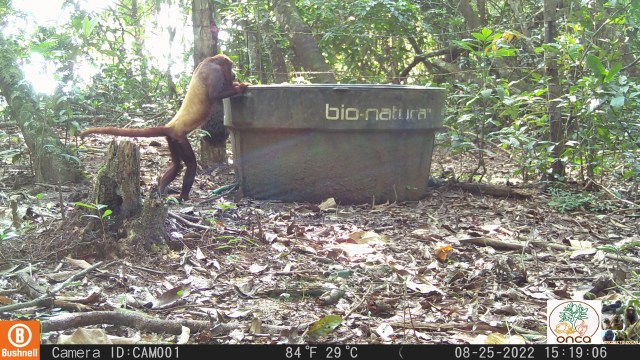
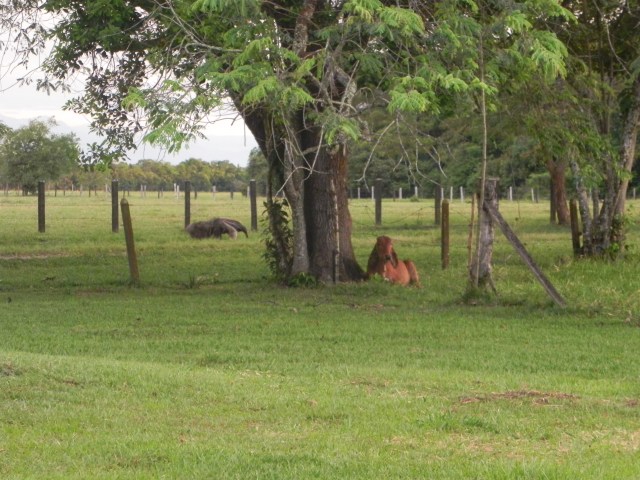
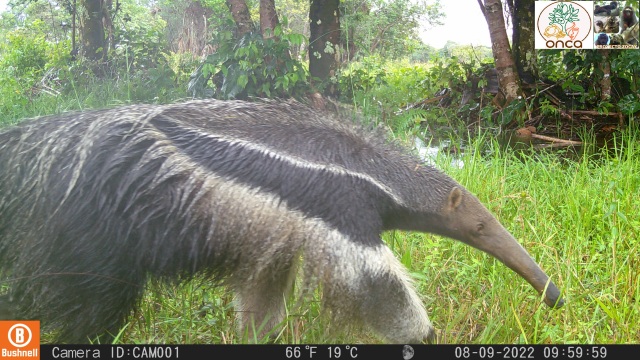
As mentioned in our last post we collaborate with Onca foundation in our camera trap project. This project is already finished but we will be writing a paper with the main results of this project in following months. If you want to know some of the exciting recommendations result from this project visit our post about it here.
However, this wasn’t our only collaboration this year, additionally we collaborate with SUSA group from Universidad de Los Llanos, especially with Dr. Martha Ortiz with who we are developing a landscape scale project about the effects of landscape variable on Brucmback night monkeys (Aotus brumbacki) presence in fragmented landscapes, hopefully at the beginning of next year we will give you some news on the results of this exciting project. In this project we also continue collaborating with Cumaral Biodiversa and Finca El Silencio in Cumaral town where groups of this species usually are found close to the urban area.

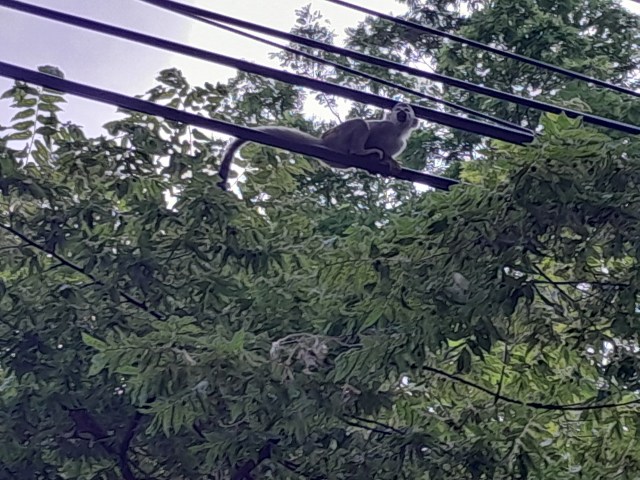
This year we also support an incredible and dedicated student from Nuevo Gimnasio School in Villavicencio who study Colombian squirrel monkeys behaviour who is feed by tourist and local people. If you want to know more about his experience, read here.
We also launched a citizen science project to complement the data we had been collected for a couple of years now about dusky titi monkeys (Plecturocebus ornatus), an endemic species of Colombia, which distribution area is mostly in fragmented areas. We area also waiting for some funding to clarify some of its distribution limits, so hopefully we will have some exciting news about this project in the following months. For now, we want to thank all private reserves and organizations that already send us its data to make this project possible. If you want to collaborate, share your data with us or volunteer with us in this project please see our post about this exciting project here.
We also continue collecting data about primate populations living in fragmented areas of San Martin and Villanueva towns, and Villavicencio city where we continue doing group’s counting and, in some areas of San Martin town, we continue monitoring groups that had been observed now for almost two decades in terms of demographic and ecological data. This data is focus on the monkey species present in each zone. We are grateful with all landowners that allowed us to make samplings in their lands for almost two decades.
If you want to support our activities, please visit https://fineartamerica.com/art/xyomara+carretero or get in contact with as at xcarretero@gmail.com if you want to collaborate, donate or volunteer in our activities. You can also support our activities by buying our dusky titi monkeys stuff dolls https://www.instagram.com/p/Ctm_sEORvk8/?igshid=MzRlODBiNWFlZA==
© Copyright Disclaimer. All pictures used on this web page are protected with copyrights to Xyomara Carretero-Pinzón. Video in this post reproduced with permission from Jose Vasquez. If you want to use any of these pictures, please leave a message on the website.

Aotus brumbacki group filmed by Jose Vasquez in a farm of San Marin town

Monkey Forest Tales: Balance of Zocay Project activities in 2023 – Part 1: events participation

In today’s post we are going to start our year’s balance for this ending year 2023. This year was an intense and dynamic year for us with multiple participations in conferences and talks with different audiences, from scientific to kids. As well as assistance to regional events and technical discussions.
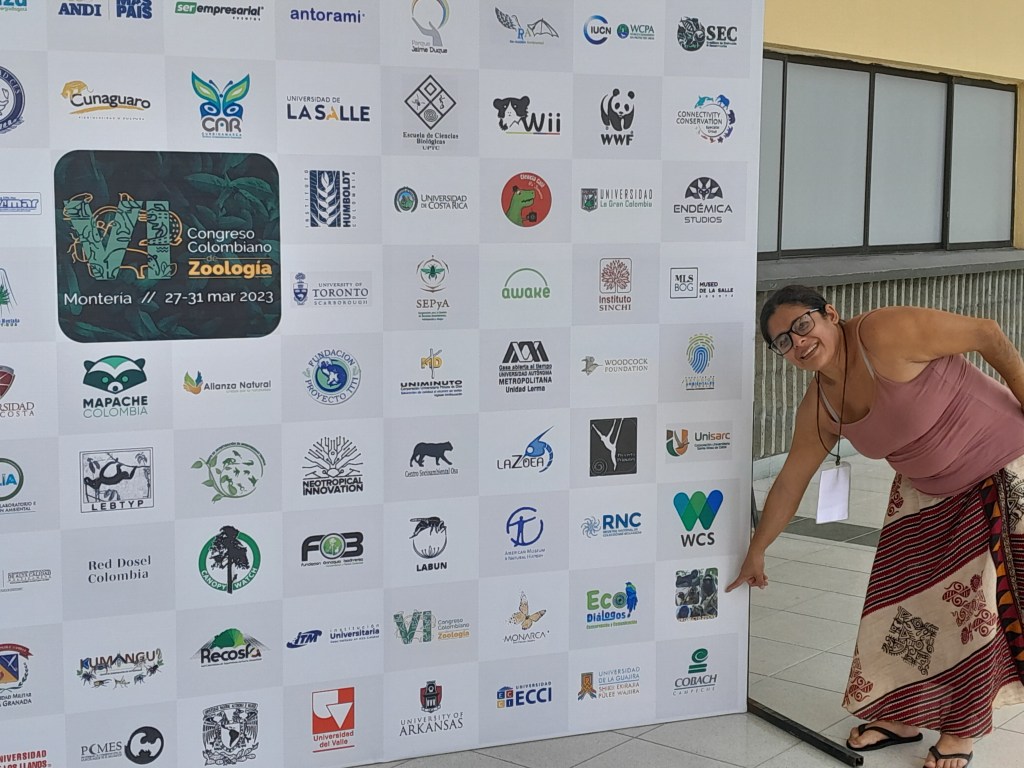
Our first event was our participation, in collaboration with Onca Foundation, to the VIth congress of zoology in which we presented the preliminary results of our camera trap project. This project aimed to establish wildlife use of water sources used for cattle in private farms. Use of water sources, artificial and natural, by wildlife include a wide variety of mammals, birds and reptiles. Some recommendations from this project can be found in Spanish and English here
Our next event was our participation in a vaccination campaign of farm dogs in our study area. This campaign was an international campaign to reduce the impact of domestic dog’s diseases on wildlife. Some studies had found transmission of diseases from domestic dogs to wild canids and felids in areas where both speciez enter in contact. Therefore, prevention and vaccination of domestic dogs and cats are important tool to reduce this disease prevalence in wildlife.
We also participate in a couple of talks with kids from Police School in Villavicencio to celebrate environmental and biodiversity day. These talks were focused on monkeys present in Villavicencio city as well as a small story for small kids to learn about dusky titi monkeys and its importance.

We also participate in regional symposium of biodiversity in the Orinoquia region organized by National Parks of Colombia, where biodiversity experiences from the Orinoquia region were presented.
Finally, we participate in a virtual forum to celebrate Dr Chuck Snowdown contributions to primatology, where we share our experience and lessons learned over the past 28 years of studying monkeys in Colombia, here.
In our next post, we will share our projects and collaborations in 2023. We are grateful with all people who invite us to participate on these events.
If you want to support our activities, please visit https://fineartamerica.com/art/xyomara+carretero or get in contact with as at xcarretero@gmail.com if you want to collaborate, donate or volunteer in our activities. You can also support our activities by buying our dusky titi monkeys stuff dolls https://www.instagram.com/p/Ctm_sEORvk8/?igshid=MzRlODBiNWFlZA==
© Copyright Disclaimer. All pictures used on this web page are protected with copyrights to Xyomara Carretero-Pinzón. If you want to use any of these pictures, please leave a message on the website.

Monkey Forest Tales: Considerations for long term studies in private lands

First I want to apologize for this post delay, but to be complete honest with you, it was hard to find a topic to talk about. However, during past days I had the opportunity to share my experience and knowledge with a potential future biologist. While talking with him I realize that part of Zocay Project success is that we had persisted working in private lands by a combination of good decisions and hard work, especially during early years, and being able to adapt ourselves to talk with people of different backgrounds over the years.
Those initial good decisions build trust between landowners and researchers/ students because we were able to sit and listen to each other, share our knowledge and agreed on management actions that benefit them and the wildlife inhabiting their land. This couldn’t be possible without the hard work of some students and my persistence, despite all challenges, to continue working in those farms.
Being able to talk with people of different backgrounds is extremely important when working close to people, not matter if it is landowners, farm workers, peasant or indigenous communities. Our skills to talk and explain scientific concept to people is part of the success of any long term project.
Another important factor is to be able to secure financial support, probably the most difficult part and one that for sure I didn’t master yet.
Additional factors that influence your success on a long term project is your personal motivation. For me, being close to monkeys and forest as well as trying to understand how they persist and survive despite all threats surrounding them are my constant motivations to continue as long as the landowners allow me to be in their farms.
So, if you are thinking about implementing a long term project not matter the context or species you study, first build trust with people living in the area and listen their concerns, work together to find solutions and consult each other opinions when making management decisions. Stay motivated and never loose your passion for what you are doing.
If you want to support our activities, please visit https://fineartamerica.com/art/xyomara+carretero or get in contact with as at xcarretero@gmail.com if you want to collaborate, donate or volunteer in our activities. You can also support our activities by buying our dusky titi monkeys stuff dolls https://www.instagram.com/p/Ctm_sEORvk8/?igshid=MzRlODBiNWFlZA==
© Copyright Disclaimer. All pictures used on this web page are protected with copyrights to Xyomara Carretero-Pinzón. If you want to use any of these pictures, please leave a message on the website.
Monkey Forest Tales: What make you an expert or specialized on a specific topic, ie. primatology?

Today’s post we are going to discuss some of the challenges we faced when we apply for jobs different from typical academic job or outside of academy, although some surprises can be found also when applying to academic institutions too. And you need to support your experience.
Typical answers to the question: What make you an expert or specialized on a specific topic? Could be time you had been working/ studying that specific topic inside and/or outside of academy or a certificate or diploma about that specific topic. In the case of primatology, despite of a few masters that are focused on primates most people working in primatology came from different backgrounds and different careers such as biology, ecology, psychology, anthropology, veterinary and even medicine. Therefore, a diploma on primatology usually is not what you have to demonstrate that you specialize yourself or are an expert in primatology. Most of us who had been in academy and had been working for several years with primates have our publications to support our claims of that specialization on primatology.
However, some jobs require that you upload certificates and job letters but not publications for their applications, this is particularly true in countries like Colombia in which everything need to be certified by a diploma and most of the time you also add job certifications to your applications. So, in these cases how do you support that you have experience in primatology? Well if you are lucky enough of had worked on projects involving primates, you will have that supported experience. Volunteer work also help when the organization in which you make your volunteering give you a letter.
However what surprise me a lot and make me write this post is how despite your publications, letter of support from paid work and volunteer work explicitly saying you worked with primates, for some institutions, even some academic institutions these doesn’t represent a proof of support that you have experience in primatology. I had to say that at the beginning my first reaction was anger, I didn’t spend more than 25 years working with monkeys in the field and publishing for the last 15 years for someone to tell me I don’t have experience working in primatology. But then, I also notice that it was evident they didn’t take the time to read all the supporting documentation. This also make me think of how perverse the system is that governments and institutions had created to bureaucratize job offers.
An additional problem of these type of systems, at least in Colombia, is the belief at government level that post doctorate is another type of study that gives you a diploma. This is not new; we had several reports of universities in the country promoting post doctorate programs in which you paid for a diploma instead of institutions paying you for your work as in other countries.
This kind of systems only promotes more corruption and even normalize it inside and outside of academy. So, my advice, especially for people in Colombia is to continue publishing despite not always being recognized as experience, ask for support letters from all jobs you have and ask them to make explicit the kind of work you did for them and think twice before applying to public jobs with bureaucratized systems.
If you want to support our activities, please visit https://fineartamerica.com/art/xyomara+carretero or get in contact with as at xcarretero@gmail.com if you want to collaborate, donate or volunteer in our activities. You can also support our activities by buying our dusky titi monkeys stuff dolls https://www.instagram.com/p/Ctm_sEORvk8/?igshid=MzRlODBiNWFlZA==
© Copyright Disclaimer. All pictures used on this web page are protected with copyrights to Xyomara Carretero-Pinzón. If you want to use any of these pictures, please leave a message on the website.
Forest Monkeys Tales: Importance of species distribution studies: dusky titi monkey case

In today’s world in which climate change and biodiversity loss crisis are of high priority and concern to all of us who study life, we often forget that some basic information to understand and mitigate the effects of both climate change and biodiversity loss are still need it such as species distributions. In today’s post I want to discuss some challenges that this kind of studies presents and how important these studies are in endemic species cases.
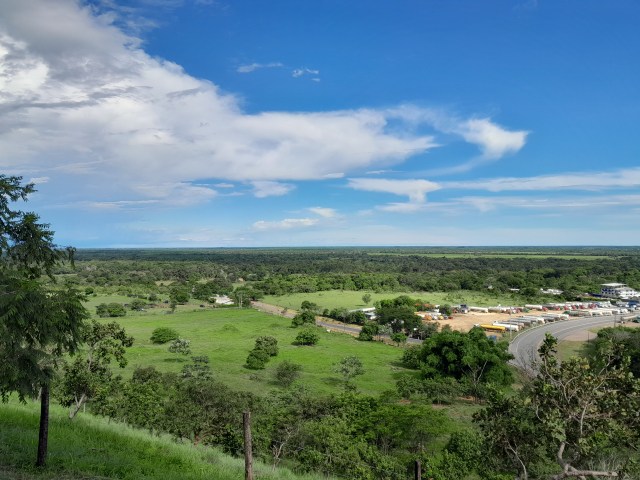
Colombia is a privileged country in terms of biodiversity and endemic species. However, for some endemic species there is still gaps in their distribution limits that challenges all conservation actions we do on behalf of these species. Colombia’s internal war, had represented an obstacle for the definition of species distribution limits as well as our abrupt geography. Since peace agreement some areas had become open to register new species, to rediscover forget species populations and to access to areas that had long being suspected to be distribution limits of endemic species.
These is the case for our endemic dusky titi monkey or mono zocay (Plecturocebus ornatus), in Spanish. Since its description as a subspecies and up to know part of their northern, eastern and southern limits had been not verified. Current hypothesis for its limits are related to a widespread theory of rivers acting as geographic barriers of species distributions, especially for small vertebrates that are unable to swim and cross those rivers.
Some of the challenges of species distribution studies had is the number of records need it to delineate those limits, which implies large expeditions by rivers and sampling in multiples sites, something that requires a lot of logistic and economic resources that funding agencies and grant are not always willing to give to this kind of projects. However, internet and natural applications such as inaturalust had opened new opportunities to register data of new sites in which species had been seen. This year we started a new project to clarify northern, eastern and southern limits of dusky titi monkeys, so I want to make a call to all people living, visiting and having farms along the Upía, Meta, Metica and Guayabero rivers to share with us pictures and locations where you have seen this beautiful endemic species of primate in Colombia. You can send all you records and/or you names in inaturalist to xcarretero@gmail.com for us to collect and improve our knowledge on the distribution limits of this species.
SPANISH
En el mundo de hoy en el cual el cambio climático y la crisis de la pérdida de biodiversidad son de alta prioridad y preocupación para todos los que estudiamos la vida, a menudo olvidamos que alguna de la información básica para entender y mitigar los efectos tanto del cambio climático como de la pérdida de la biodiversidad aún son necesarios como las distribuciones de las especies. En este blog quiero discutir algunos retos que este tipo de estudios presentan y lo importante que son estos estudios en el caso de especies endémicas.
Colombia es un país privilegiado en términos de biodiversidad y especies endémicas. Sin embargo, para algunas especies endémicas aún existen vacios en sus límites de distribución que representan retos para todas las acciones de conservación que hacemos en mombre de estas especies. La guerra interna de Colombia ha representado un obstaculo para la definición de los limites de distribución así como nuestra geografía abrupta. Desde la firma del acuerdo de paz, algunas áreas se han vuelto disponibles para el registro de nuevas especies, el redescubrimiento de poblaciones olvidadas de especies y para el acceso a áreaa que por largo tiempo se ha sospechado que son limites de distribución de especies endémicas.
Este es el caso de nuestro mono endémico el mono zocay (Plecturocebus ornatus). Desde du descrpción como subespecie y hasta ahora parte de sus límites norte, oriental y sur no han sido verificados. Hipótesis actuales para sus limites se relacionan con la teoria ampliamente distribuida de los ríos que actuan como barreras geograficas de la distribución de especies, especialmente para vertebrados pequeños que no son capaces de nadar y atravesar esos ríos.
Algunos de los retos que los estudios de distribucion de especies tienen es la necesidad de delinear esos límites lo que implica grandes expediciones a lo largo de rios y muestreos en multiples sitios, algo que requiere mucha logistica y recursos económicos que las agencias de financiamiento y becas no siempre estan dispuestas a dar a este tipo de proyectos. Sin embargo, internet y las aplicaciones de naturaleza como inaturalist han abierto nuevas oportunidades para registrar datos de nuevos sitios en lis que las especies han sido vistas. Este año empezamos un nuevo proyecto para clarificar los limites norte, este y sur del mono zocay, de forma que quiero invitar a las personas viviendo, visitando y que tengan fincas a lo largo de los ríos Upía, Meta, Metica y Guayabero para que nos compartan sus registros de fotos y ubicaciones fonde hayan observado esta hermosa especie endémica de mono en Colombia. Pueden enviar sus registros y/o nombres en inaturalist a xcarretero@gmail.com para que podamos mejorar nuestro conocimienyo de los limites de distribución de esta especie.
If you want to support our activities, please visit https://fineartamerica.com/art/xyomara+carretero or get in contact with as at xcarretero@gmail.com if you want to collaborate, donate or volunteer in our activities. You can also support our activities by buying our dusky titi monkeys stuff dolls https://www.instagram.com/p/Ctm_sEORvk8/?igshid=MzRlODBiNWFlZA==
© Copyright Disclaimer. All pictures used on this web page are protected with copyrights to Xyomara Carretero-Pinzón. If you want to use any of these pictures, please leave a message on the website.

Monkeys Forest Tales: Importance of artificial water sources for native wildlife: some recommendations for landowners

In today’s post we are going to discuss some of the main results from our project with camera traps on artificial water sources used by native wildlife and some recommendations for landowners raised from this project. In this project we located camera traps facing artificial (plastic and cement cattle water containers and artificial lagoons) and natural (natural lagoons and relicts of Mauritia flexuosa swamps) water sources in a cattle ranching landscape.
Water sources surrounded by forest were visit by 63 species of mammals, birds and reptiles. Native fauna used artificial water containers and artificial lagoons surrounded by forest more often than the ones surrounded by pastures. Mauritia swamps are used as corridors in the landscape as well as water source. Colombian squirrel monkeys (Saimiri cassiquiarensis albigena) and red howler monkeys (Alouatta seniculus) were recorded drinking water from cattle water containers. Red howler monkeys and black-capped capuchins (Sapajus apella fatuellus) use artificial lagoons surrounded by forest and Mauritia flexuosa swamp relicts for different activities as well as for drinking water.


Recommendations for landowner
From our observations and the camera trapping results the following recommendations can be used by farm owners to improve native wildlife use of artificial water sources:

– Reduce the height of water container used in forest edges to increase native fauna use of these container during dry season.

– Increase of Mauritia swamps cover and reduction of its degradation as these areas are used for many species to move in the landscape.

We want to give special thanks to our funding, Little Chalcraft Fund, and our partners Onca Fundación para el estudio de la diversidad, to make this project possible.
If you want to support our activities, please visit https://fineartamerica.com/art/xyomara+carretero or get in contact with as at xcarretero@gmail.com if you want to collaborate, donate or volunteer in our activities. You can also support our activities by buying our dusky titi monkeys stuff dolls https://www.instagram.com/p/Ctm_sEORvk8/?igshid=MzRlODBiNWFlZA==
© Copyright Disclaimer. All pictures used on this web page are protected with copyrights to Xyomara Carretero-Pinzón. If you want to use any of these pictures, please leave a message on the website.

Monkey Forest Tales: new collaboration project

Yesterday was the Biodiversity National Day in Colombia, as a way of celebration we had started a new collaboration project on the effects of landscape-scale and patch-scale variables on Brumback’s night monkeys (Aotus brumbacki) on several towns in the Colombian Llanos. This is a collaboration with SUSA group at University of Los Llanos, a regional university.
It is always exciting to start a new project. This one in particular is more exciting as it has elements similar to the ones I did with my PhD, but with a species that at that time wasn’t possible to work with. It has also some interesting challenges that comes with working with a nocturnal species. Sites need to be carefully chosen, as security for working at night is important. Logistic for nocturnal census, also requires sites where we can rest close to forest fragments where we are doing census due to their sampling times. It is also a challenge to work at night in new sites that you don’t know or that you had not visit recently.
This project also had a big component of GIS and modeling, that is interesting and challenging at the same time. We had limited information on Brumback’s night monkeys, an endemic species of Colombian monkeys, mainly found in the piedmont forest of Colombian Llanos. This is an area highly fragmented and transformed by human activities and despite this Brumback’s nigth monkeys is still present in very degraded areas, close to main roads, inside cities and towns.
Over the years we had observed them eating on fruit crops as well as plants used as forage to cattle. Using different types of trees as nest such as guadua clusters (clusters of Guadua angustifolia), standing death trunks of Mauritia flexuosa, dense vines areas in tall trees, Oenocarpus bataua pals (unamas), hole trees in old and tall trees of Ficus spp. And moving through living fences between forest fragments. However there is still a lot of their ecology and behavior that we don’t know, especially what variables explain the presence of this species of monkey in an specific forest fragment. Something we plan to answer with this new project.
If you want to support our activities, please visit https://fineartamerica.com/art/xyomara+carretero or get in contact with as at xcarretero@gmail.com if you want to collaborate, donate or volunteer in our activities.
© Copyright Disclaimer. All pictures used on this web page are protected with copyrights to Xyomara Carretero-Pinzón. If you want to use any of these pictures, please leave a message on the website.
Monkey Forest Tales: work-life balance everyday – some reflections

During the last weeks I had talked with friends doing their PhD, and again questions about work-life balance had emerged and make me reflect on how much we talk about having work-life balance and how poorly we really try to achieve it in our daily lives, no matter our career stage or life situation. So in today’s post we are going to discuss about this topic again.
Our crazy and fast- running system, not matter if its in academy or out of it, demands that we go at a fast speed while trying to achieve all the dreams and goals we propose to ourselves. While doing our PhDs is finishing the next paper, not very different if we are doing a postdoc or even if you are a professor, or finishing the next report for our job, the next business or the next client. Our next goal’s name can change but at the end is another step in a large line of things to do that we make to give purpose to our everyday life. I don’t think this would change for anybody, we will always have a list of things to do not matter if they implies manual labor or a complex thinking process, what I found is important to change is the way we see it and how we assume those goals. Why I want to achieve x or y? It is worth it to sacrificed my health to achieve it? What other thing I want for my own life?
When I was doing my PhD, I was in a marathon to achieve things that I though it will give me stability, that I though it was necessary to get the life I dream, but while I was in this crazy career I lost part of my health and recovering that health had cost me a lot… So for those who are doing a PhD make time to rest, don’t burnout, it is not worth it. Enjoy student’s life and benefits, that will never come back. Work hard for your goals but don’t forget that you are also human and need time for yourself. Learn to recognize the best hours for writing, when you are more focus, and recognize the times your brain is more disperse and use that time to do other things to bring balance to your life.
For those who are in a working life, money never will be enough to pay you if you lost your health. No job will ever consider you irreplaceable, there is always someone else waiting to do what you are doing. Try to do what you love in life, that will give you more satisfaction than working for big salaries. Take a break and enjoy life every now and then. We don’t know how long we will have in this world and a life full of experiences always will be better than a life with regrets and “what if”
A work-life balance is a continuous learning process in which you weight the cost and benefits of everything you do and every decision you make, but if you are sure of all the reasons why you are doing it then you will live the life you always dream. For me had been studying monkeys in the field with small breaks to see whales in the wild and a continuous search of answers to all the questions I have while I’m looking at monkeys…
If you want to support our activities, please visit https://fineartamerica.com/art/xyomara+carretero or get in contact with as at xcarretero@gmail.com if you want to collaborate, donate or volunteer in our activities.
© Copyright Disclaimer. All pictures used on this web page are protected with copyrights to Xyomara Carretero-Pinzón. If you want to use any of these pictures, please leave a message on the website.

Monkey Forest Tales: News from the field: looking for dusky titi monkeys (Plecturocebus ornatus)

In today’s post we are going to talk about a new project we started this month. In this new project we are looking for dusky titi monkeys (Plecturocebus ornatus) along the eastern limit of their distribution. As we had mention in several post and pages in this website, dusky titi monkeys (Plecturocebus ornatus) is an endemic primate mostly distributed in Meta department and a small part of Cundinamarca, around Medina town. However their distribution limits in the East are poorly known and seems to be delimited by Upia and Meta rivers.
So this new project is focused in surveys done on both sides of Upia and Meta rivers. We started by doing sampling in both sides of Upia river near to Villanueva and Barranca de Upia towns.
Why close to towns? Well when you start a new project in a new area, you start close to places where you can have accommodation and food accessible and in places where you have contacts that can give you access to forest fragments inside private lands. Thanks to our contacts with Stella Gutierrez and don Arturo Aguirre of La Bendición de San Miguel agroturistic farm, we are able to start looking for new additional points that give us a better idea where dusky titi monkeys can be found.
While looking for new places, rural roads passing close to forest fragments can be additional points to detect monkeys. This strategy can help you cover large extensions of area and help you to select possible areas with potential to answer your questions. A detailed study of maps from the potential area you are surveying is always a first step to do projects in which multiple sites are necessary.
Although I will prefer to start project involving multiple sites during dry season, our changing rain patterns make those decisions difficult and in areas with relatively short dry season, such as Orinoquia region, we usually start any time of the year. But why is better to start in dry season? Well multiple sites usually means less time in each site and if it rains too much you can loose lots of time due to rain and you field schedule suffer. Logistics become more complicated and costs increases.
Sometimes those are some considerations not always taken in account while planning a project that can make your fieldwork stressful if you are not flexible enough to understand that weather is not something you can control. Fortunately for us weather has been helpful and rain didn’t stop us to make our surveys.
We already done surveys in one side of the river and get some data, lets hope surveys in the other side give us even more interesting data to clarify the distribution limits of our endemic dusky titi monkey or Mono Zocay as they are know by locals in Spanish.
If you want to support our activities, please visit https://fineartamerica.com/art/xyomara+carretero or get in contact with as at xcarretero@gmail.com if you want to collaborate, donate or volunteer in our activities.
© Copyright Disclaimer. All pictures used on this web page are protected with copyrights to Xyomara Carretero-Pinzón. If you want to use any of these pictures, please leave a message on the website.

Monkey Forest Tales: Guest post: MY EXPERIENCE AS A HIGHSCHOOL SENIOR WITH FIELD OBSERVATIONS OF Saimiri cassiquiarensis albigena

By Jose Manuel Vasquez Rey

Today’s post is a guest post by Jose Manuel Vásquez Rey, a senior highschool student from Villavicencio who has been observing one of the Colombian squirrel monkey’s groups living inside Villavicencio city.
Lately, I have been working with the diet of new world primates, specifically with the Colombian Squirrel Monkey -S. cassiquiarensis albigena- and you could be asking yourself, what is a 17-year-old researching about such a specific topic? Well, that is exactly what I’m going to explain in this entry.
Ecology has always been my passion, since the first grades of school the Colombian Llanos ecosystems caught my attention due to the multiple endemic species that could be found, as a consequence of how near this context is to me and how I can appreciate the fauna inside Villavicencio. That’s why in high school I decided to focus my graduation project on the squirrel monkey. Additionally, in the past few years the presence of them inside the urbanization increased (at least by sights) as a result of the lack of transition between the gallery forests and constructions; besides that, news about roadkills and electrocution in S. cassiquiarensis albigena were becoming more frequent.
What I just mentioned lead me to make an approach of historic researching in this specie, to understand how the exponential growth of Villavicencio in the last 30 years is affecting them, nevertheless studies about them in this city are really uncommon so the data is nonexisting and the interviews with citizens to collect it would not be enough, considering that people in urban areas does not focus too much on animals because of the constant hurry.
At that moment, I found myself with a really confusing path (taking into account that is my first time deepening in biological studies) and had to search for aid with Xyomara, who helped me to focus the project to something feasible, so on we decided to center the attention in a monkeys feeding point, knowing that giving banana to this specie is a really common activity between locals and tourists, and how this activity affects the behavior and patterns of diet on them, something that is actually leading me to obtain interesting results.
Now, I want to reflect about the observation, and I can assure you that it requires patience and dedication. The period of study in my case was approximately 2 months and a half, going there 2 hours daily between 4 to 5 days a week, so it was hard after school. At first, it was a challenge, differentiating monkeys and what they were eating and doing was kind of difficult. But with time, I improved my abilities and understand their behaviour, taking into account external factors (like sound, cars, dogs, etc.) and acknowledge patterns, as well as some specific traits to differentiate them (wounds, scars and lack of tail) and it was satisfactory to feel how they familiarized with my presence in a short period. This left me with multiple experiences that affected me deeper than just a school project. Seeing and providing help to a youth squirrel monkey that suffered electrocution led me to grasp the cables as a danger, by how they use them to move and hoe infants and juveniles bite them. Besides that, there were curious injuries in some monkeys, that seemed like infected tissue in the tail, this would be interesting to evaluate to know the cause and if it can impact the group as a whole.
In conclusion, after observation, Squirrel monkeys took a part of my heart and my concern, seeing how normalized people have to feed monkeys and treat them like an attraction has to be stopped knowing how their food -at least in my hours and location of sight- is in a big proportion banana, that is clearly don’t part of their diet and can potentially affect them.
Jose’s observations has highlighted the importance of observing monkeys inside cities to better understand threats faced by these populations inside urban areas that are not always so evident. Solutions to problems like feeding wildlife require behavioral changes that usually involve economic alternatives to people living around them and usually using them as a tourist attraction. As well as education campaigns in the surrounding areas.
On the other hand, reducing electrocution will involve coordination with electricity companies and environmental authorities that are more complex to achieve.
If you want to support our activities, please visit https://fineartamerica.com/art/xyomara+carretero or get in contact with as at xcarretero@gmail.com if you want to collaborate, donate or volunteer in our activities
© Copyright Disclaimer. All pictures used on this web page are protected with copyrights to Xyomara Carretero-Pinzón. If you want to use any of these pictures, please leave a message on the website. Thank you. This post have pictures from José Manuel Vasquez Rey, pictures only can be used with his permission.