Monkey Forest Tales: News from the field

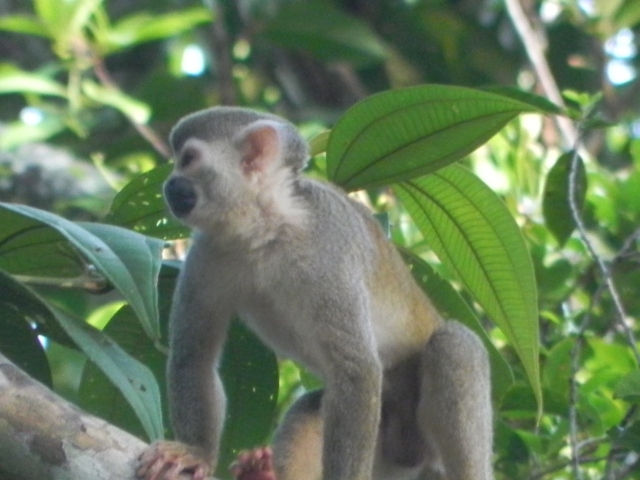
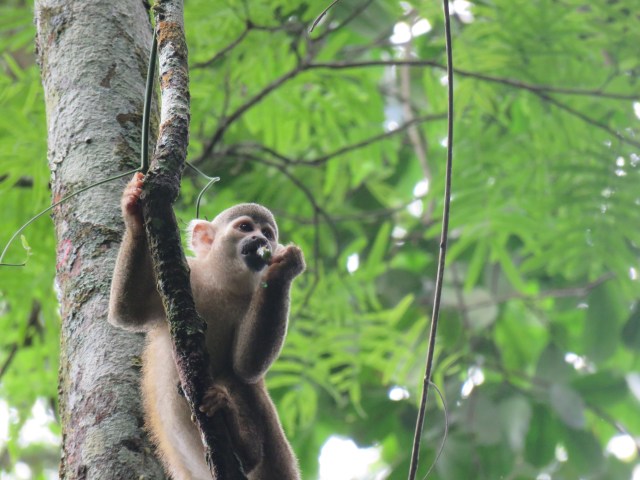
In today’s post we have some news from our field samplings in Meta and Guahinia departments from our project about the distribution of two species of squirrel monkeys in Colombia. We continue with our samplins by land and river.

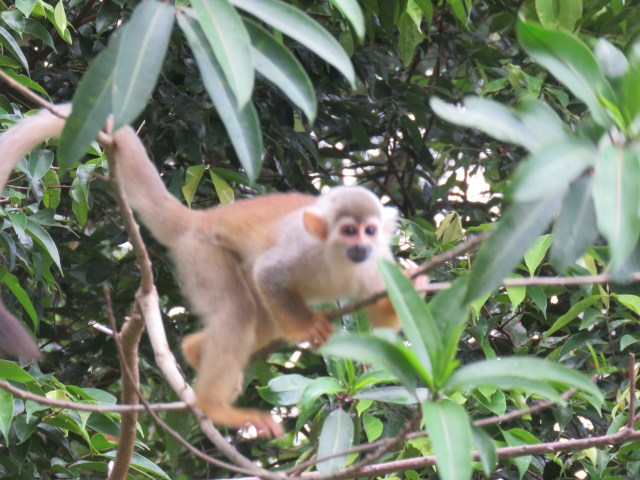
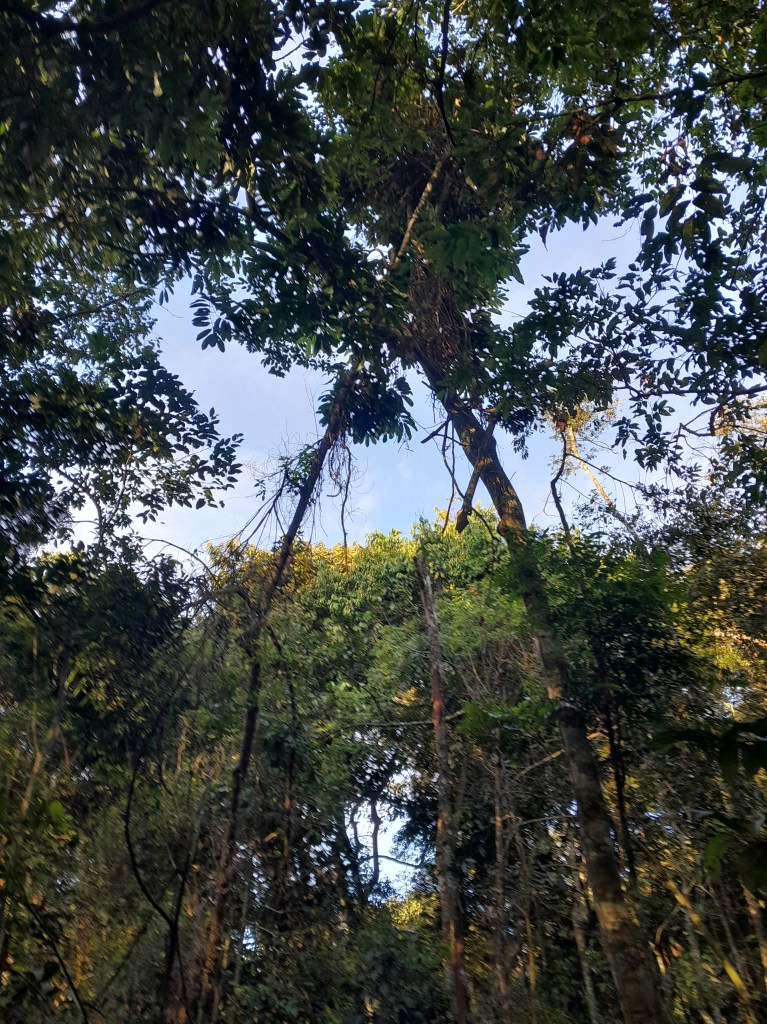
During our samplings in Meta department, several groups of the Colombian squirrel monkeys were observed. Despite the high deforestation in the buffer area North of Sierra de La Macarena national park, several species of monkeys still can be seen in this area.

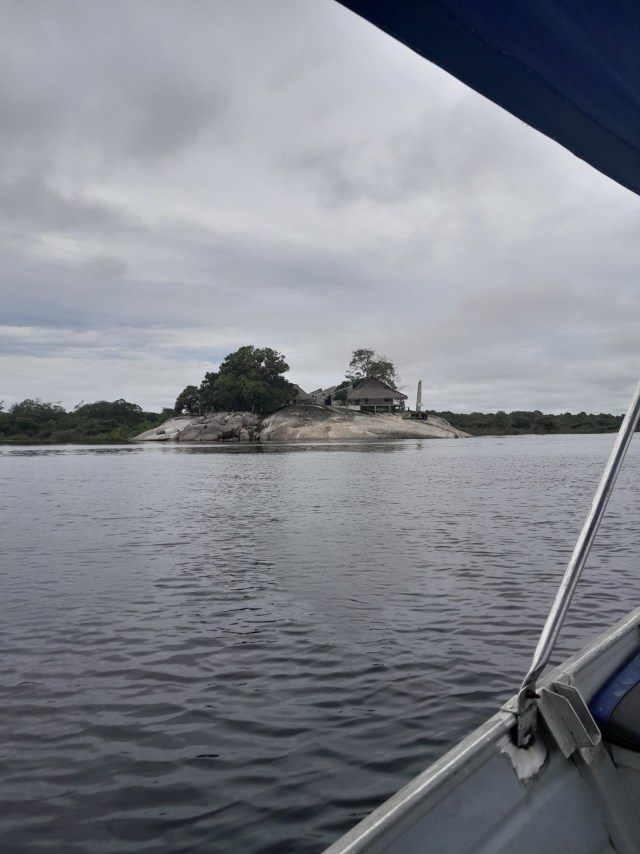
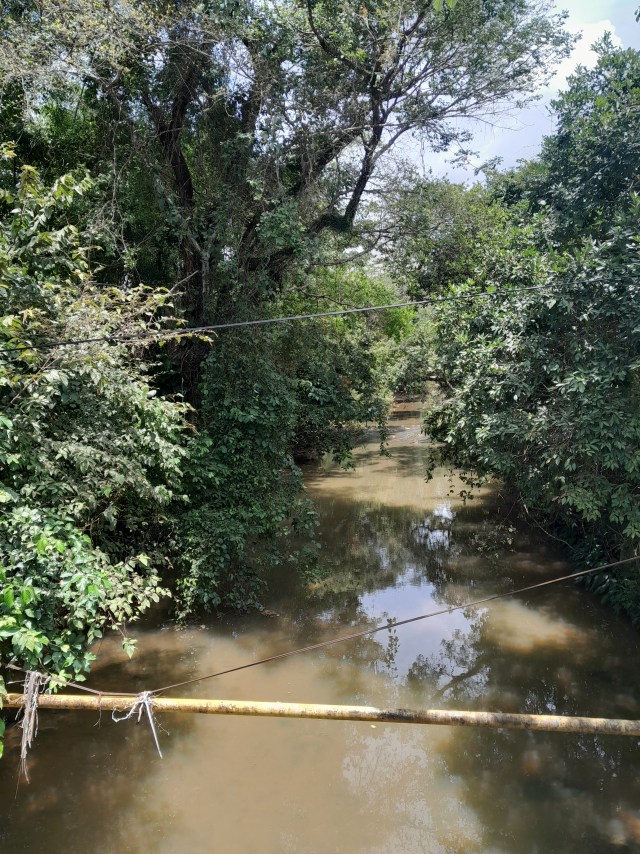
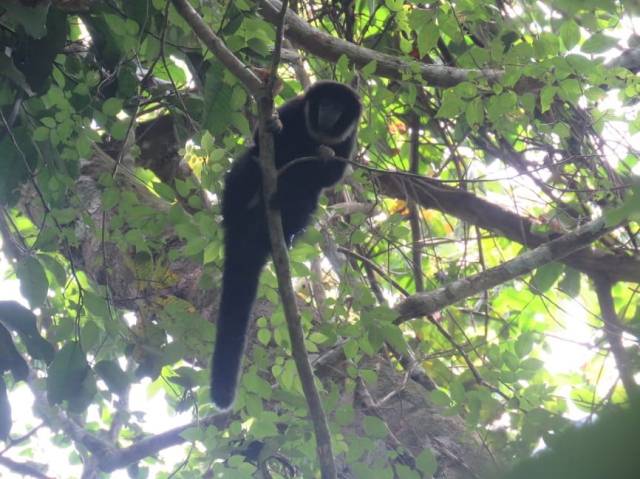
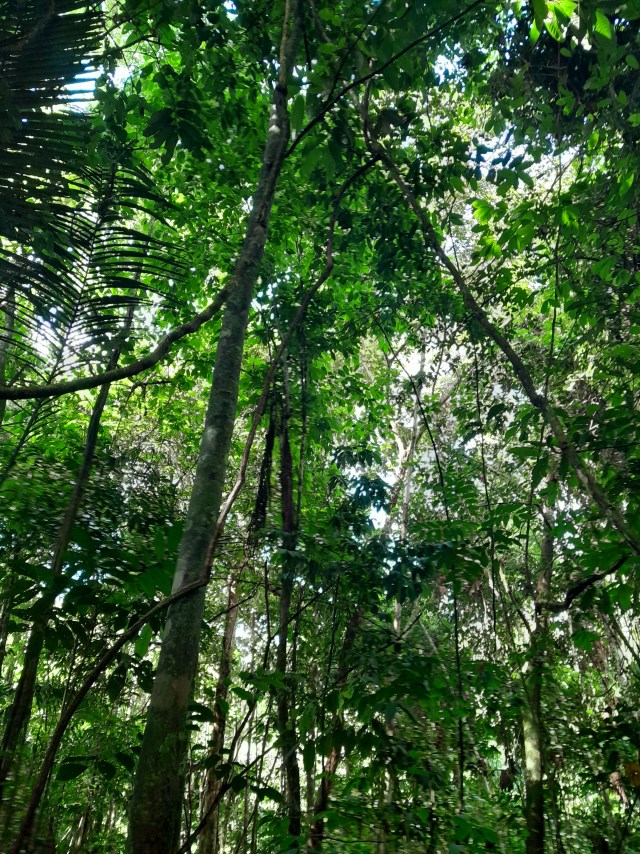
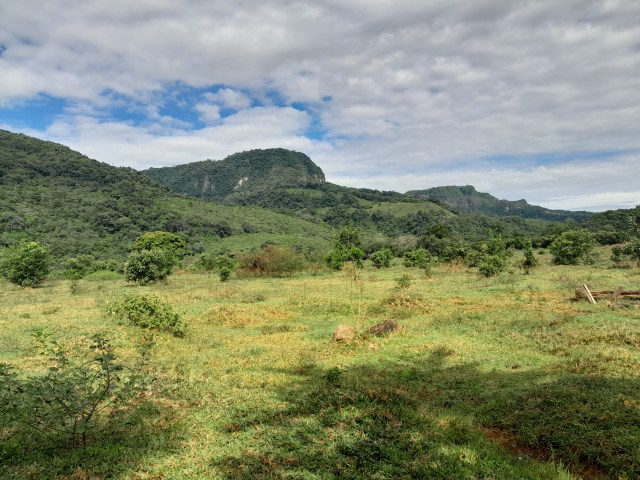
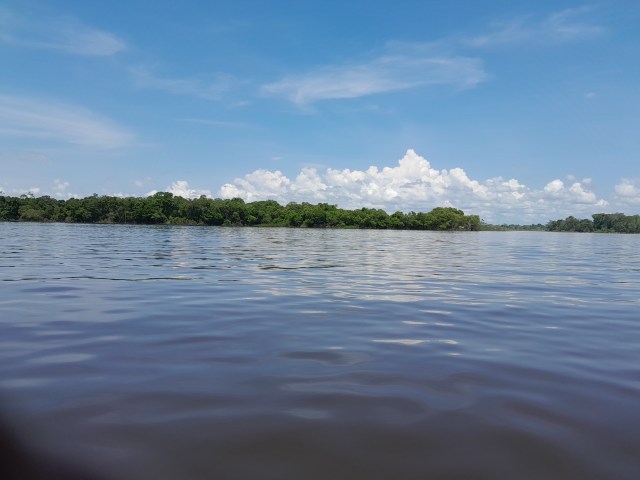
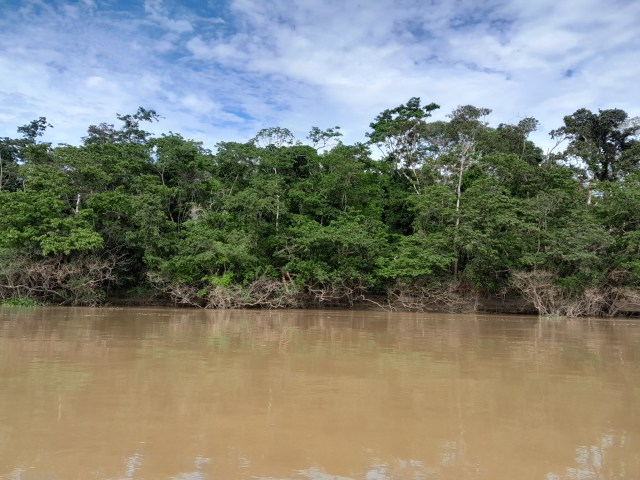
However our sampling in Guainía department, still in progress, had prove to be more challenging and with some contrasting surprises. First, some incredible aquatic mammals, giant otter (Pteronura brasiliensis) let us see it, something not so easy. Few monkeys up to now, although we still have few more days in the field and an unexpected amount of cattle farms in an area where 28 years ago, when I first came, there was none. We still have several areas to sample and hopefully more monkeys to see in an area of contrast and incredible rock formations from the Guyana shield. Forest in this area shows the contrast of the white or black waters that runs nearby and the confluence of rivers with white and rich water versus black and poor waters is evident in the forest height and the animals you can found in each river. This samplings wouldn’t be possible without the logistic support of Fundación Biológica Aroma Verde, a local NGO who help us to organize our samplings. This project is fund by Rewild (Primate Action Fund). More news about this sampling in the following posts…

If you want to support our activities, please visit https://fineartamerica.com/art/xyomara+carretero or get in contact with us at xcarretero@gmail.com if you want to collaborate, donate or volunteer in our activities. You can also support our activities by buying our ornate titi monkeys stuff dolls https://www.instagram.com/p/Ctm_sEORvk8/?igshid=MzRlODBiNWFlZA== and our new journals in Amazon https://www.amazon.com/X-Carretero/dp/B0CWD1DBJM/ref=mp_s_a_1_1? © Copyright Disclaimer. All pictures used on this web page are protected with copyrights to Xyomara Carretero-Pinzón. If you want to use any of these pictures, please leave a message on the website or contact xcarretero@gmail.com

Monkey Forest Tales: A recent publication: new information on the geographic distribution and conservation status of ornate titi monkeys (Español abajo)

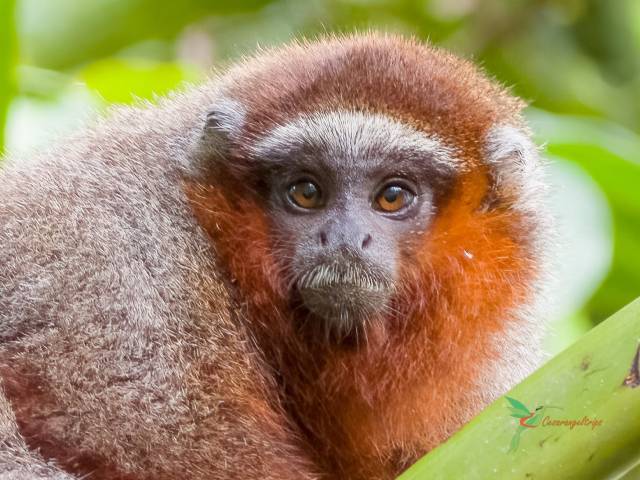
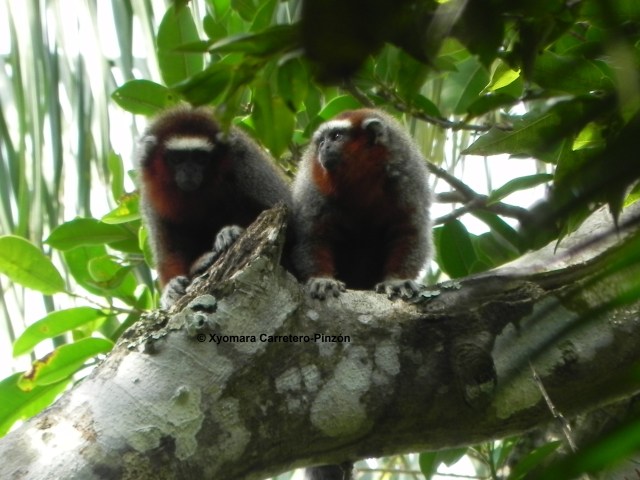
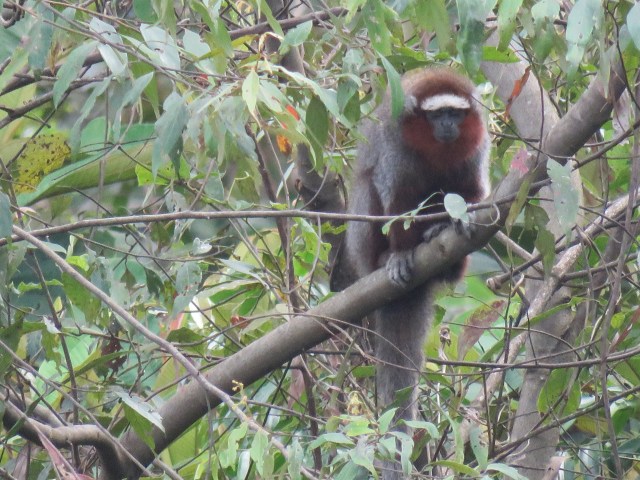
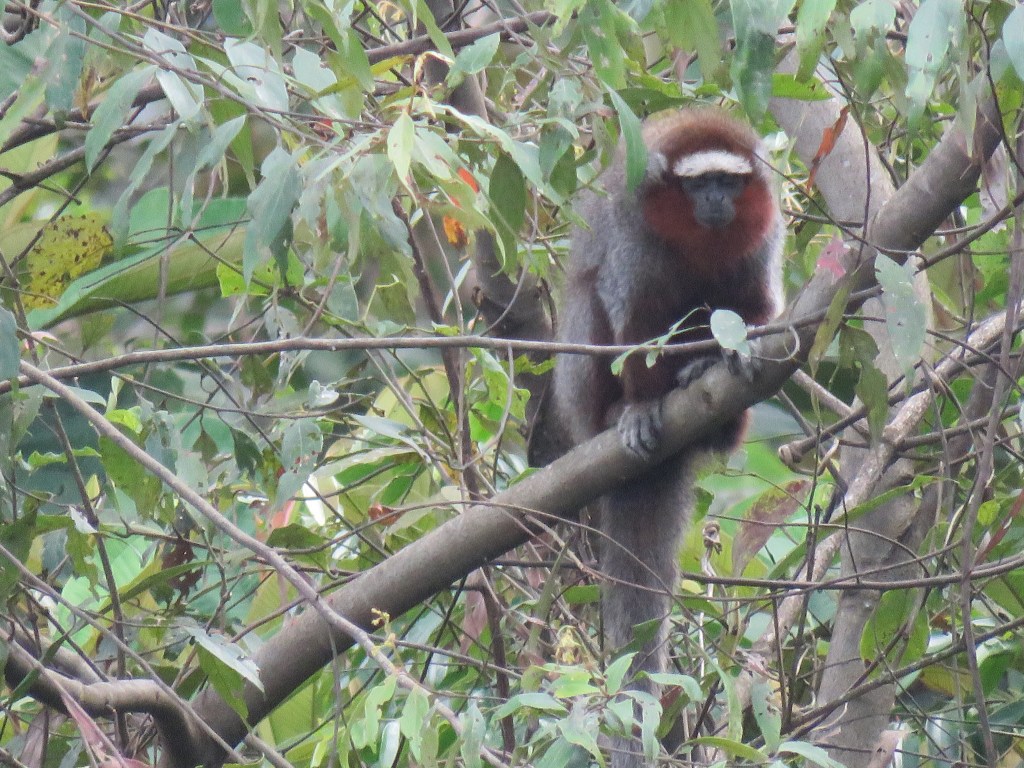
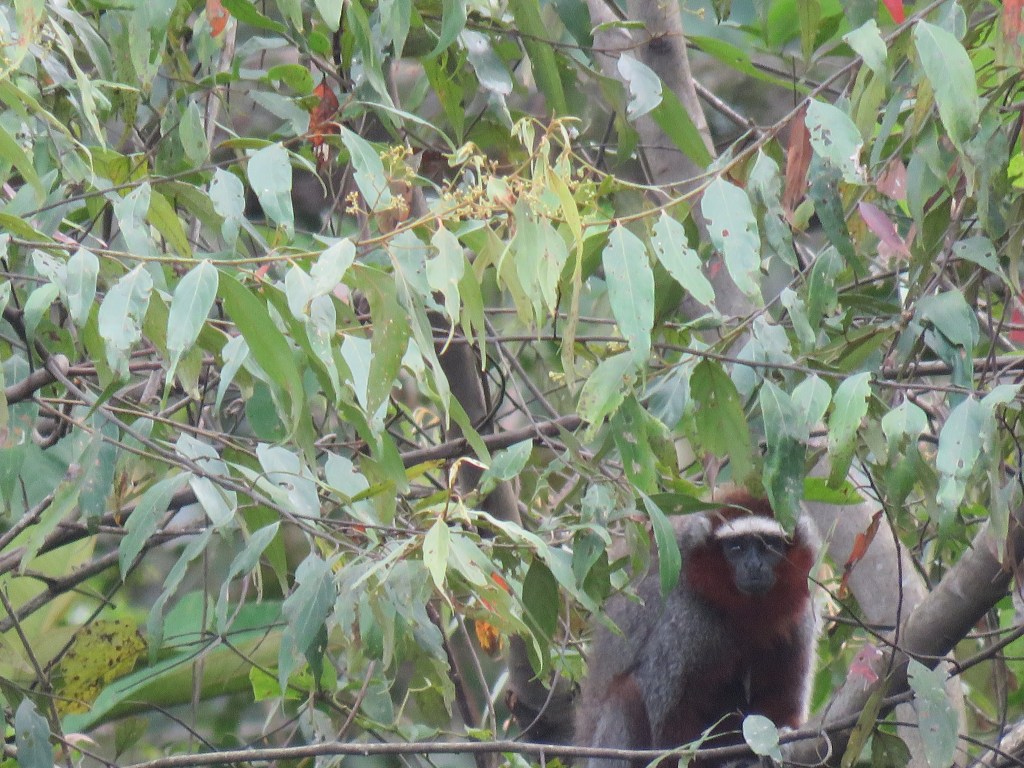
In today’s post, we are going to talk about our recent publication on ornate titi monkeys (Plecturocebus ornatus). As some of you may remember from several posts from last year, we were reviewing the geographic distribution of the endemic ornate titi monkeys. This new paper presents all our results on these samplings. You can find the article here. There are three main results from this paper that I want to highlight:

A change in the northern limit of the distribution. Ornate titi monkeys currently are only found up to Río Guacavia, therefore its distribution is mainly in Meta department.

It´s altitudinal limit is still up to 500 m a.s.l

I suggested a change in its conservation status from Vulnerable to Endangered under criteria A4c: the estimated and inferred population reduction due to continuous deforestation within its distribution

Some of the main recommendations from this study are:

Efforts to protect riparian forest in private reserves and cattle ranching areas would benefit the connectivity inside the species’ range.

More connectivity is necessary in some parts in the center of its range, where cattle ranching is one of the main activities.

Living fences can increase connectivity of forest fragments remaining in cattle ranching areas

Efforts to create management plans for regional and municipal protected areas where P. ornatus need to be done

Other strategies such as silvopastoral practices in cattle ranching areas can also improve connectivity in these landscapes.

In the southern part of its range, efforts are needed to focus on protecting the two national parks, Tinigua and Sierra de La Macarena, which are suffering the highest deforestation rate in the country

Connectivity and sustainable activities in the surrounding areas of the national parks should be prioritized

More effective control of deforestation around Tinigua and Sierra de La Macarena national parks should be implemented

Economic alternatives including regenerative tourism, primate-watching and environmentally friendly agricultural practices would provide opportunities to conserve areas surrounding Tinigua and Sierra de La Macarena national parks and private nature reserves in other parts of the range of P. ornatus.

Although it was not mentioned in the paper, I want to highlight that it is important to increase the general public awareness about the importance of this endemic species in the department of Meta. Therefore, Zocay Project started in October an education activity that consist on an education tent called “El Zocay y sus amigos” (The ornate titi monkey and its friends”) in which games and mask painting is done with kids during town festivals, We started in Acacias, thanks to the support of the promotion and sustainable development secretary from Acacias mayor office, with the support of the biologist Yesid Rojas. We hope we can take this activity to another towns in the department in the following months and during the next year.

Español: Una publicación reciente: nueva información sobre la distribución geográfica y estado de conservación del mono zocay

En el blog de hoy vamos a hablar sobre nuestra más reciente publicación sobre el mono zocay (Plecturocebus ornatus). Como algunos de ustedes pueden recordar de varios blogs del año pasado, estabamos revisando la distribución geográfica del mono zocay, mico endémico colombiano. Este nuevo artículo muestra los resultados de esos muestreos. Pueden encontrar el articulo aca. Hay tres resultados principales de este artículo que quiero resaltar:

Un cambio en el límite norte de la distribución. El mono zocay actualmente solo se encuentra hasta el Río Guacavia, por lo que su distribución es principalmente en el departamento del Meta.

Su límite altitudinal aún es 500 m sobre el nivel del mar

Sugerí un cambio en su estado de conservación de Vulnerable a En Peligro bajo el criterio A4c: reducción estimada e inferida de la población debido a continúa deforestación dentro de su distribución

Algunas de las principales recomendaciones de este estudio son:

Los esfuerzos para proteger los bosques riparios en reservas privadas y áreas ganaderas pueden beneficiar la conectividad dentro del rango de distribución de la especie.

Más conectividad es necesaria en algunas partes del centro del rango de distribución, donde la ganadería es una de las principales actividades económicas.

Las cercas vivas pueden incrementar la conectividad de los fragmentos de bosque que quedan en las zonas ganaderas

Se deben hacer esfuerzos para crear planes de manejo para las áreas protegidas a nivel municipal y regional donde P. ornatus esta presente

Otras estrategias como prácticas silvopastoriles en zonas ganaderas también pueden mejorar la conectividad en estos paisajes.

En la parte sur del rango de distribución, los esfuerzos se deben enfocar en proteger los dos parques nacionales, Tinigua y Sierra de La Macarena, que están sufriendo las tasas de deforestación más altas del país

Conectividad y actividades sostenibles en las áreas alrededor de los parques deben ser priorizadas

Control más efectivo de la deforestación alrededor de los parques nacionales Tinigua y Sierra de La Macarena debe ser implementado

Alternativas económicas incluyendo turismo regenerativo, observación de primates y prácticas agrícolas ambientalmente amigables pueden proporcionar oportunidades para conservar áreas alrededor de los parques nacionales Tinigua y Sierra de La Macarena y en reservas privadas en otras partes del rango de P. ornatus.

Aunque no fue mencionado en el artículo, quiero resaltar que es importante incrementar el conocimiento del público general acerca de la importancia de esta especie endémica en el departamento del Meta. Por lo que el Proyecto Zocay inicio en octubre una actividad educativa que consiste en una Carpa Educativa llamada “El Zocay y sus amigos” en la que se hacen juegos y se pintan mascaras con los niños durante los festivales de los pueblos. Empezamos en Acacias, gracias al apoyo de la secretaria de fomento desarrollo sostenible de la Alcaldía de Acacias, con el apoyo del biólogo Yesid Rojas. Esperamos poder llevar esta actividad a otros municipios en el departamento en los próximos meses y durante el próximo año.

If you want to support our activities, please visit https://fineartamerica.com/art/xyomara+carretero or get in contact with us at xcarretero@gmail.com if you want to collaborate, donate or volunteer in our activities. You can also support our activities by buying our ornate titi monkeys stuff dolls https://www.instagram.com/p/Ctm_sEORvk8/?igshid=MzRlODBiNWFlZA== and our new journals in Amazon https://www.amazon.com/X-Carretero/dp/B0CWD1DBJM/ref=mp_s_a_1_1?

© Copyright Disclaimer. All pictures used on this web page are protected with copyrights to Xyomara Carretero-Pinzón. Pictures in this blog from Cesar Angel, Francisco Gomez, Xyomara Carretero-Pinzón and Gabriela Luna. If you want to use any of these pictures, please leave a message on the website or contact xcarretero@gmail.com
Monkey Forest Tales: Remembering Jane Goodall

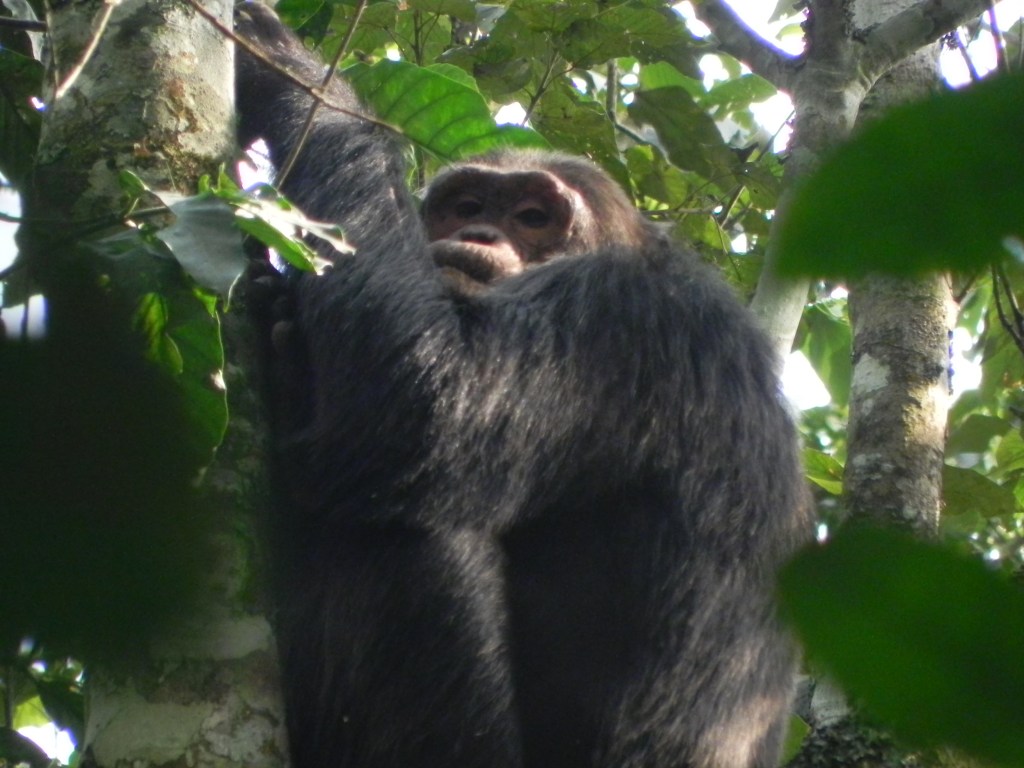
In today’s post we want to remember and celebrate the legacy of Jane Goodall, a pioneer female researcher in primatology, who make us change the way we see humans, chimps and all primates. There are so many lessons Jane taught us…from never give up if we really wanted something, to appreciate nature and the value each living thing has just for being in this planet and to have hope that we can have a better future in which humans and the rest of the planet can live in peace…

Life has given me many opportunities, one of those was to have a few minutes chat with Jane Goodall in 2010. At that time I was feeling frustrated for not being able to talk with the different productive sectors that converge in my study area (palm oil, cattle ranchers, among others), in just a few minutes she just listened me and said to keep going and continue trying, just don’t give up…a lesson she always were repeating as one of the reason to continue working for nature and keep having hope for our planet. I’m not sure I’m exactly in speaking terms with those productive sectors but I keep trying and continue to try for as many years as I’ll be able to do it, our monkeys and other native fauna needed.

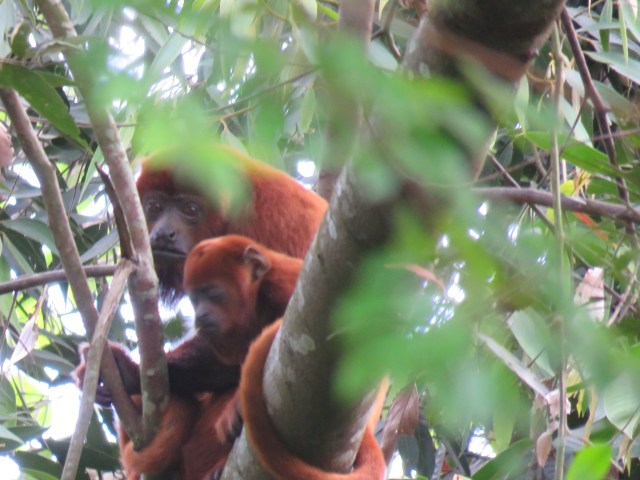
Another of the many stories she used to tell in her talks was how many of the professors in Cambridge told her that she shouldn’t say primates have personalities, even after three decades some of my own professor used to tell me the same thing. When I started, I was studying the development of red howler monkeys and I remember that for me, part of the differences that I was observing in the way the females were behaving around their infants seems to be related to their own personalities, their own life histories, but my professor though I was not scientific enough by saying that. I still agree with Jane that primates had personalities and that definitely influence the way in which they respond and behave in different situations…

Thank you, Jane, for your inspiration, for giving us hope and for sharing your love for animals with all of us. Rest in peace…

If you want to support our activities, please visit https://fineartamerica.com/art/xyomara+carretero or get in contact with us at xcarretero@gmail.com if you want to collaborate, donate or volunteer in our activities. You can also support our activities by buying our ornate titi monkeys stuff dolls https://www.instagram.com/p/Ctm_sEORvk8/?igshid=MzRlODBiNWFlZA== and our new journals in Amazon https://www.amazon.com/X-Carretero/dp/B0CWD1DBJM/ref=mp_s_a_1_1?© Copyright Disclaimer. All pictures used on this web page are protected with copyrights to Xyomara Carretero-Pinzón. If you want to use any of these pictures, please leave a message on the website or contact xcarretero@gmail.com

Monkey Forest Tales: news from the field: squirrel monkeys and more

In today’s post we are talking about the new project we are starting this year to review the distribution and habitat available for the Colombian squirrel monkey (Saimiri albigena) and its limits with the Humboldt’s squirrel monkeys (Saimiri cassiquiarensis). Colombian squirrel monkeys is a Vulnerable species that live in large groups with several females, males, juveniles and babies. In this new project we are recording locations of the two squirrel monkey’s species in mostly all the departments in which Colombian squirrel monkeys live, except by Arauca department.

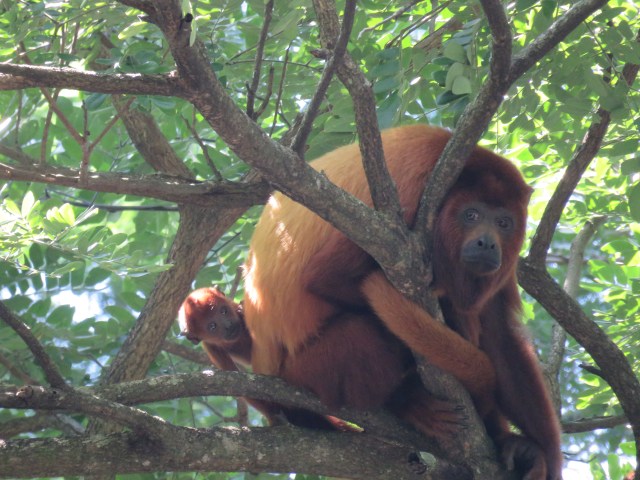
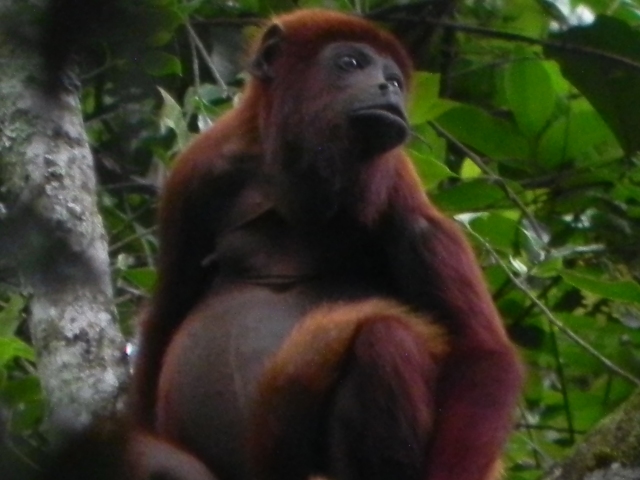
Our first sampling was in Casanare department, where road census takes us to new areas, sees interesting landscapes and we discover new things. Red howler monkeys (Alouatta seniculus) give us surprises as they have small babies, and squirrel monkeys give us new data. New areas are always exciting as we discover new possibilities. It’s also a challenging project where new threats appear and very long sampling hours in the sun and rain.

Despite the long hours, fieldwork is always rewarding and gives me more questions than answers, which is what I love about science. Science is about curiosity and asking questions about the things and patterns we saw, and fieldwork never disappoint me on that…so for now more questions are arising and hopefully some answers in the process.

We also had the opportunity to meet incredible people from a private reserve “La Reserva” in Barranca de Upia, where howler monkeys and squirrel monkeys allow us to see them and black-capped capuchins just let us hear them. A reserve with an incredible process of natural regeneration that is starting to attract birds and monkeys and giving them more need it habitat.

We continue with our monitoring of squirrel monkeys in Villavicencio as we see babies born this year to grow up…and we had the opportunity to present our work in a local forum organized by a local NGO where several organizations share their results with a general public, including school students.

If you want to support our activities, please visit https://fineartamerica.com/art/xyomara+carretero or get in contact with us at xcarretero@gmail.com if you want to collaborate, donate or volunteer in our activities. You can also support our activities by buying our ornate titi monkeys stuff dolls https://www.instagram.com/p/Ctm_sEORvk8/?igshid=MzRlODBiNWFlZA== and our new journals in Amazon https://www.amazon.com/X-Carretero/dp/B0CWD1DBJM/ref=mp_s_a_1_1?© Copyright Disclaimer. All pictures used on this web page are protected with copyrights to Xyomara Carretero-Pinzón. If you want to use any of these pictures, please leave a message on the website or contact xcarretero@gmail.com
Monkey Forest Tales:

The past September 1rst we celebrate International Primate Day, a day to raise awareness about the importance of this charismatic and important group of mammals of which we are part. Every time there is an environmental celebration day my mind reflects on how much we have done to really raise awareness about a specific environmental topic. This week was similar and I was reflecting on my personal work and how much impact I had made through Proyecto Zocay to raise awareness about all the primate species that share our planet with us, but especially the ones in my study area… and I have to recognize that there is still too much to do and so much to learn from them…

In a world in which all our activities impact the lives of so many primates around us and how they found strategies to adapt to the challenges they face by living close to us, it is also inevitable that we found conflict between humans and primates…For me is always challenging to mediate those conflicts, especially when I know the behavior monkeys does, like crop feeding is just their strategy to compensate for the loss of resources in an area caused by deforestation. However, I also understand the frustration and need local people in areas close to forest have to growth their crops to eat and get financial resources for their lives. For me it is always a difficult situation that requires understanding and empathy for both people and monkeys…

Despite all the efforts around the world to protect primates, most of the species are threatened in some way due to our economic activities and it seems the actions we are taking are not enough or not at a speed enough to allow many species to recover. So, what else we can do… I guess keep trying and do the best we can for the primates living near to us, even if that sometimes looks like it is not enough. Keep raising awareness and keep educating others about how smart and important primates are for our forest. Talking about their threats and searching for solutions together is part of raising awareness about primates’ conservation, support research so we understand better how they relate with their environment and how they behave and keep sharing the stories of the people working with and for them…

If you want to support our activities, please visit https://fineartamerica.com/art/xyomara+carretero or get in contact with us at xcarretero@gmail.com if you want to collaborate, donate or volunteer in our activities. You can also support our activities by buying our ornate titi monkeys stuff dolls https://www.instagram.com/p/Ctm_sEORvk8/?igshid=MzRlODBiNWFlZA== and our new journals in Amazon https://www.amazon.com/X-Carretero/dp/B0CWD1DBJM/ref=mp_s_a_1_1?© Copyright Disclaimer. All pictures used on this web page are protected with copyrights to Xyomara Carretero-Pinzón. Copyrights of pictures in this blog post belongs to Francisco Gomez and Xyomara Carretero-Pinzón. If you want to use any of these pictures, please leave a message on the website or contact xcarretero@gmail.com
Monkey Forest Tales: A chapter about densities, behavior and conservation of Ornate Titi Monkeys (Español abajo)

In today’s post, we continue with our series of articles based on information we had been collecting in the study area over the past 21 years. We are going to talk about a chapter in which we use data of densities, behavior and conservation of ornate titi monkeys (Plecturocebus ornatus). This chapter was again a collaboration with Dr. Thomas Defler, who had incentivized my work with this endemic species.

In this chapter we describe the densities of titi monkeys in forest fragments of different sizes (i.e. how many individuals of a species are found in a delimited area). This work describes the work we both do in one of the largest forest fragments in the department of Meta, a forest fragment of more than 1000 hectares. For this fragment, ornate titi monkeys have higher densities in the edges of the forest fragment than in the interiors. This seems to be related to a more diversity of plants found also in the forest fragment edges. We also found that forest fragment size, i.e. how big the forest is, is not a determinant of the density and group size of this species as we thought it could be.

Ornate titi monkeys show a high ecological plasticity, which means that this species is adaptable ecologically to fragments and this adaptability seems to be related with the use of forest edges that this species does. We also reported the presence of small infants (babies) during the dry season in the area (December – March). Also we reported a small list of plants of which this species eats their fruits, that can be used in reforestation projects.

Español: Un capítulo acerca de las densidades, comportamiento y conservación del mono zocay

En el blog de hoy continuamos con nuestra serie de artículos basados en la información que hemos venido colectando en el área de estudio del Proyecto Zocay en los últimos 21 años. Vamos a hablar de un capítulo de libro en el cual usamos datos de densidades, comportamiento y conservación del mono zocay (Plecturocebus ornatus). Este capítulo también fue una colaboración con el Dr. Thomas Defler, quien ha motivado mi trabajo con esta especie endémica.

En este capítulo describimos las densidades de los monos zocay en fragmentos de bosque de diferentes tamaños (es decir, qué tantos individuos de la especie se encuentran en un área delimitada). Este trabajo describe el trabajo que ambos hicimos en uno de los fragmentos de bosque más grandes en el departamento del Meta, un fragmento de bosque de más de 1000 hectáreas. Para este fragmento, los monos zocay tiene densidades más altas en los bordes del fragmento de bosque que en el interior. Esto parece estar relacionado con una mayor diversidad de plantas en el borde del fragmento de bosque. También encontramos que el tamaño del fragmento de bosque, es decir que tan grande es un bosque, no es un determinante de la densidad y tamaño del grupo de monos zocay, como nosotros pensábamos.

Los monos zocay muestran una alta plasticidad ecológica, lo que significa que esta especie es adaptable ecológicamente a los fragmentos y esta adaptabilidad parece estar relacionada con el uso de los bordes de los fragmentos de bosque que esta especie hace. También reportamos la presencia de bebes de la especie durante la época seca en el área (Diciembre a Marzo). También reportamos una lista pequeña de plantas de las que la especie come frutos que puede ser usada en proyectos de reforestación.

If you want to support our activities, please visit https://fineartamerica.com/art/xyomara+carretero or get in contact with us at xcarretero@gmail.com if you want to collaborate, donate or volunteer in our activities. You can also support our activities by buying our ornate titi monkeys stuff dolls https://www.instagram.com/p/Ctm_sEORvk8/?igshid=MzRlODBiNWFlZA== and our new journals in Amazon https://www.amazon.com/X-Carretero/dp/B0CWD1DBJM/ref=mp_s_a_1_1?

© Copyright Disclaimer. All pictures used on this web page are protected with copyrights to Xyomara Carretero-Pinzón. Pictures in this blog are also protected with cpyrights to Cesar Angel. If you want to use any of these pictures, please leave a message on the website or contact xcarretero@gmail.com
Monkey Forest Tales: Back in the field: the effects of wind and storms in fragments (Español abajo)

In today’s post we are talking about some news about the field. After our participation on the International Primatological Conference in Madagascar where we present our results about the distribution of the Ornate Titi Monkeys (Plecturocebus ornatus), we get back to the field, to our long-term monitoring of monkeys in forest fragments.

During the conference I was reminded of the climate change effects on forest fragments, especially the small and narrow ones. In some of the International Panel of Climate Change predictions (IPCC), the northwest part of South America, where Colombia is located will increase temperatures. This means that for primates living in fragmented areas that have isolated populations like some of the populations of the endemic Ornate Titi Monkey will be more at risk.

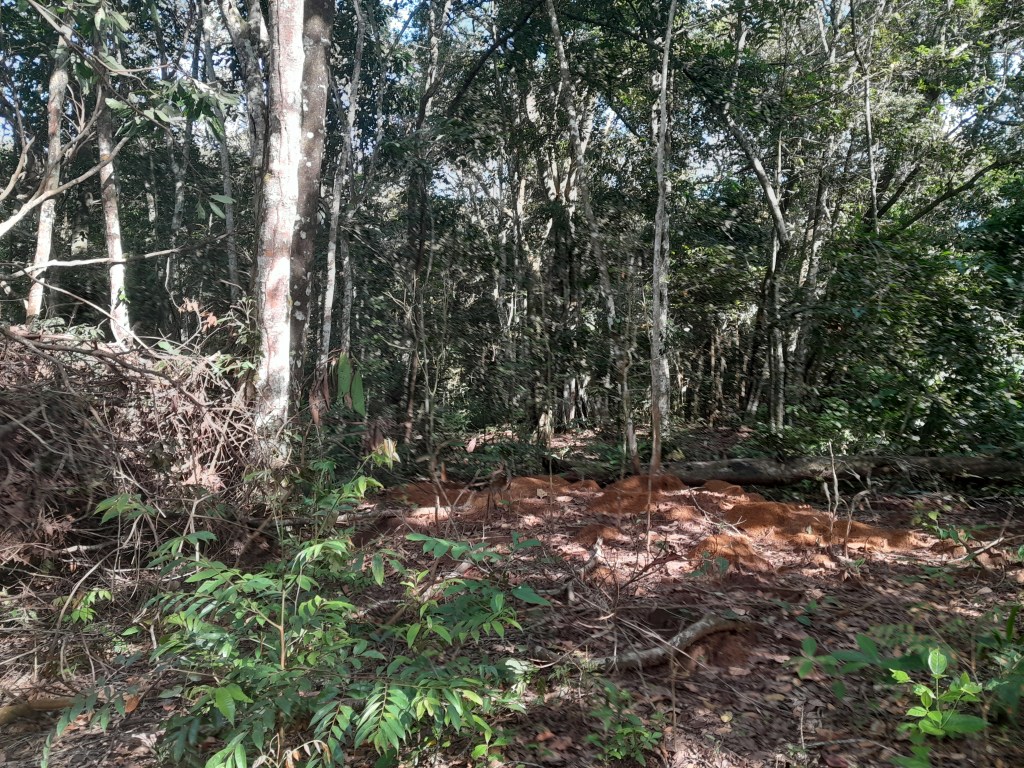
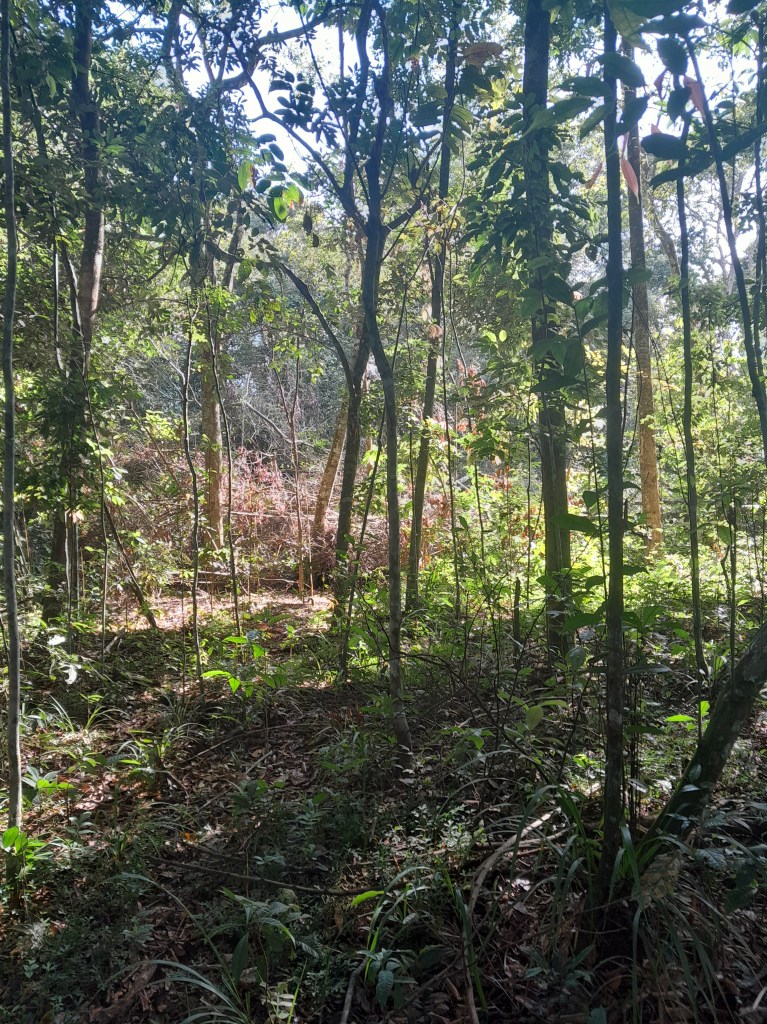
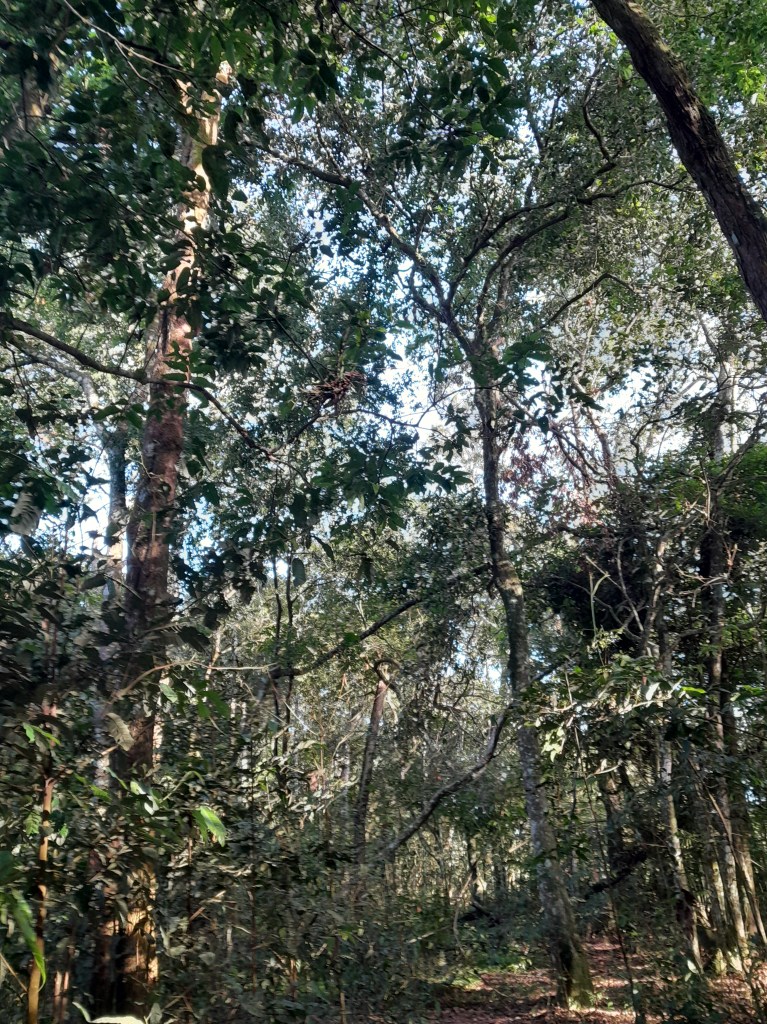
I mention this because while I was in the field after the conference, I observed more fallen trees than in past months as well as a more open canopy in some part of the long-term monitoring forest fragments I had been visiting over the past 21 years. Talking with the farm workers, they mention strong storms in the area, common at this time of the year, but that seems to have an increased effect this time. Although over the years we have observed storms and times in which management actions on the farm have affected the internal structure of the forest, changes in weather patterns seem to be more evident now and sometimes even stronger than in past years.These changes produce more edge effects that have positive and negative effects on monkeys, depending on the monkey’s species. And it also makes me think about the long-term benefits of some of the landscape structures such as living fences and lineal forest strips that we promote to connect forest fragments in highly fragmented landscapes. How can we improve them? What is the minimal width we should be using? More questions to answer for the following years so we can better understand how to help our monkeys to survive in fragmented landscapes…

Español: De vuelta en el campo: los efectos del viento y las tormentas en fragmentos

En el blog de hoy vamos a hablar acerca de algunas noticias de nuestro campo. Después de nuestra participación en el Congreso Internacional de Primatología en Madagascar donde presentamos nuestro trabajo sobre la distribución del Mono Zocay (Plecturocebus ornatus), volvimos al campo, a nuestro monitoreo de monos en fragmentos de bosque.

Durante la conferencia me recordaron sobre los efectos del cambio climático sobre los fragmentos de bosque, especialmente los fragmentos pequeños y delgados. En algunas de las predicciones del Panel Internacional de Cambio Climático (IPCC), el Noroeste de Sur América, donde está ubicada Colombia las temperaturas se incrementarán. Esto significa que para los monos viviendo en áreas fragmentadas que tienen poblaciones aisladas como algunas de las poblaciones del endémico mono zocay que estarían más en riesgo.

Menciono esto porque mientras estuve en el campo después de la conferencia, observe más árboles caídos que en los meses anteriores, así como más discontinuidad en la parte alta del dosel del bosque en algunas partes de los fragmentos de bosque de monitoreo de largo plazo que he estado visitando a lo largo de los últimos 21 años. Hablando con algunos de los trabajadores, ellos mencionaron tormentas fuertes en el área, comunes durante esta época del año, pero que parece han incrementado su efecto esta vez. Aunque a lo largo de los años hemos observado tormentas y a veces las acciones de manejo de la finca han afectado la estructura interna del bosque, los cambios en los patrones del clima parecen ser más evidentes ahora y algunas veces más fuertes que en los años anteriores. Estos cambios producen más efectos de borde que tienen efectos positivos y negativos sobre los monos, dependiendo de la especie de mono. Y esto también me hace pensar acerca de los beneficios a largo plazo de las estructuras de paisaje como cercas vivas y franjas lineales de bosque que promovemos para conectar fragmentos de bosque en paisajes altamente fragmentados. ¿Cómo las Podemos mejorar? ¿Cuál es el ancho mínimo que deberíamos usar? Más preguntas para responder en los años siguientes de forma que podamos entender mejor cómo ayudar a nuestros monos a sobrevivir en paisajes fragmentados…

If you want to support our activities, please visit https://fineartamerica.com/art/xyomara+carretero or get in contact with us at xcarretero@gmail.com if you want to collaborate, donate or volunteer in our activities. You can also support our activities by buying our ornate titi monkeys stuff dolls https://www.instagram.com/p/Ctm_sEORvk8/?igshid=MzRlODBiNWFlZA== and our new journals in Amazon https://www.amazon.com/X-Carretero/dp/B0CWD1DBJM/ref=mp_s_a_1_1?© Copyright Disclaimer. All pictures used on this web page are protected with copyrights to Xyomara Carretero-Pinzón. If you want to use any of these pictures, please leave a message on the website or contact xcarretero@gmail.com
Monkey Forest Tales: Celebrating 30 years of my primatological journey

In today’s post, I want to take this opportunity to celebrate 30 years of my primatological journey. On July 19th, 1995, I have the opportunity to start a small project on red howler monkey’s baby behavior. This was the first time I followed monkeys, and it was the beginning of my primatological journey. Red howler monkeys open an incredible world of learning to me. I started this adventure with two wonderful friends, one who didn’t continue in a primatology path but became a great biologist, Gustavo Galindo, and another incredible primatologist, Dr. Carolina Gomez.

In my first day with my study group of red howler monkeys, the day started with an incredible encounter. It was also the day I first met a jaguar, a close encounter that not only was magical but also marked my life forever. Jaguars had an incredible way of looking at you that not only see you but also see your soul and connect you with nature and yourself in ways that it’s difficult to express with words. After this encounter I followed my way to the group of howlers that showed me the incredible journey of baby’s growth and mother behavior.

From 1995 onwards my primatological journey took me to many places and I had the opportunity to work with many species, each as unique as the previous one. From red howler monkeys, mantled howler monkeys, Colombian squirrel monkeys, ornate titi monkeys, Japanese macaques, saki monkeys and nocturnal monkeys, my primatology research had included behavior, ecology, landscape ecology and conservation. I had been lucky enough to work with great primatologists such as Dr. Izawa, Dr. Nishimura, Dr. Defler and so many other primatologists, ecologists, landscape ecologists and modelers who had taught me and shared incredible knowledge and experiences with me over the years. I’m very grateful to all of them. I also had the opportunity to share experiences with so many great students and researchers, in many places around the world. This is a journey that I hope continue in the following years as I continue following and studying monkeys in Colombia.

If you want to support our activities, please visit https://fineartamerica.com/art/xyomara+carretero or get in contact with us at xcarretero@gmail.com if you want to collaborate, donate or volunteer in our activities. You can also support our activities by buying our ornate titi monkeys stuff dolls https://www.instagram.com/p/Ctm_sEORvk8/?igshid=MzRlODBiNWFlZA== and our new journals in Amazon https://www.amazon.com/X-Carretero/dp/B0CWD1DBJM/ref=mp_s_a_1_1?

© Copyright Disclaimer. All pictures used on this web page are protected with copyrights to Xyomara Carretero-Pinzón. If you want to use any of these pictures, please leave a message on the website or contact xcarretero@gmail.com

Monkey Forest Tales: Another chapter about how Colombian squirrel monkeys live in fragmented areas

In today’s post, we continue with our series of articles based on information we had been collecting in the study area over the past 21 years. We are going to talk about a chapter in which we use data of Colombian squirrel monkey (Saimiri albigena) from my undergraduate thesis in Tinigua National Park, a continuous forest and my master thesis in Zocay Project study area, a fragmented area. In this chapter we compare the territory size, time spent on each activity and items consumed (i.e. arthropods, fruits, flowers and leaves consumed) of two groups of these monkeys, one in each site. Additionally occasional observations of other groups of Colombian squirrel monkeys were count in both areas and these counts were used to compared group sizes in both areas.

This chapter shows that groups in both areas consumed fruits and flowers of different plant species, however both groups consumed a similar number of arthropods (i.e. insects and spiders), fruits and flowers. In the continuous area Colombian squirrel monkeys also consume a small proportion of leaves that were not consumed in the fragmented area. In terms of the time spent by both groups feeding, the group in Zocay Project area (fragmented area) spent more time in this activity compared with the group in Tinigua (continuous area). Territory size and groups size was smaller in the fragmented area, while the distance they move every day was higher in the fragmented area compared to the continuous area. Time spent resting was lower in the fragmented area, while time spent moving is higher. Therefore, Colombian squirrel monkey’s strategy is to spend more time feeding, increasing the number of plant species of which they consumed fruits near to forest fragment edges and living fences. Living fences increase the space where they can find food.

Español: Otro capítulo sobre cómo los monos titis viven en zonas fragmentadas

En el blog de hoy continuamos con nuestra serie de artículos basados en información que hemos colectado en el área de estudio en los últimos 21 años. Vamos a hablar de un capítulo en el cual usamos datos de monos titis (Saimiri albigena) de mi tesis de pregrado en el parque nacional Tinigua, un bosque continuo y mi tesis de maestría en la zona de estudio del Proyecto Zocay, un área fragmentada. En este capítulo comparamos el tamaño del territorio, tiempo dedicado en cada actividad y los ítems consumidos (es decir, artrópodos, frutos, flores y hojas consumidas) de dos grupos de estos monos, uno en cada sitio. Además, las observaciones ocasionales de otros grupos de monos titis fueron contados en ambas áreas y estos conteos fueron usados para comparar los tamaños de los grupos en ambas áreas.

Este capítulo muestra que los grupos en ambas áreas consumieron frutos y flores de diferentes especies de plantas, sin embargo, ambos grupos consumieron un número similar de artrópodos (es decir insectos y arañas), frutos y flores. En el área continua, los monos titis también consumen una pequeña proporción de hojas que no son consumidas en el área fragmentada. En términos del tiempo empleado por ambos grupos alimentándose, el grupo en el área del Proyecto Zocay (área fragmentada) paso más tiempo en esta actividad comparado con el grupo de Tinigua (área continua). El tamaño del territorio y tamaño de los grupos es más pequeño en el área fragmentada, mientras que la distancia que los monos se mueven diariamente es mayor en el área fragmentada comparado con el área continua. El tiempo dedicado a descansar fue más corto en el área fragmentada, mientras que el tiempo gastado en moverse es mayor. Por lo tanto, la estrategia de los monos titis es pasar más tiempo comiendo, aumentando el número de especies de plantas de las cuales consumen frutos cerca de los bordes de los fragmentos y en las cercas vivas. Las cercas vivas aumentan el espacio donde pueden encontrar comida.

If you want to support our activities, please visit https://fineartamerica.com/art/xyomara+carretero or get in contact with us at xcarretero@gmail.com if you want to collaborate, donate or volunteer in our activities. You can also support our activities by buying our ornate titi monkeys stuff dolls https://www.instagram.com/p/Ctm_sEORvk8/?igshid=MzRlODBiNWFlZA== and our new journals in Amazon https://www.amazon.com/X-Carretero/dp/B0CWD1DBJM/ref=mp_s_a_1_1?© Copyright Disclaimer. All pictures used on this web page are protected with copyrights to Xyomara Carretero-Pinzón. If you want to use any of these pictures, please leave a message on the website or contact xcarretero@gmail.com
Monkey Forest Tales: An article explaining why we need to look outside and inside of forest fragments to better manage monkey species in the Colombian Llanos (Español abajo)

In today’s post, we continue with our series of articles based on information we had been collecting in the study area over the past 21 years. We are going to talk about an article product of my doctorate thesis and probably one of the best papers I have ever written. This paper was written under the supervision of two great landscape ecologists, Dr. Jonathan Rhodes and Dr. Clive McAlpine, and the supervision of Dr. Thomas Defler, a primatologist.

This paper focuses on four species of diurnal monkeys that live in Zocay Project study area: red howler monkeys (Alouatta seniculus), black-capped capuchin (Sapajus apella), Colombian squirrel monkeys (Saimiri albigena) and ornate titi monkeys (Plecturocebus ornatus). The last two are endemic and are classified as Vulnerable by the IUCN criteria. These criteria evaluate the risk of extinction for each species. The most important result of this paper is that for each species, variables affect these monkeys at different scales. This means that we need to consider the size of the landscape surrounding a specific forest fragment for each species, because it is not the same landscape size for all the species. For example, the landscape size for ornate titi monkeys (Plecturocebus ornatus) and black-capped capuchins (Sapajus apella) cover a 1000 m ratio around a specific forest fragment. In the case of Colombian squirrel monkeys (Saimiri albigena) and red howler monkeys (Alouatta seniculus), the landscape size is measure with a 500 m of ratio around a specific forest fragment.

Additionally, site-variables or variables related to structure and resource availability inside forest fragments are also important for monkey’s presence and abundance. For example, for monkey species such as Colombian squirrel monkeys and ornate titi monkeys resource availability variables such as number of trees with fruits is important for their presence and abundance. On the other hand, medium and large monkey species presence and abundance, such as red howler monkeys and black-capped capuchins, are influenced by variables related to forest structure such as canopy height. The importance of knowing how these variables at site and landscape-scale influence monkeys species presence and abundance is important when planning management and conservation actions in fragmented areas, improving the impact of any strategy that we implement. Therefore, if we want to conserve all the species in the study area we will need to look at landscape sizes measured at a ratio of 500 – 1000 m around a forest fragment and consider an increase of the amount of forest present in that landscape, while increasing native fruit availability inside the forest fragments present, paying special attention to species that produce fruits consumed by the monkey and with higher canopy height that provide good structural support (i.e. big trees).

Español: Un artículo explicando porqué necesitamos mirar adentro y afuera de los fragmentos de bosque para manejar mejor a las especies de monos en los Llanos Colombianos

En el blog de hoy continuamos con nuestra serie de artículos basados en información que hemos colectado en el área de estudio en los últimos 21 años. Vamos a hablar de un artículo producto de mi tesis de doctorado y probablemente uno de los mejores artículos que he escrito. Este artículo fue escrito bajo la supervisión de dos grandes ecólogos de paisaje, Dr. Jonathan Rhodes y Dr. Clive McAlpine, y la supervisión del Dr. Thomas Defler, un primatólogo.Este artículo se enfoca en cuatro especies diurnas de monos que viven en el área de estudio del Proyecto Zocay: monos aulladores (Alouatta seniculus), monos maiceros (Sapajus apella), monos titis o frailes (Saimiri albigena) y monos zocay (Plecturocebus ornatus). Los últimos dos son endémicos, es decir exclusivos de Colombia y del Llano y son clasificados como Vulnerable bajo los criterios de la IUCN. Estos criterios evalúan el riesgo de extinción para cada especie. Los resultados más importantes de este artículo es que para cada especie, las variables afectan estos monos a diferentes escalas. Esto significa que necesitamos considerar el tamaño del paisaje alrededor de un fragmento de bosque específico porque no es el mismo tamaño de paisaje para todas las especies. Por ejemplo, el tamaño del paisaje para el mono zocay (Plecturocebus ornatus) y de los monos maiceros (Sapajus apella) cubre un radio de 1000 m alrededor de un fragmento de bosque específico. En el caso de los monos titis (Saimiri albigena) y monos aulladores (Alouatta seniculus), el tamaño del paisaje es medido con un radio de 500 m alrededor de un fragmento de bosque específico.

Adicionalmente, variables a la escala de sitio o variables relacionadas con la disponibilidad de recursos o estructura dentro del bosque también son importantes para la presencia y abundancia de los monos. Por ejemplo, para las especies de monos como los titis y zocay, las variables relacionadas con la disponibilidad de los recursos tal como el número de árboles con frutos es importante para la presencia y abundancia de estos monos. Por otro lado, para la presencia y abundancia de especies de monos medianas y grandes, tales como los monos aulladores y maiceros, están influenciados por variables relacionadas con la estructura del bosque tales como la altura del dosel del bosque. La importancia de conocer cómo estas variables a escala de sitio y de paisaje influyen en la presencia y abundancia de las especies de monos es importante cuando se planean acciones de manejo y conservación en áreas fragmentadas, mejorando el impacto de cualquier estrategia que implementemos.

Por lo tanto, si queremos conservar todas las especies en el área de estudio necesitaremos mirar paisajes medidos en un radio de 500 – 1000 m alrededor del fragmentos de bosque y considerar un incremento de la cantidad de bosque presente en ese paisaje, mientras se incrementa la disponibilidad de frutos nativos dentro del bosque, poniendo atención especial a especies que produzcan frutos consumidos por los monos y con una árboles altos de dosel que proporcionen buena estructura de soporte, es decir árboles grandes.

If you want to support our activities, please visit https://fineartamerica.com/art/xyomara+carretero or get in contact with us at xcarretero@gmail.com if you want to collaborate, donate or volunteer in our activities. You can also support our activities by buying our ornate titi monkeys stuff dolls https://www.instagram.com/p/Ctm_sEORvk8/?igshid=MzRlODBiNWFlZA== and our new journals in Amazon https://www.amazon.com/X-Carretero/dp/B0CWD1DBJM/ref=mp_s_a_1_1?© Copyright Disclaimer. All pictures used on this web page are protected with copyrights to Xyomara Carretero-Pinzón. If you want to use any of these pictures, please leave a message on the website or contact xcarretero@gmail.com