
Monkey Forest Tales: Why is sad ecologist and biologist are not going to the field anymore?

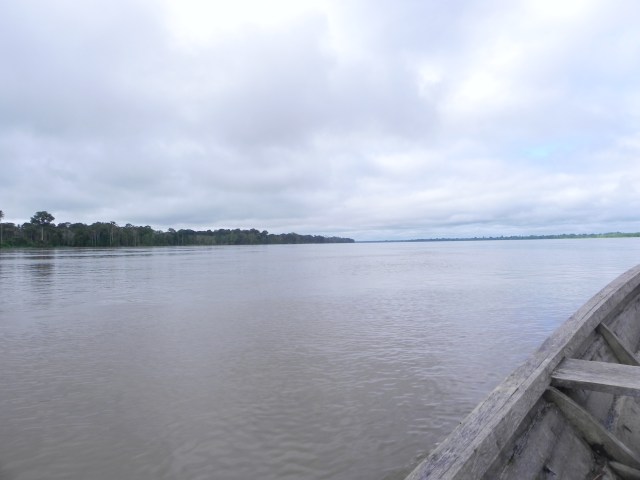
Today’s post is a personal reflection on an information shared in X from an article published in Nature in which a scientist mention that he “rarely get outside” despite of been working in an ecological question. For me as a biologist who had worked in the field for several decades and who had also incorporated technological tools and software in my work, reading the article make me think about how disconnected the new generation of ecologist and biologist seems to be of the organisms and ecosystems that they are studying and how that could impact our future results.

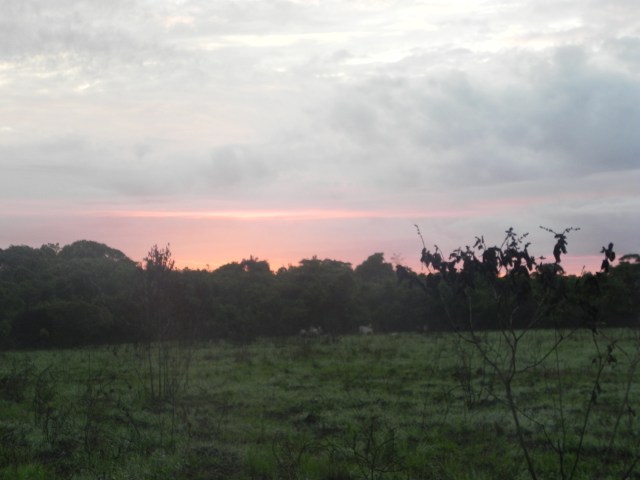
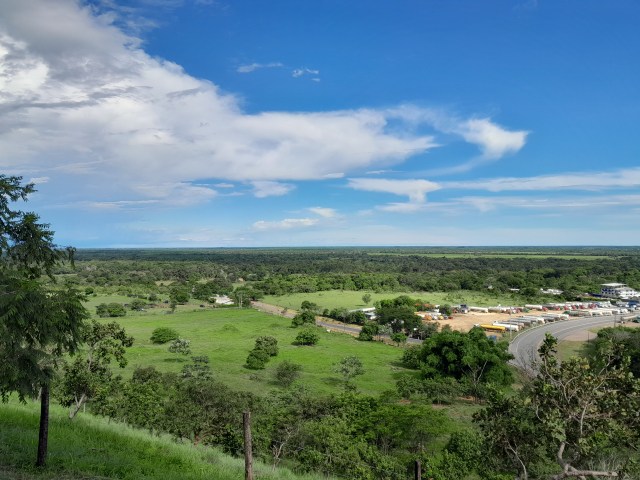
In my work, especially in the last 10 years, I learned and implemented the use of GIS and remote sensing information and software on answering the questions about geographic distribution and effects of fragmentation and habitat loss on primate species at Zocay Project study area. However, for me personally, going to the field and corroborating what satellite images and maps show me are an important and mostly fun part of my work. There isnothing more relaxing and clarifying that a walk in the forest when the sun is raising up…

May be because for me, primate sighting is an important part of what I do or because I started my career by doing behavioral and ecological research, not going to the field is just not an option. Even when funding is difficult to get and sometimes when no funding is available, not going to the field is simply not an option and I always find a way to go and spend time observing the monkeys. May be is also because, for me, going to the field constitute part of my process to generate questions and to understand what my data is saying.

I understand the importance of including new technologies and data from different sources, however the connection between data and real-world process is something that, for me, requires direct observation in the field. Animals don’t behave in a simplistic way and there are always multiple factors affecting and influencing how an animal behaves when a threat or a new process is close to them. Also, technology can help to collect data and analyze it faster but not to do everything. So, I still believe that one of the main factors that make research based on field data so important and strong is because people who work on it, like me, take the time to go and verify in the field what is happening on the ground and carefully observe how animals respond.

Hopefully, this connection with nature in ecology and biology is something that future generations of biologists and ecologists will consider incorporating it in their studies as that is what makes our work so important and realistic.

If you want to support our activities, please visit https://fineartamerica.com/art/xyomara+carretero or get in contact with us at xcarretero@gmail.com if you want to collaborate, donate or volunteer in our activities. You can also support our activities by buying our ornate titi monkeys stuff dolls https://www.instagram.com/p/Ctm_sEORvk8/?igshid=MzRlODBiNWFlZA== and our new journals in Amazon https://www.amazon.com/X-Carretero/dp/B0CWD1DBJM/ref=mp_s_a_1_1?© Copyright Disclaimer. All pictures used on this web page are protected with copyrights to Xyomara Carretero-Pinzón. If you want to use any of these pictures, please leave a message on the website or contact xcarretero@gmail.com
Monkey Forest Tales: A collaborative chapter on population density and habitat availability of ornate titi monkeys (Español abajo)

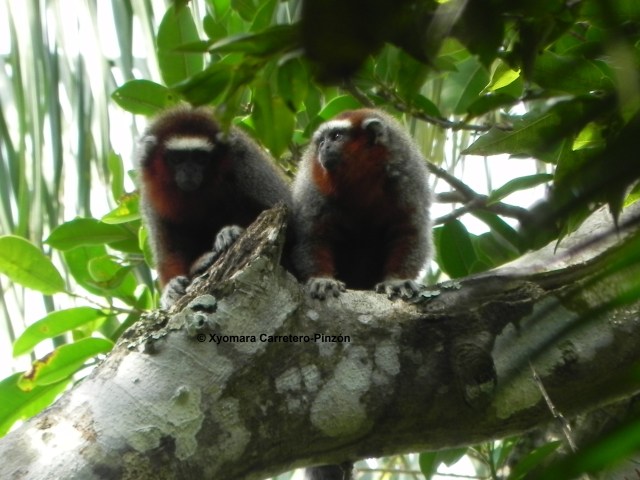
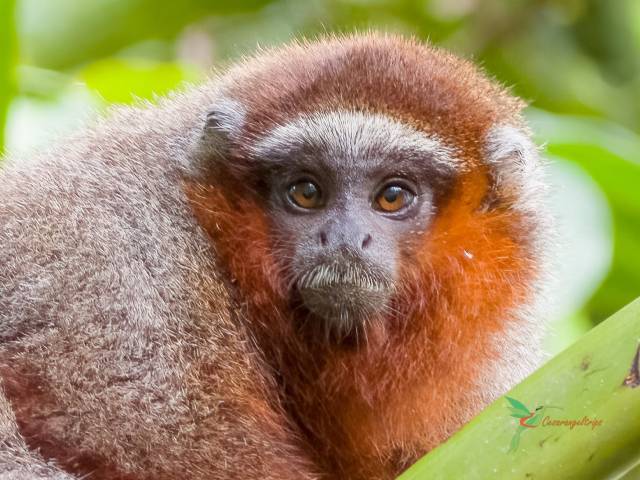
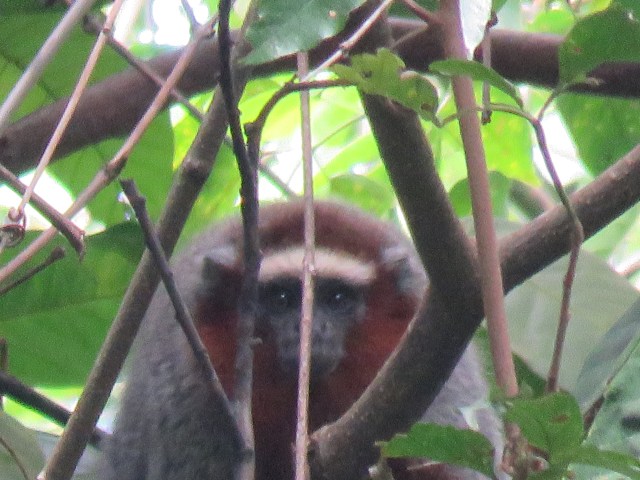
On the first post of this new year, we continue con our series of publications resulting from our work in Zocay Project study area over the past 21 years. Today’s post is about a chapter aimed at evaluating the population density and habitat availability of ornate titi monkeys (Plecturocebus ornatus). This is a collaborative chapter with Dr. Thomas Defler.

In this chapter we did the first evaluation of the habitat availability (how many forests are available) inside the distribution area of this endemic species. We found that the distribution of the species in official conservation areas is about 49.074,79 km2; however, the total area is highly fragmented by agricultural crops and other activities. Therefore, the actual area available is less than 39.404,454 km2 (35% of habitat reduction). This is based on data from 2001 to 2008. Densities in forest fragments between 16 ha and 1050 ha was between 57.94 ind/km2 and 1.073 ind/km2. We didn’t find a strong correlation between those densities and the size of the fragment. There is a tendency for higher densities in smaller fragments. Group sizes also showed a tendency to be high (4 to 5 individuals) in smaller fragments. These results are probably caused by less opportunities for animals to move between forest fragments.

This chapter was my first attempt to evaluate how much habitat is available as forest to this endemic primate species of Colombian Llanos, the ornate titi monkey (Plecturocebus ornatus). This was also the first time that education programs and connectivity measures were suggested. This chapter also lead to our paper last year about the current geographic distribution of the species and the change of conservation status for the ornate titi monkey from Vulnerable to Endangered, where we again suggest education and connectivity as two of the main conservation actions for this species. These two pillars education and connectivity are two of the main focus of our project this year.

Español: Un capítulo colaborativo sobre densidad poblacional y hábitat disponible para el mono zocay

En el primer blog de este nuevo año, continuamos con nuestra serie de publicaciones resultado de nuestro trabajo en el área de estudio del Proyecto Zocay por los últimos 21 años. El blog de hoy es acerca de un capítulo colaborativo con el objetivo de evaluar la densidad poblacional y el hábitat disponible del mono zocay (Plecturocebus ornatus). Este es un capítulo colaborativo con el Dr. Thomas Defler.

En este capítulo hicimos la primera evaluación del hábitat disponible (qué tanto bosque está disponible) dentro del área de distribución de esta especie endémica. Encontramos que la distribución de la especie en áreas de conservación es cerca de 49.074,79 km2; sin embargo, el área total es altamente fragmentada por cultivos agrícolas y otras actividades. Por los tanto, el área real disponibles es menor a 39.404,454 km2 (35% de reducción del hábitat). Esto se basa en datos de 2001 a 2008. Las densidades en los fragmentos de bosque entre 16 ha y 1050 ha fue entre 57.94 ind/km2 y 1.073 ind/km2. No encontramos una fuerte correlación de estas densidades con el tamaño del fragmento. Existe una tendencia a densidades más altas en fragmentos más pequeños. El tamaño de los grupos también mostró una tendencia a ser más alta (4 a 5 individuos) en fragmentos más pequeños. Estos resultados son probablemente causados por menos oportunidades para animales para moverse entre fragmentos de bosque.

Este capítulo fue mi primer intento para evaluar qué tanto hábitat está disponible como bosque para esta especie endémica de especies de primates de los Llanos Colombianos, el mono zocay (Plecturocebus ornatus). Esta fue también la primera vez que los programas de educación y medidas de conectividad fueron sugeridos. Este capítulo también llevo a nuestro artículo del año pasado acerca de la distribución geográfica actual y el cambio del estado de conservación del mono zocay de Vulnerable a En Peligro, donde nuevamente sugerimos la educación y conectividad como dos de las principales acciones de conservación para esta especie. Estos dos pilares, educación y conectividad, son dos de los principales enfoques de Nuestro Proyecto este año.

If you want to support our activities, please visit https://fineartamerica.com/art/xyomara+carretero or get in contact with us at xcarretero@gmail.com if you want to collaborate, donate or volunteer in our activities. You can also support our activities by buying our ornate titi monkeys stuff dolls https://www.instagram.com/p/Ctm_sEORvk8/?igshid=MzRlODBiNWFlZA== and our new journals in Amazon https://www.amazon.com/X-Carretero/dp/B0CWD1DBJM/ref=mp_s_a_1_1?© Copyright Disclaimer.

All pictures used on this web page are protected with copyrights to Xyomara Carretero-Pinzón. Pictures in this post belongs to Xyomara Carretero-Pinzón and Cesar Angel. If you want to use any of these pictures, please leave a message on the website or contact xcarretero@gmail.com