



In today’s post, we continue with our series of articles based on information we had been collecting in the study area over the past 20 years. We are going to talk about an article from 2018 in collaboration with one of my mentors, Dr. Thomas Defler. Thomas is an incredible researcher that although was born in US, came to Colombia following his passion for monkeys and the tropical forest and became a Colombian.
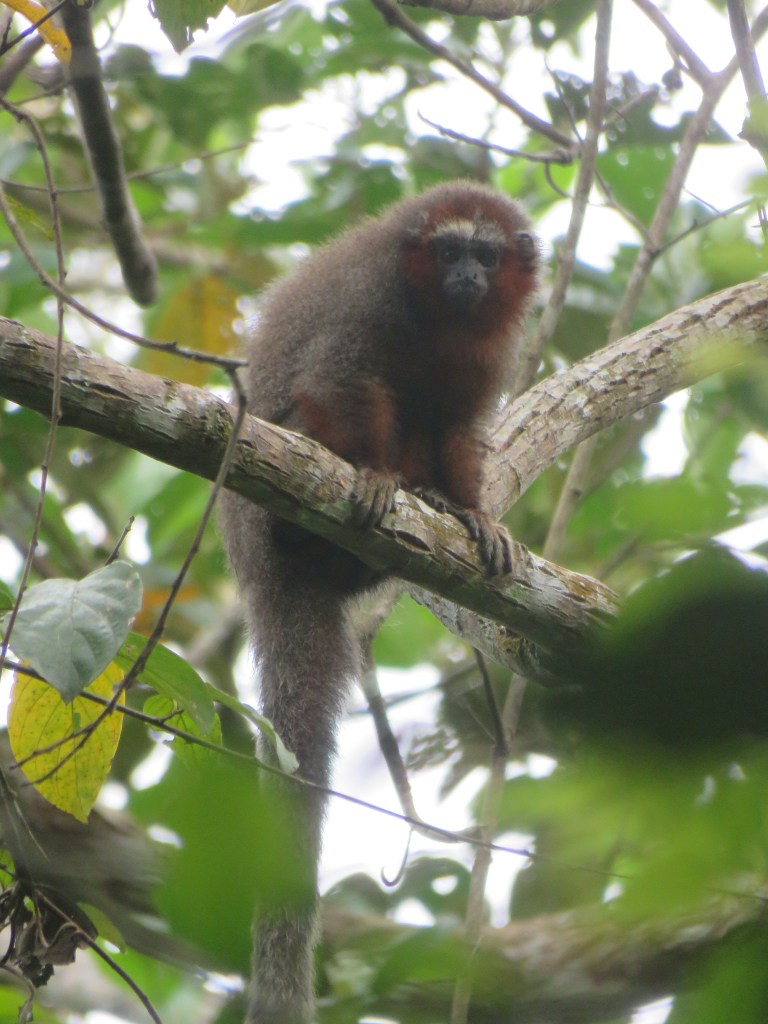
This paper put together observations from both of us in the Colombian Llanos and Tom’s observations from his years in the Orinoquian and Amazon forest in the departments of Vichada, Amazonas and Vaupes in Colombia. This paper showed that three species of titi monkeys, ornate titi monkeys (Plecturocebus ornatus, before called Callicebus ornatus), yellow-handed titi (Cheracebus lucifer, before called Callicebus torquatus lucifer), and white-chested titi (Cheracebus lugens, before called Callicebus lugens) have higher densities on forest edges compared with interior areas in large fragments (> 1000 ha) and in continuous areas. For example, in continuous forests like the ones in Amazonas and Vaupes, densities of titi species in these areas (Cheracebus lucifer and Cheracebus lugens) were higher in the forest near to rivers than in more interior areas present in these large tracks of forest. In the Colombian Llanos, large forest fragments (> 1000 ha) also showed higher densities in the edges of the fragment compared with the interiors, this information was taken during almost 9 years working in a private reserve in San Martin area, part of Proyecto Zocay. If you want to read more, please find the article here.
Español
Otro artículo colaborativo, esta vez sobre la preferencia del mono zocay por hábitats de borde de bosque.
En este blog, continuamos con nuestra serie sobre artículos basados en la información que hemos estado colectando en el área de estudio en los últimos 20 años. Vamos a hablar de un artículo del 2018 en colaboración con uno de mis profesores, el Dr. Thomas Defler. Thomas es un investigador increíble que, aunque nació en Estados Unidos, vino a Colombia siguiendo su pasión por los monos y los bosques tropicales y se nacionalizó como colombiano.
Este artículo combina las observaciones de ambos en los llanos de Colombia y las observaciones de Thomas de sus años en los bosques de la Orinoquia y Amazonas en los departamentos de Vichada, Amazonas y Vaupés en Colombia. Este artículo mostro que tres especies de titis, mono zocay (Plecturocebus ornatus, antes llamado Callicebus ornatus), titi de manos amarillas (Cheracebus lucifer, antes llamado Callicebus torquatus lucifer), y mono viudita o zogui zogui (Cheracebus lugens, antes llamado called Callicebus lugens) tienen altas densidades en los bordes de bosque comparado con áreas del interior en fragmentos grandes (> 1000 ha) y en áreas continuas. Por ejemplo, en los bosques continuos como los de Amazonas y Vaupés, las densidades de especies de viuditas (Cheracebus lucifer y Cheracebus lugens)en estas zonas fueron más altas en bosques cerca a los ríos comparado con áreas más en el interior en estas grandes zonas de bosque. En los llanos colombianos, los fragmentos más grandes (> 1000 ha) también mostró densidades más altas en los bordes del fragmento comparado con el interior, esta información fue tomada durante casi 9 años trabajando en una reserva privada en el área de San Martin, parte del Proyecto Zocay. Si desea leer más, por favor encuentre el artículo aquí.
If you want to support our activities, please visit https://fineartamerica.com/art/xyomara+carretero or get in contact with us at xcarretero@gmail.com if you want to collaborate, donate or volunteer in our activities. You can also support our activities by buying our ornate titi monkeys stuff dolls https://www.instagram.com/p/Ctm_sEORvk8/?igshid=MzRlODBiNWFlZA== and our new journals in Amazon https://www.amazon.com/X-Carretero/dp/B0CWD1DBJM/ref=mp_s_a_1_1?© Copyright Disclaimer. Pictures in this blog post are protected with copyrights to Xyomara Carretero-Pinzón and Francisco Gomez. All pictures used on this web page are protected with copyrights to Xyomara Carretero-Pinzón. If you want to use any of these pictures, please leave a message on the website or contact xcarretero@gmail.com
 zocayproject