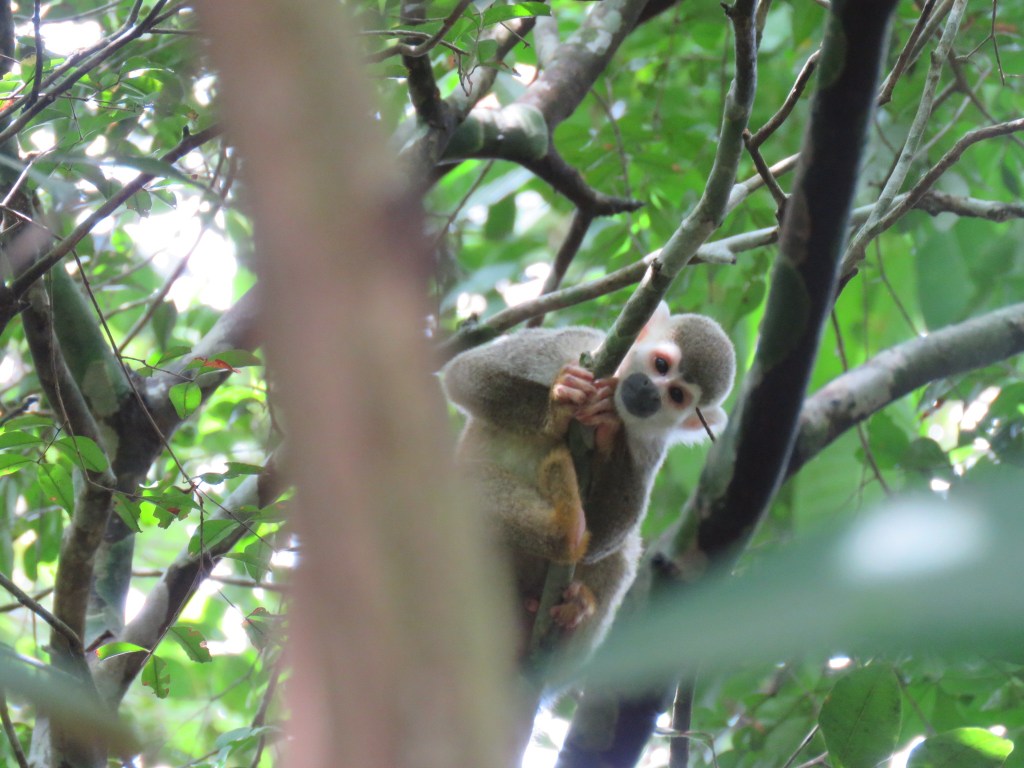
Today’s post is about some of the newest news from the field. Apart from the excitement to check on the Colombian squirrel monkeys (Saimiri albigena) babies born over the past months; it was also time to check of the yellow fever outbreak we have in Colombia was showing any sign in Zocay Project study area. Colombia is passing through a yellow fever outbreak that had already affected red howler monkeys (Alouatta seniculus) and night monkeys (Aotus spp.) in another region of Colombia. Fortunately for all the monkeys in our study area, none of the monkeys we saw in our fieldwork this month had shown any signs of yellow fever up to now. However, we will continue looking for any signs of monkey’s sickness in our field site and any sites we monitor monkeys in San Martín, Villavicencio and Villanueva.
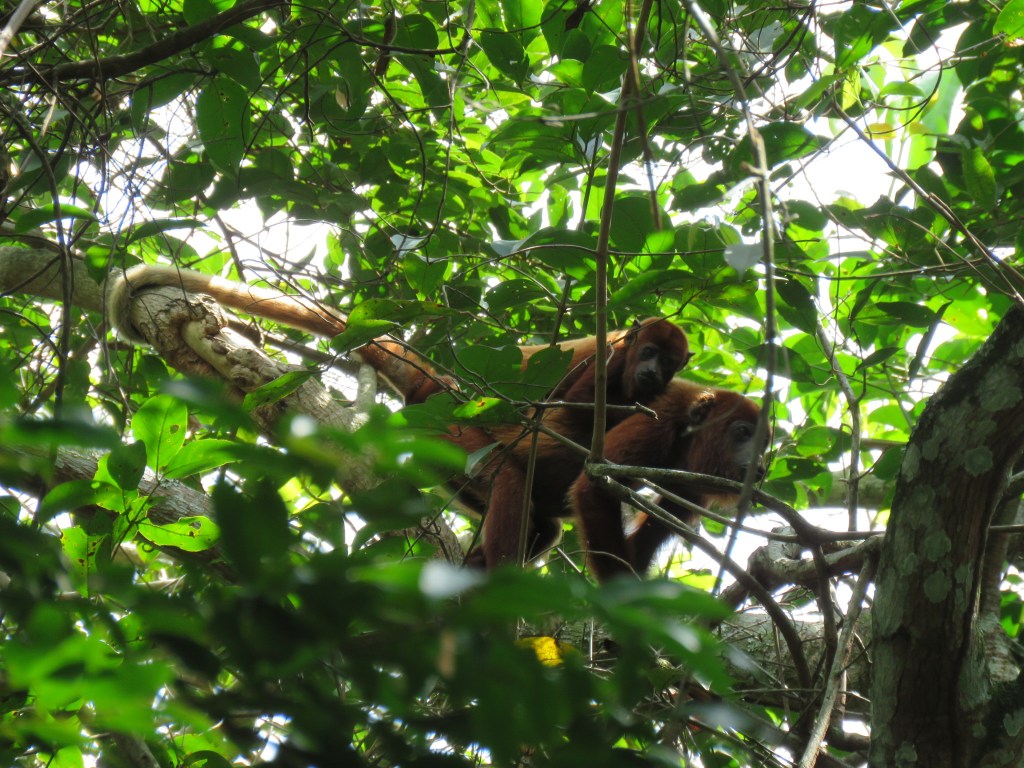
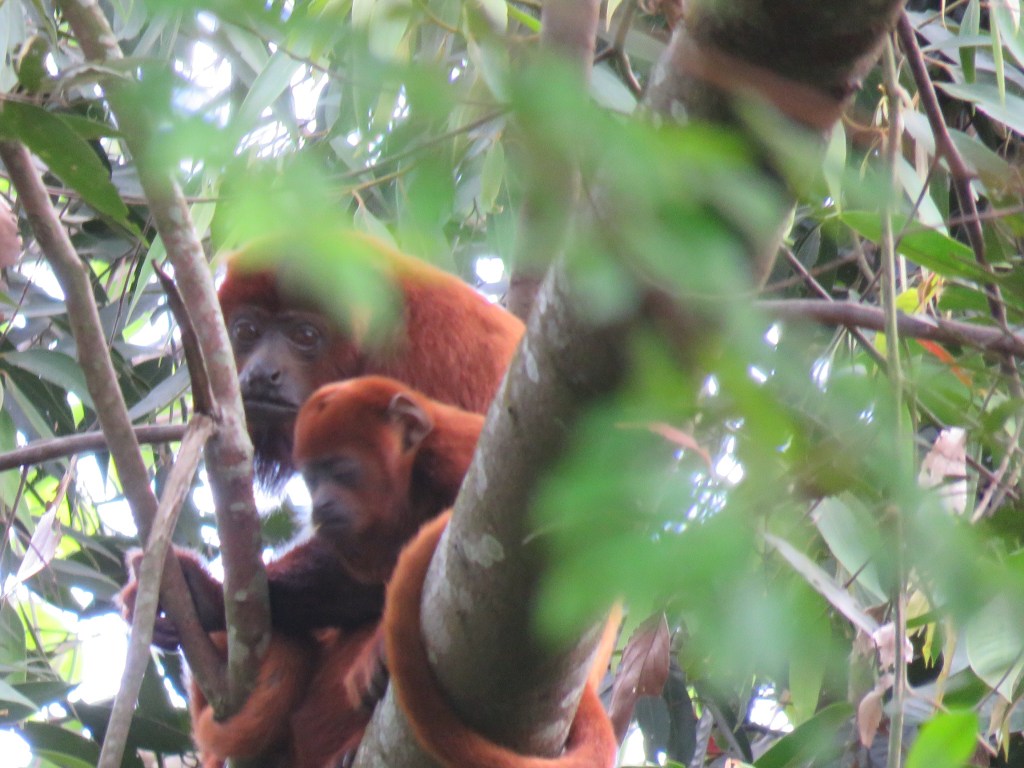
Colombian squirrel monkeys’ babies continue to grow and some of the older babies are starting to show some independent movements, moving and playing a little bit farther from mom. They are still eating mom’s milk, however, a couple of them seem to start eating some fruits near to their moms. We also saw black-capped capuchin monkeys (Sapajus apella) and red howler monkeys (Alouatta seniculus) babies enjoying their playful adventures. Fortunately for all monkeys’ babies, the rainy season has already started, and fruits are all over the forest.
During our visit to San Martin area, this time, a huge storm broke over night and the stream along which the forest growth was flooded, trees were as greener as they become after a heavy rain. A giant anteater (Myrmecophaga tridactyla), tamandua (Tamandua tetradactyla) and coatis (Nasua nasua) were also roaming around. Coatis also had babies at this time of the year making the forest a nursery.
In today’s post, we continue with our series of articles based on information we had been collecting in the study area over the past 20 years. We are going to talk about an article in which researchers working in Latin America and Madagascar used information collected in many places where monkeys and lemur are found in the wild to better understand why in Latin America and Madagascar primates use mainly trees instead of on the ground to move, which is more used by primates in Asia and Africa. This kind of article requires information from many species and places and researchers collaborate and share their information to answer questions related to wider conceptual questions, such as how terrestriality (moving on the ground instead of on trees) evolves?
For this article, we share information we collected as part of my master thesis on ecology and behavior of Colombian squirrel monkeys in the study area. This study found that monkeys and lemurs tend to use the ground more in areas with less canopy cover (areas where there are less big trees, such small fragments) and higher temperatures (hotter sites). Also, the species that use more the ground are species that eat more items and not only fruits, for example Colombian squirrel monkeys that eat a lot of insects and spiders and flowers and not only fruits (and bananas as many would think!!). Species that live in larger groups also use the ground more.
Over the years, we also have seen other species using the ground for many activities such as searching for food, movement, play and even interacting with other species. Most of these behaviors are sometimes influenced by lack of trees where the monkeys can move from one fragment of forest to another, that is why it is so important to connect forest fragments with trees. The use of the ground in animals in the study area is not always a natural behavior but something the monkeys need to do because we didn’t give them any other option.
Español: Un artículo de colaboración para entender por qué los monos en Latino América y lemures en Madagascar prefieren usar árboles en vez del suelo para moverse
En este blog, continuamos con nuestra serie sobre artículos basados en la información que hemos estado colectando en el área de estudio en los últimos 20 años. Vamos a hablar de un artículo en el que investigadores trabajando en Latino América y Madagascar usando información colectada en muchos sitios donde monos y lemures se encuentran en vida silvestre para entender mejor porqué en Latino América y Madagascar los primates usan principalmente árboles en vez de en el suelo para moverse, que es más usado por primates en Asia y Africa. Este tipo de artículos requieren información de muchas especies y lugares y los investigadores colaboran y comparten su información para responder preguntas relacionadas con preguntas conceptuales amplias, tales como ¿Cómo la terrestrialidad (moverse en el suelo en vez de sobre los árboles) evoluciona?
Para este artículo, nosotros compartimos información que colectamos como parte de mi tesis de maestría sobre la ecología y comportamiento de los monos titi (frailes) en la zona de estudio. Este estudio encontró que los monos y lemures tienden a usar el suelo más en áreas con menos cobertura del dosel (áreas donde hay menos árboles grandes, como fragmentos pequeños) y altas temperaturas (sitios calientes). También, las especies que usan más el suelo son especies que comen más ítems y no solo frutos, por ejemplo, los monos titis que comen muchos insectos, arañas y flores y no solo frutos (y bananos como muchos pueden pensar). Las especies que viven en grupos grandes también usan el suelo más.
A lo largo de los años, también hemos visto otras especies usando el suelo para muchas actividades tales como buscar alimentos, movimientos, jugar e incluso interactuando con otras especies. La mayoría de estos comportamientos son algunas veces influenciados por la falta de árboles donde los monos puedan moverse de un fragmento de bosque a otro, que es porque es tan importante conectar fragmentos de bosque con árboles. El uso del suelo por animales en el área de estudio no siempre es un comportamiento natural sino que algunas veces los monos necesitan hacerlo porque no tienen ninguna opción.



 zocayproject