
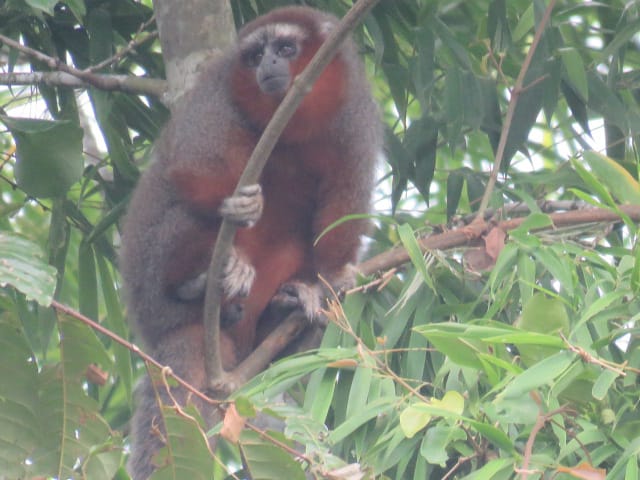
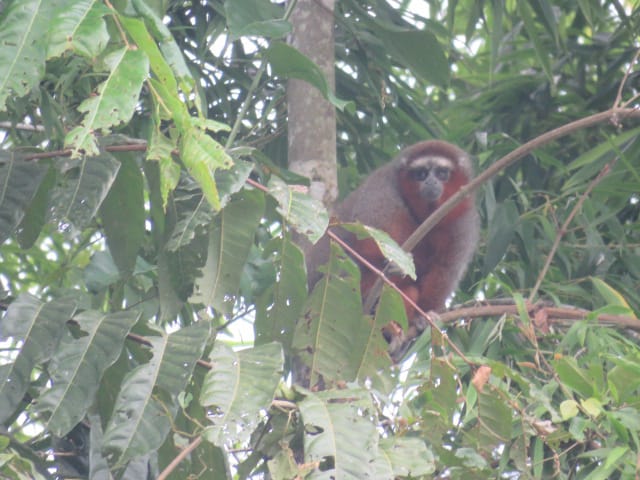

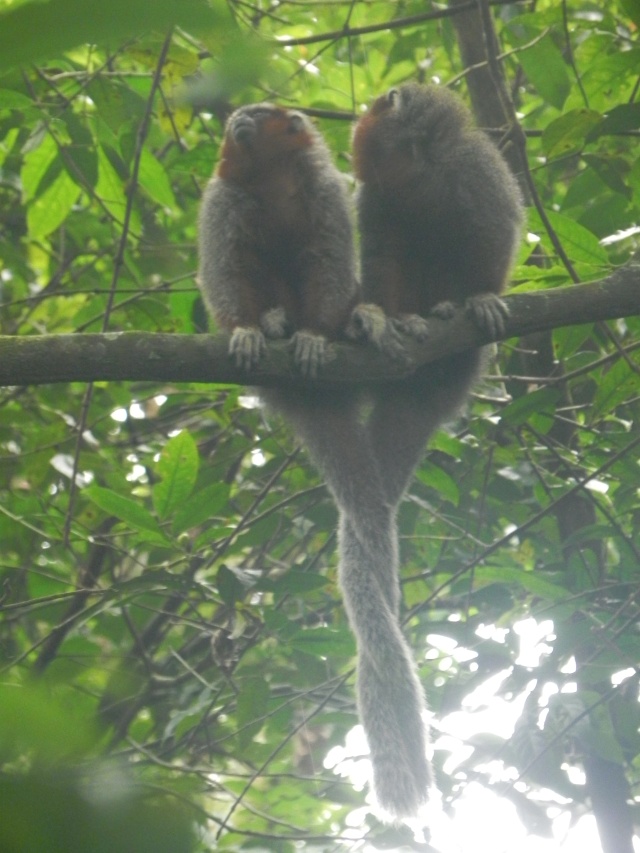
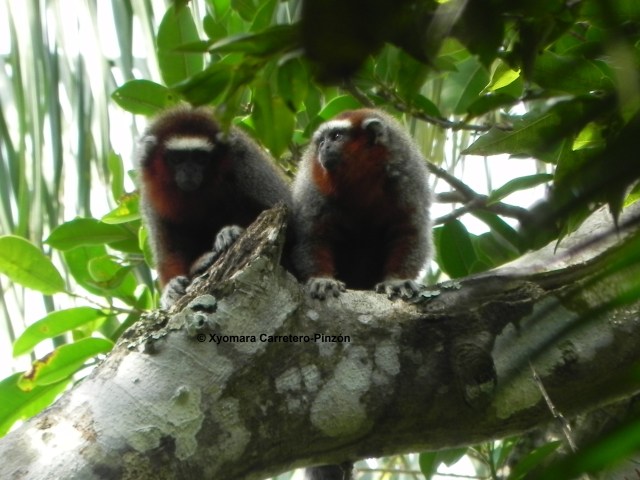

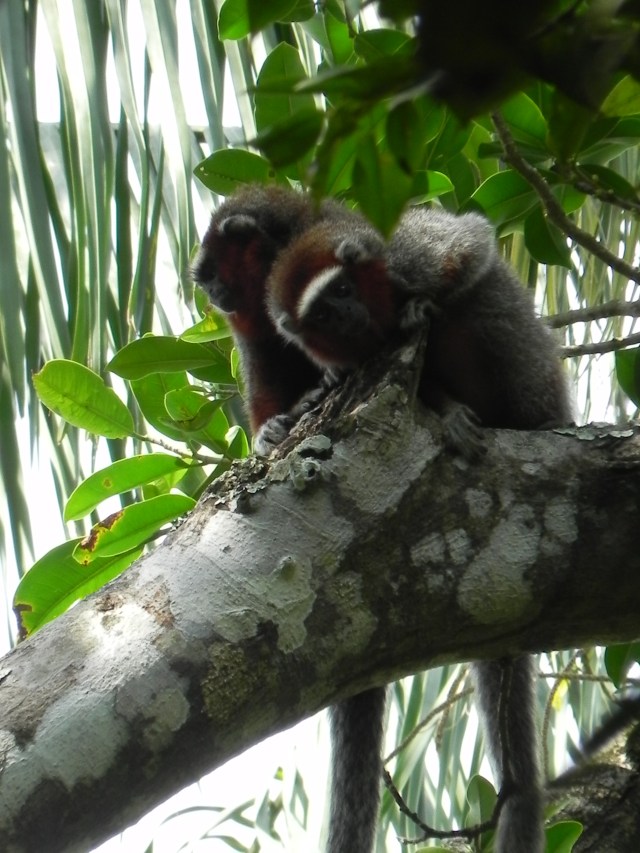
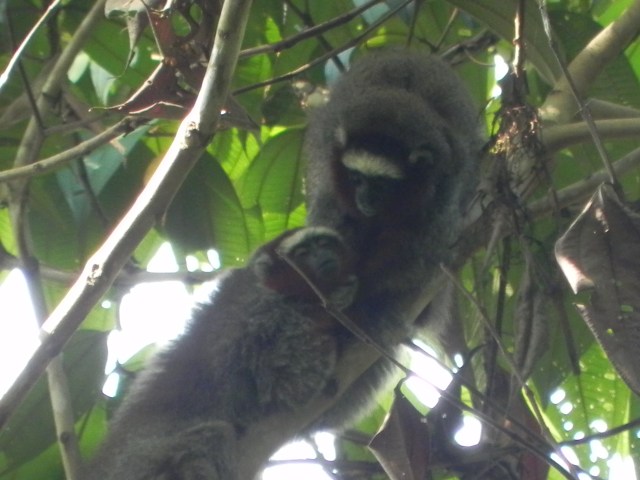
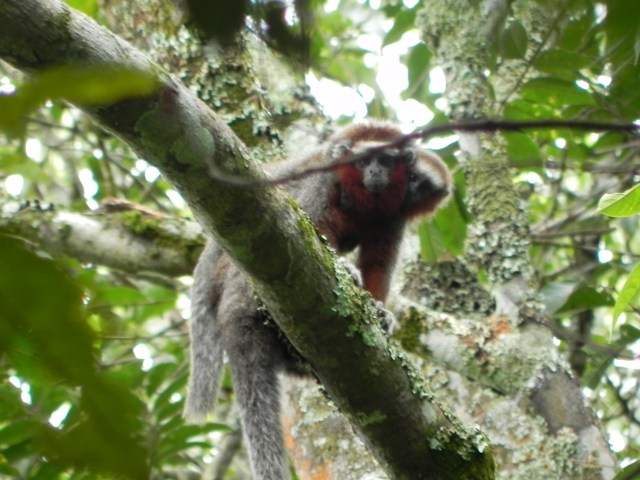
In today’s post we continue with our series of posts about our recent publications. Today in the turn for a paper done with one of my students who did a nice work focus on ornate titi monkeys (Plecturocebus ornatus) back in 2017 that was published recently in Primate Conservation journal. You can find the original paper in this link.
This work aimed to answer two questions: 1) How different was the time spent in different activities by a group of ornate titi monkeys living in a forest fragment surrounded by a more fragmented landscape (i.e. basically a landscape with less forest in it) compared to another group in a less fragmented landscape (i.e. a landscape with more forest in it) and 2) How different were they diet in those same groups?
Basically, we found that time spent feeding and moving were different between the groups, showing more time spent feeding in the group living in a more fragmented landscape. However, both groups eat mostly fruit. The group in the more fragmented landscapes also eats more leaves and arthropods (i.e. insects and spiders) than the group in the less fragmented landscape. These findings showed us that alterations in the landscape are affecting the time that ornate titi monkeys spent doing different activities, but especially the time they spent looking for food and eating. In terms of conservation of this endemic species of Colombia, there are to important applications of these results. First, considering the landscape around the forest fragments in which ornate titi monkeys is important to ensure that their behavior is not changed and second, we included a list of plants of which this species eat its fruits, and those plants can be used in regenerating and reforestation projects to increase connectivity of forest fragments in which this species inhabits.
Más acerca de nuestros resultados
En el blog de hoy continuamos nuestra serie de blogs acerca de nuestras últimas publicaciones. Hoy el turno es para un artículo realizado con una de mis estudiantes quien hizo un trabajo muy bonito enfocado en el mono zocay (Plecturocebus ornatus) en el 2017, que fue recientemente publicado en la revista Primate Conservation. Puede encontrar el enlace al artículo aca.
Este trabajo se enfocó en dos preguntas: 1) Qué tan diferente es el tiempo empleado en las diferentes actividades por un grupo de mono zocay viviendo en un fragmento rodeado por un paisaje más fragmentado (es decir, básicamente un paisaje que tiene menos bosque), comparado con otro grupo en un paisaje menos fragmentado (es decir, con más bosque). 2) qué tan diferente es la dieta (lo que comen) de esos mismos grupos.
Básicamente, encontramos que hay diferencias en el tiempo empleado por los dos grupos en alimentarse y moverse, con el grupo en el paisaje más fragmentado dedicando más tiempo a alimentarse. Sin embargo, los dos grupos se alimentan principalmente de frutos. El grupo en el paisaje más fragmentado también comió más hojas y artrópodos (insectos y arañas) comparado con el grupo del paisaje menos fragmentado. Estos resultados muestran que las alteraciones en el paisaje están afectando el tiempo que los monos zocay gastan para buscar comida y consumirla. En términos de conservación para esta especie endémica colombiana existen dos aplicaciones importantes de estos resultados. Primero, considerar el paisaje alrededor de los fragmentos en los cuales están los monos zocay es importante para asegurar que su comportamiento no cambie, y segundo, incluimos una lista de plantas de las que los monos zocay consumen sus frutos y esas plantas pueden ser usadas para proyectos de regeneración y reforestación para incrementar la conectividad de lo fragmentos de bosque en los que esta especie habita.
If you want to support our activities, please visit https://fineartamerica.com/art/xyomara+carretero or get in contact with us at xcarretero@gmail.com if you want to collaborate, donate or volunteer in our activities. You can also support our activities by buying our ornate titi monkeys stuff dolls https://www.instagram.com/p/Ctm_sEORvk8/?igshid=MzRlODBiNWFlZA== and our new journals in Amazon https://www.amazon.com/X-Carretero/dp/B0CWD1DBJM/ref=mp_s_a_1_1?
© Copyright Disclaimer. All pictures used on this web page are protected with copyrights to Xyomara Carretero-Pinzón. Pictures rights in this post belongs to Cesar Angel, Francisco Gomez and Xyomara Carretero-Pinzón. If you want to use any of these pictures, please leave a message on the website or contact xcarretero@gmail.com
 zocayproject