
Monkey Forest Tales: more about our results (Español abajo)

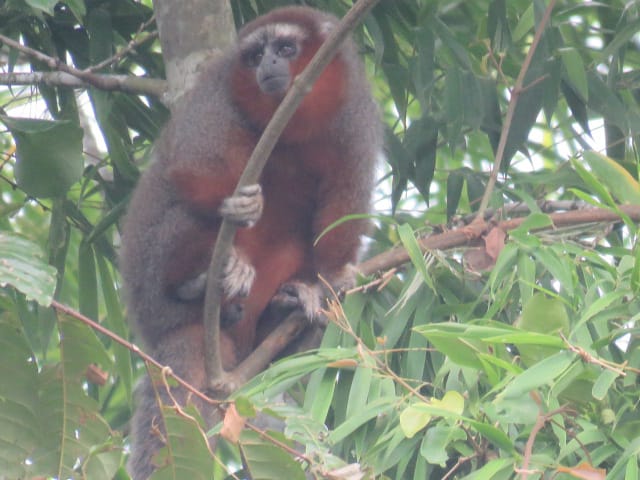
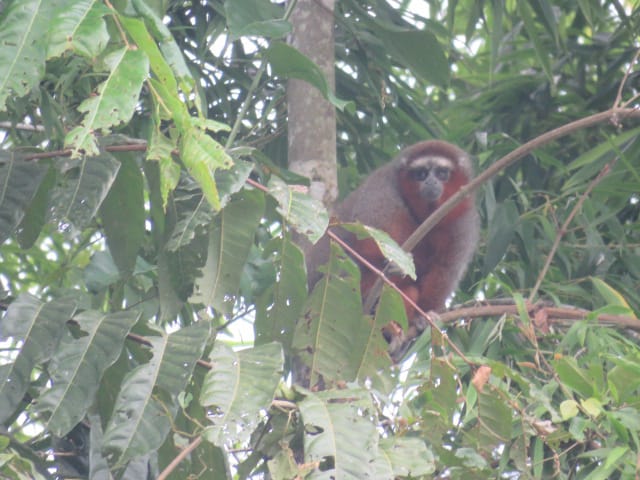
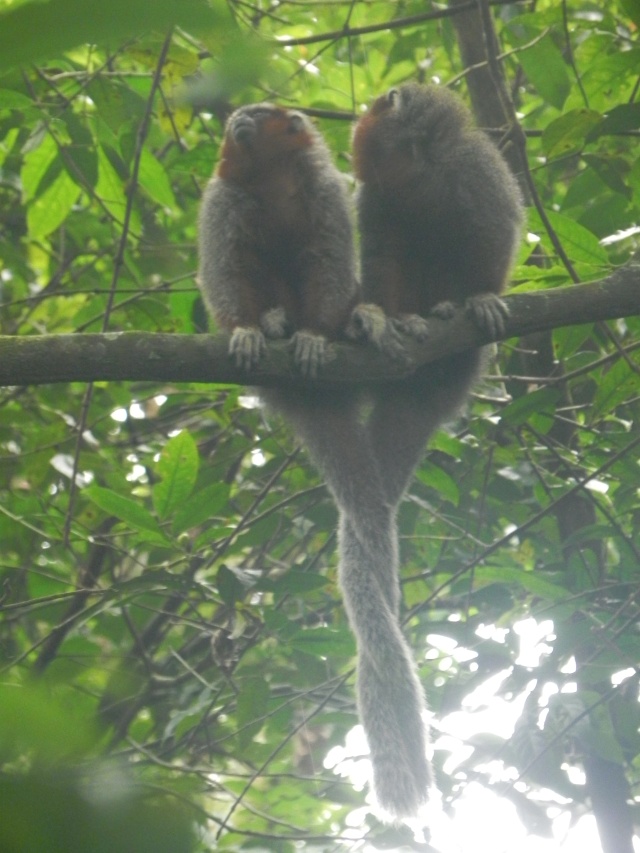
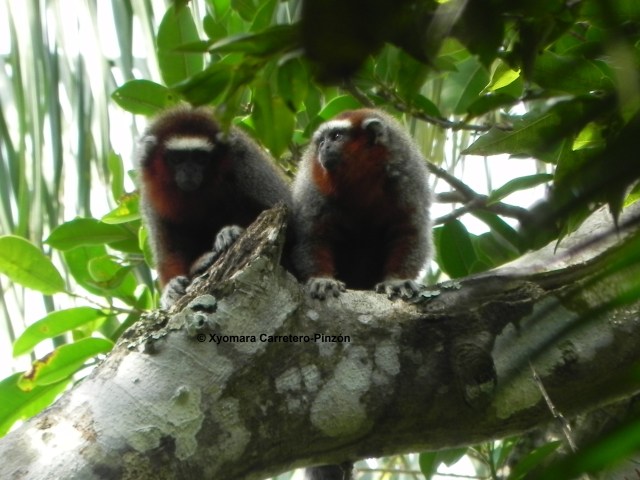
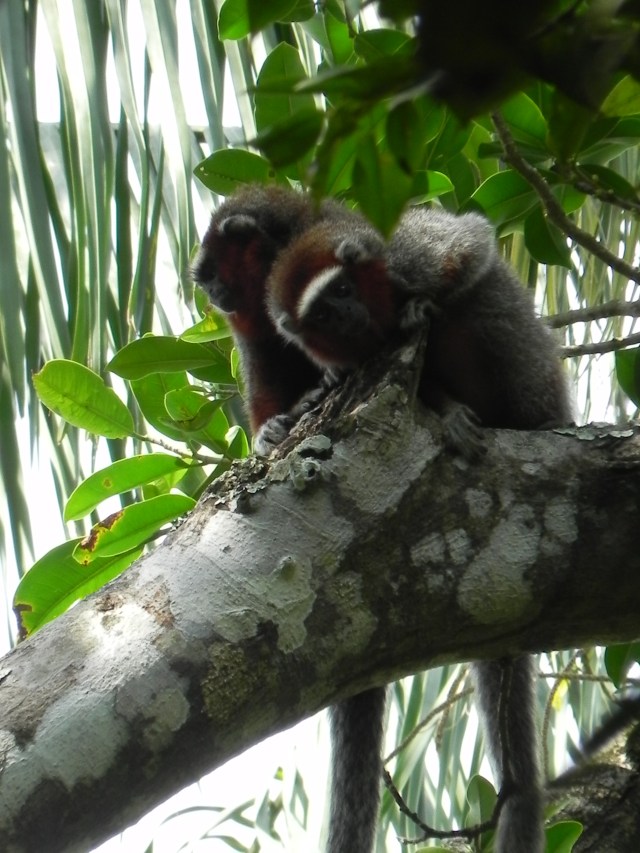
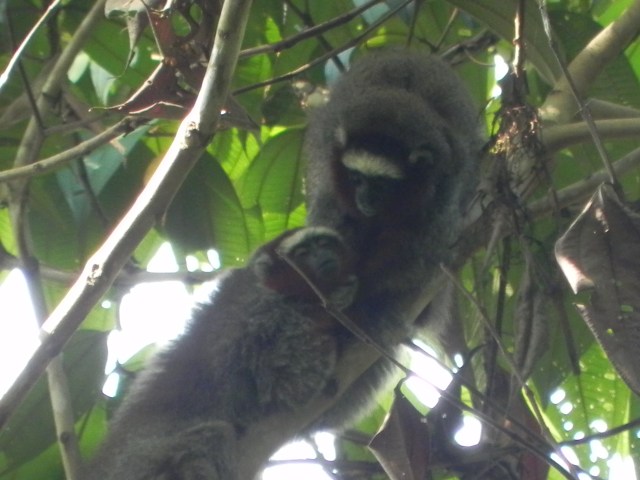
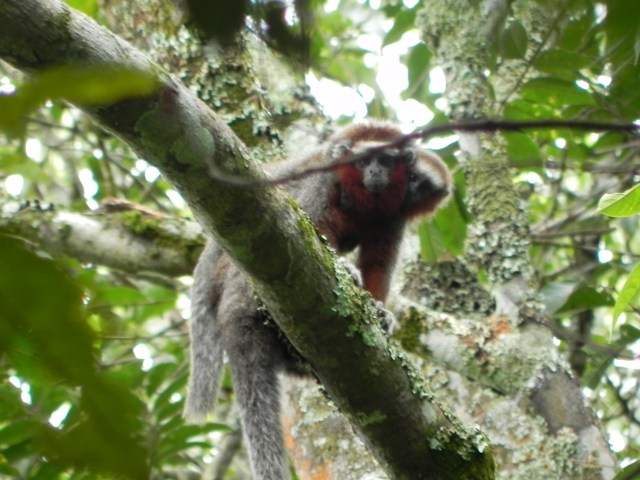
In today’s post we continue with our series of posts about our recent publications. Today in the turn for a paper done with one of my students who did a nice work focus on ornate titi monkeys (Plecturocebus ornatus) back in 2017 that was published recently in Primate Conservation journal. You can find the original paper in this link.

This work aimed to answer two questions: 1) How different was the time spent in different activities by a group of ornate titi monkeys living in a forest fragment surrounded by a more fragmented landscape (i.e. basically a landscape with less forest in it) compared to another group in a less fragmented landscape (i.e. a landscape with more forest in it) and 2) How different were they diet in those same groups?

Basically, we found that time spent feeding and moving were different between the groups, showing more time spent feeding in the group living in a more fragmented landscape. However, both groups eat mostly fruit. The group in the more fragmented landscapes also eats more leaves and arthropods (i.e. insects and spiders) than the group in the less fragmented landscape. These findings showed us that alterations in the landscape are affecting the time that ornate titi monkeys spent doing different activities, but especially the time they spent looking for food and eating. In terms of conservation of this endemic species of Colombia, there are to important applications of these results. First, considering the landscape around the forest fragments in which ornate titi monkeys is important to ensure that their behavior is not changed and second, we included a list of plants of which this species eat its fruits, and those plants can be used in regenerating and reforestation projects to increase connectivity of forest fragments in which this species inhabits.

Más acerca de nuestros resultados

En el blog de hoy continuamos nuestra serie de blogs acerca de nuestras últimas publicaciones. Hoy el turno es para un artículo realizado con una de mis estudiantes quien hizo un trabajo muy bonito enfocado en el mono zocay (Plecturocebus ornatus) en el 2017, que fue recientemente publicado en la revista Primate Conservation. Puede encontrar el enlace al artículo aca.

Este trabajo se enfocó en dos preguntas: 1) Qué tan diferente es el tiempo empleado en las diferentes actividades por un grupo de mono zocay viviendo en un fragmento rodeado por un paisaje más fragmentado (es decir, básicamente un paisaje que tiene menos bosque), comparado con otro grupo en un paisaje menos fragmentado (es decir, con más bosque). 2) qué tan diferente es la dieta (lo que comen) de esos mismos grupos.

Básicamente, encontramos que hay diferencias en el tiempo empleado por los dos grupos en alimentarse y moverse, con el grupo en el paisaje más fragmentado dedicando más tiempo a alimentarse. Sin embargo, los dos grupos se alimentan principalmente de frutos. El grupo en el paisaje más fragmentado también comió más hojas y artrópodos (insectos y arañas) comparado con el grupo del paisaje menos fragmentado. Estos resultados muestran que las alteraciones en el paisaje están afectando el tiempo que los monos zocay gastan para buscar comida y consumirla. En términos de conservación para esta especie endémica colombiana existen dos aplicaciones importantes de estos resultados. Primero, considerar el paisaje alrededor de los fragmentos en los cuales están los monos zocay es importante para asegurar que su comportamiento no cambie, y segundo, incluimos una lista de plantas de las que los monos zocay consumen sus frutos y esas plantas pueden ser usadas para proyectos de regeneración y reforestación para incrementar la conectividad de lo fragmentos de bosque en los que esta especie habita.

If you want to support our activities, please visit https://fineartamerica.com/art/xyomara+carretero or get in contact with us at xcarretero@gmail.com if you want to collaborate, donate or volunteer in our activities. You can also support our activities by buying our ornate titi monkeys stuff dolls https://www.instagram.com/p/Ctm_sEORvk8/?igshid=MzRlODBiNWFlZA== and our new journals in Amazon https://www.amazon.com/X-Carretero/dp/B0CWD1DBJM/ref=mp_s_a_1_1?

© Copyright Disclaimer. All pictures used on this web page are protected with copyrights to Xyomara Carretero-Pinzón. Pictures rights in this post belongs to Cesar Angel, Francisco Gomez and Xyomara Carretero-Pinzón. If you want to use any of these pictures, please leave a message on the website or contact xcarretero@gmail.com
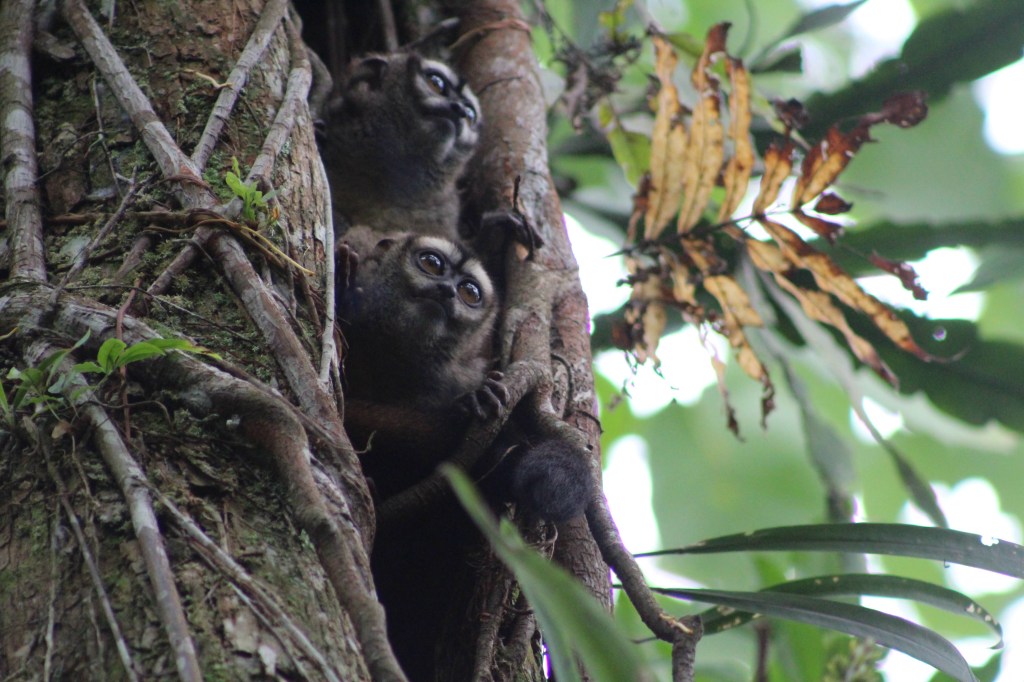
Monkey Forest Tales: About some of our findings and field news (Español abajo)

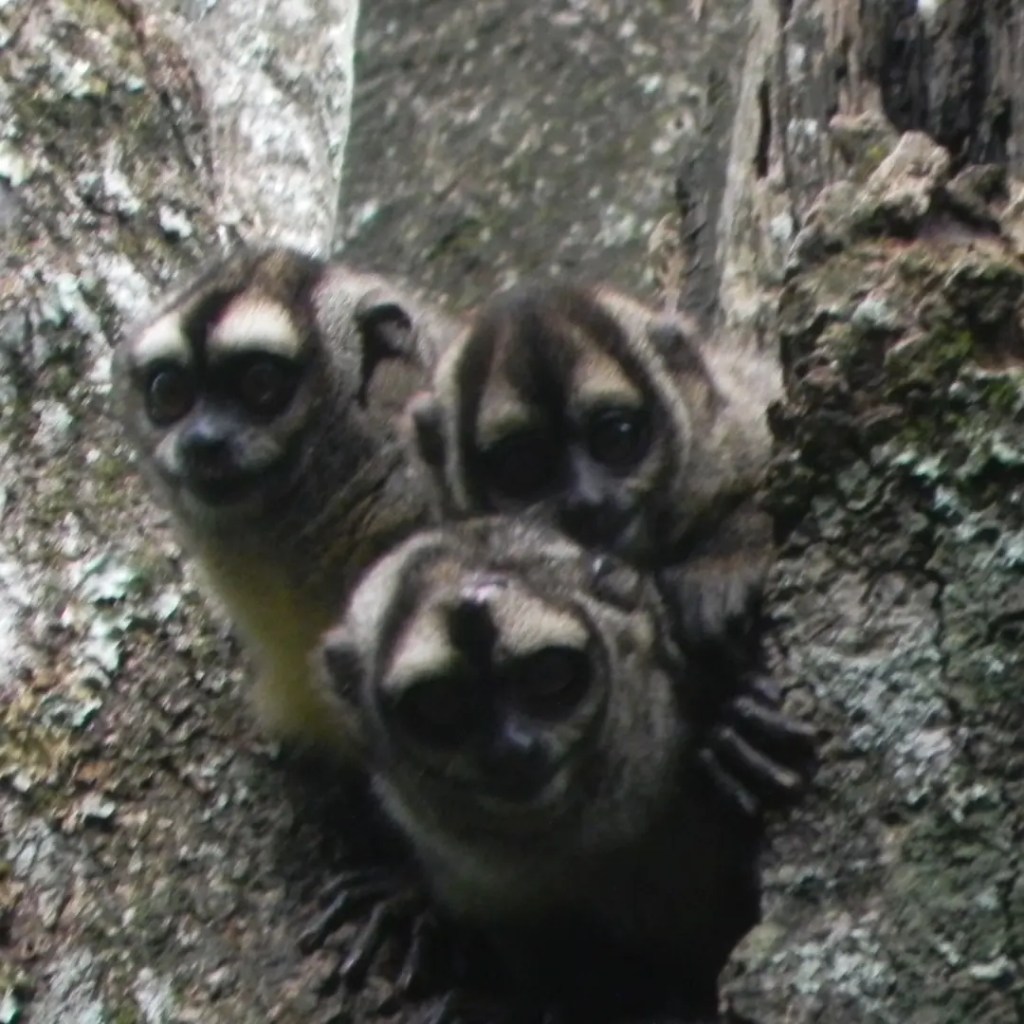
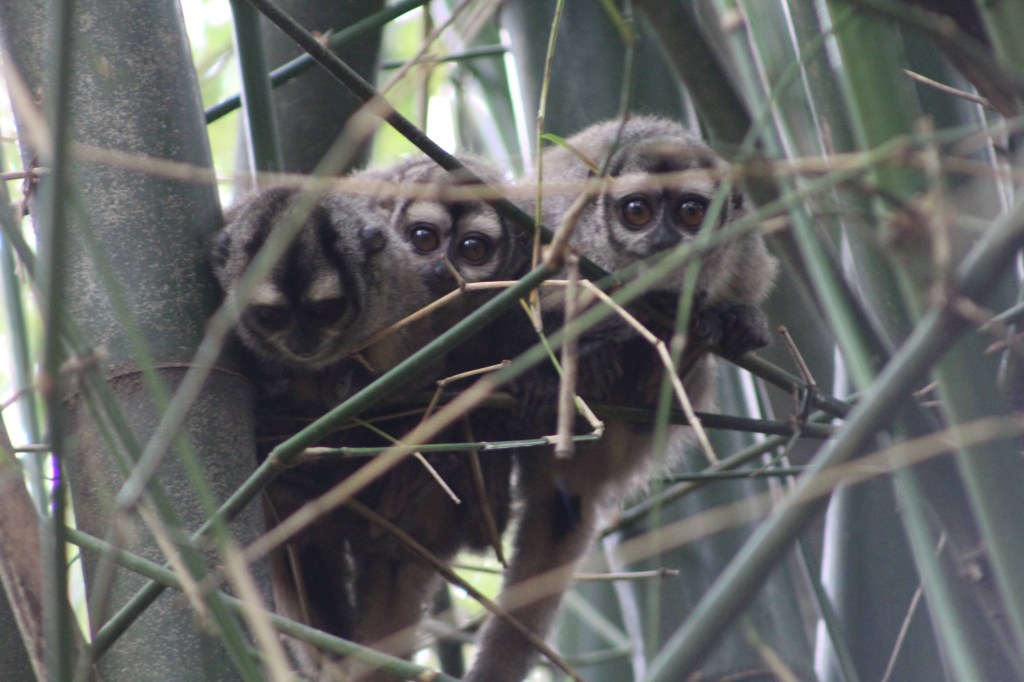
In today’s post we are going to talk a bit about some of our published findings. It will be a series of blog posts in which we are talking about some of our results, however this doesn’t mean that if you want to compare our results with yours, you don’t have to read the whole paper. The purpose of doing this exercise is to practice how to present our results in a simpler way. Also, when we have some news about our work in the field we will share this news with you, but as we are not spending that much time in the field at the moment, we are going to try to talk about what we have published up to know.We are going to start with a short note that we mention a couple of posts before about the nest sites from Brumback night monkeys (Aotus brumbacki). You can access the complete note in this link. In this note we describe some features of the nest of this endemic Colombian species that we observed over the past 20 years in San Martín, Villavicencio and Cumaral. We describe the plant species in which these nests were observed as well as the height and we describe some features of the landscapes surrounding the forest fragments where these nests were found. We found a wide diversity of hole trees, alive and dead palms, Guadua and bamboo stands and even house roofs. This is important to know because this species is found in an area of Colombia that has a lot of deforestation and hole trees, and palm trees are not always easy to find. These are nocturnal monkeys that need a safe, dark and dry site to spend the day. In small forest fragments these kinds of structures (hole trees, especially) are not abundant because they are easy to fell down during big storms with a lot of wind. Have you ever seen nocturnal monkeys’ nest? Where in Colombia? Share your observations in the commentsIn the past weeks, we had been monitoring some of the Colombian squirrel monkey’s groups (Saimiri albigena) in Villavicencio area. As we mentioned in one of our blogs in January, this is the baby’s season for this species, and we are happy to say that a couple of new babies were born and the ones we saw last month are growing. There are also a few females with really big bellies, close to birth date. It is always a challenge and a joy to observe these beautiful monkeys during this time of the year. Definitely one of the times in which I feel more joy to be able to witness new life in this planet that we all share…Acerca de algunos de nuestros resultados y noticias del campoEn el blog de hoy vamos a hablar un poco sobre nuestros resultados publicados. Será una serie de blogs en los cuales hablaremos acerca de algunos de nuestros resultados, sin embargo, esto no quiere decir que, si quieres comparar nuestros resultados con los tuyos, no tengas que leer el artículo completo. El propósito de hacer este ejercicio es practicar cómo presentar nuestros resultados en una forma más sencilla. También, cuando tengamos algunas noticias sobre nuestro trabajo en el campo, compartiremos esas noticias con ustedes, pero cómo no estamos pasando tanto tiempo en el campo en este momento, vamos a tratar de hablar de lo que hemos publicado hasta ahora.Vamos a iniciar con una nota que mencionamos hace un par de blogs anteriores sobre los nidos del mono nocturno llanero (Aotus brumbacki). Pueden acceder a la nota completa en este enlace. En esta nota describimos algunas características de los nidos de esta especie endémica colombiana que hemos observado en los últimos 20 años en San Martín, Villavicencio y Cumaral. Describimos las especies de plantas en las que los nidos fueron encontrados, así como su altura, y describimos algunas características del paisaje alrededor de los fragmentos de bosque donde los nidos fueron encontrados. Encontramos una gran diversidad de árboles con huecos, palmas vivas y muertas, guaduales o bambusales e incluso techos de casas. Esto es importante de conocer porque esta especie se encuentra en un área de Colombia que tiene mucha deforestación, y los árboles con huecos y las palmas no son fáciles de encontrar. Estos son monos nocturnos que necesitan un lugar seguro, oscuro y seco para pasar el día. En fragmentos de bosque pequeños estos tipos de estructuras (árboles con huecos, especialmente) no son abundantes debido a que es fácil que se caigan durante tormentas grandes con mucho viento. ¿Alguna vez has visto nidos de monos nocturnos? ¿Dónde en Colombia? ¡Comparte tus observaciones en los comentarios!En las semanas pasadas, hemos estado monitoreando algunos de los grupos de monos titis (Saimiri albigena) en el área de Villavicencio. Como lo mencionamos en uno de los blogs de enero, está es la época de nacimientos para esta especie y estamos felices de decirles que hay nuevos bebes y los que nacieron el mes pasado están creciendo. También hay algunas hembras con grandes barrigas, próximas a tener bebes. Siempre es un reto y una alegría observar estos hermosos monos durante este periodo del año. Definitivamente uno de los momentos en los que siento más felicidad de tener la oportunidad de presenciar nueva vida en este planeta que todos compartimos…If you want to support our activities, please visit https://fineartamerica.com/art/xyomara+carretero or get in contact with us at xcarretero@gmail.com if you want to collaborate, donate or volunteer in our activities. You can also support our activities by buying our ornate titi monkeys stuff dolls https://www.instagram.com/p/Ctm_sEORvk8/?igshid=MzRlODBiNWFlZA== and our new journals in Amazon https://www.amazon.com/X-Carretero/dp/B0CWD1DBJM/ref=mp_s_a_1_1?© Copyright Disclaimer. All pictures used on this web page are protected with copyrights to Xyomara Carretero-Pinzón. Pictures in this post from Martha L. Ortiz and Xyomara Carretero-Pinzón. If you want to use any of these pictures, please leave a message on the website or contact xcarretero@gmail.com