
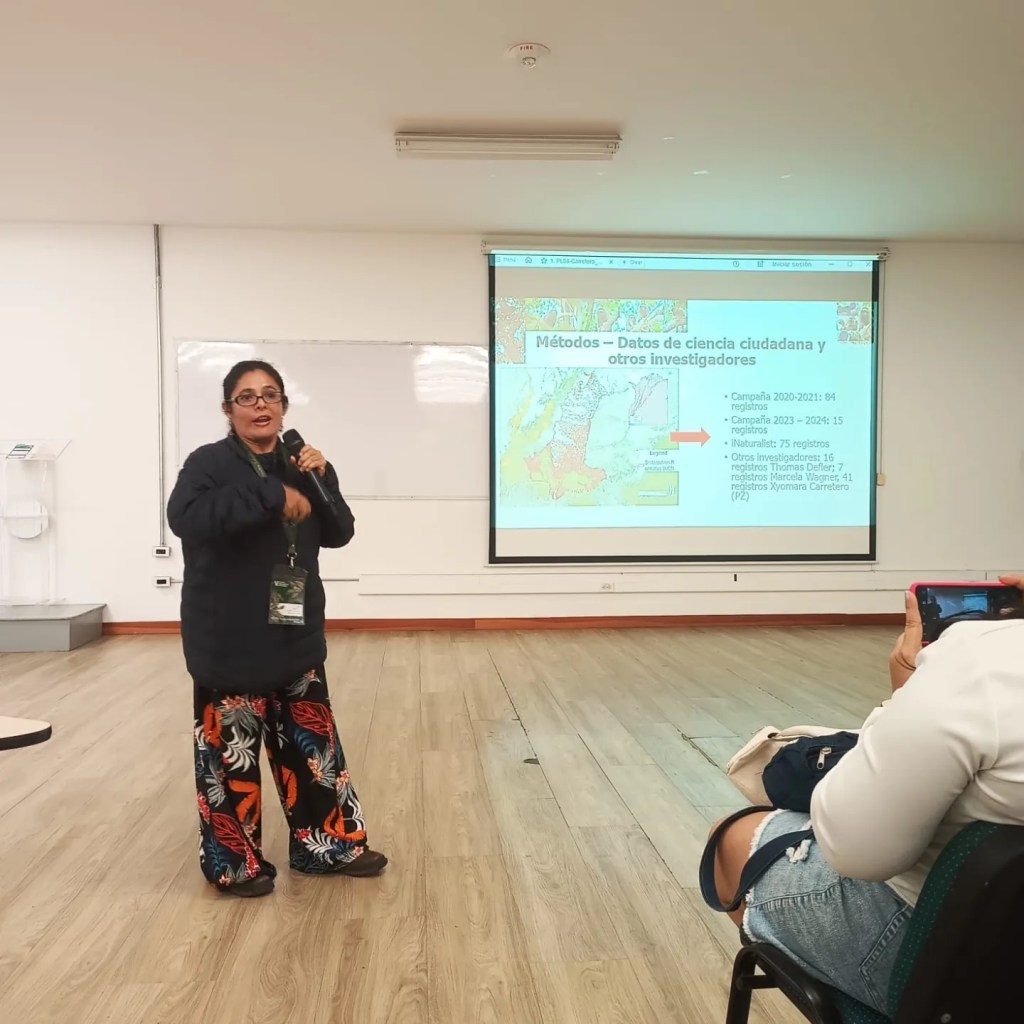
Monkey Forest Tales: Importance of sharing our findings in academic and non-academic environments

In today’s post we are going to discuss why is so important that we share our results and findings in academic and non-academic environments. This is especially important to students finishing their undergraduate thesis. The reason why is this so important is because most of the results and findings from student’s work can improve the decision-making process and policy implementation of conservation and managing actions. Additionally, all information, even basic information, that a lot of student’s research produce becomes accumulative information that can be used to understand how to conserve those species studied. No publishing that information, including not presenting any part of that in a scientific conference, makes that information less available and sometimes difficult to access for people looking for that type of results to better make decisions on conservation

How to choose those academic and non-academic environments? Well, that will depend on the type of results and findings and the kind of impact that you wish those results will make. It also depends on your resources and connections. Choosing an academic conference will depend on your topic and resources you have available to choose a national or international conference.

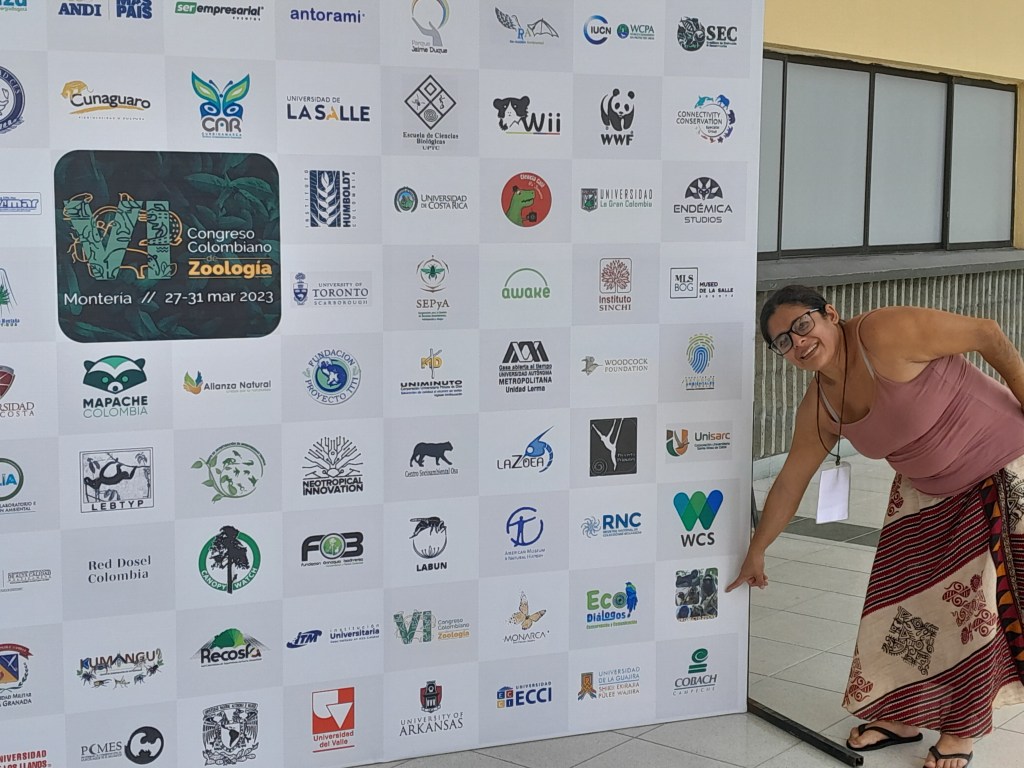
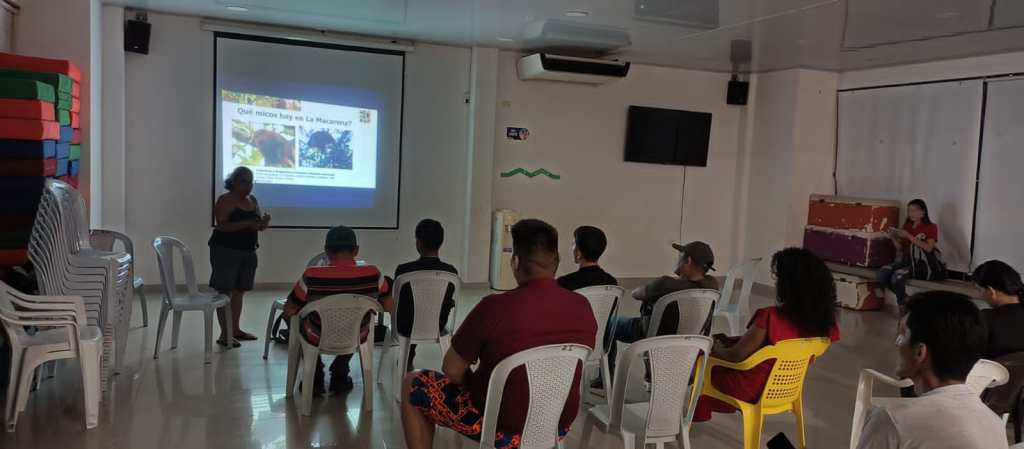
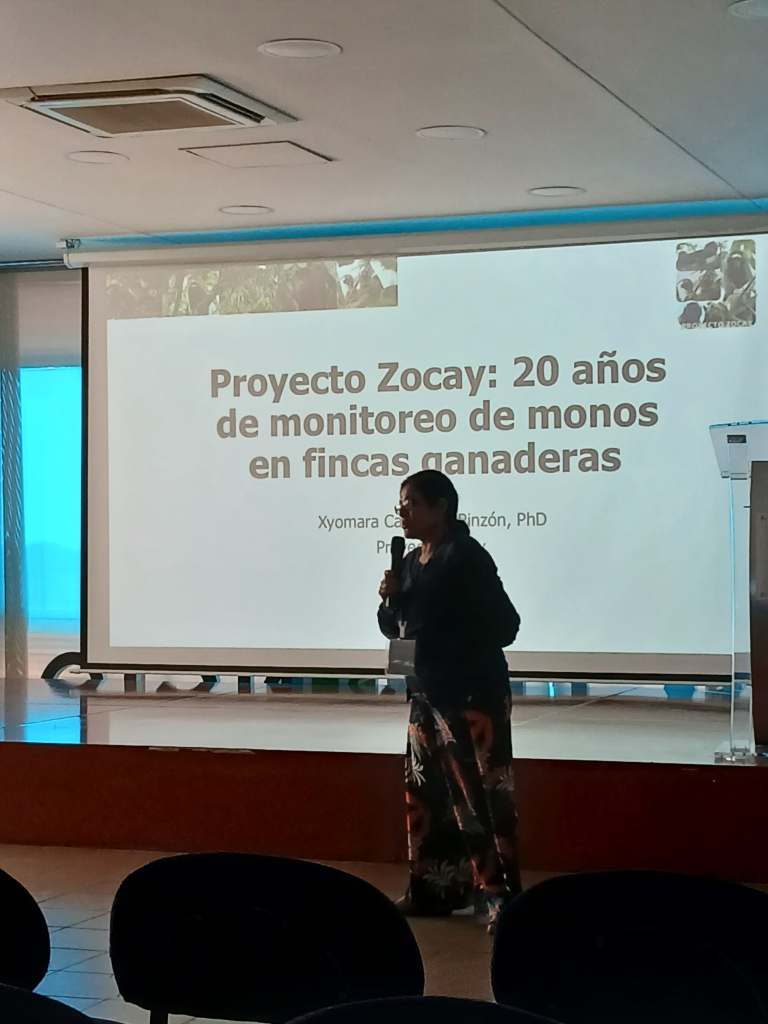
Over the years I had been in several academic conferences and, probably in fewer occasions, also in non-academic environments (trainings, community meetings, stake-holder’s meetings). My efforts to share my results had leads me to this blog also. How I make the decision to go to a conference or not, usually depends on financial resources and how much the topics on the conference interest me and make me excited to hear about other people’s results. On some occasions I had been fortunate enough to get funding but at the beginning a lot of my conference’s expenses where cover by myself and if you want a career that involves the academy world, it is a consideration you need to take in account. A lot of fellowships and grants to cover advanced degrees such as master’s and doctorates are given to people who assist to conferences and have publications. So, if you want to be a professor in a university, this is one of the many activities in which you have to involve yourself, conferences and publishing articles.

As mention in my last blogs, resources for this year research are reduced so, we will try to share with you some of the main results of our research as part of publishing, hopefully, in a more simpler way our findings as well as giving you some little updates on our limited fieldwork for this year…More soon!!!

If you want to support our activities, please visit https://fineartamerica.com/art/xyomara+carretero or get in contact with us at xcarretero@gmail.com if you want to collaborate, donate or volunteer in our activities. You can also support our activities by buying our ornate titi monkeys stuff dolls https://www.instagram.com/p/Ctm_sEORvk8/?igshid=MzRlODBiNWFlZA== and our new journals in Amazon https://www.amazon.com/X-Carretero/dp/B0CWD1DBJM/ref=mp_s_a_1_1?

© Copyright Disclaimer. All pictures used on this web page are protected with copyrights to Xyomara Carretero-Pinzón. If you want to use any of these pictures, please leave a message on the website or contact xcarretero@gmail.com


Monkey Forest Tales: Its babies season again

In today’s post we are talking about some news from the field. As every year, at the beginning of the year, Colombian squirrel monkeys (Saimiri albigena) started its birth season and despite our limited budget for this year, we started our counting of Colombian squirrel monkeys. And new babies are born in some of the groups we had been monitoring over the years. It is always exciting when we see Colombian squirrel monkeys at this time of the year, and we notice new babies. For now, some group already had a few babies while other groups did not have births, yet. Hopefully will be able to continue monitoring these groups over the following months to see the progress of those new babies. We also were able to notice some of the babies from last year season made it to their first year that is also great to see as mortalities seems to be high in the first year in some groups.We also continue looking for funding opportunities to continue working with this and other groups of monkeys in all our areas of study. Our efforts are also focused on trying to publish all the information product of our fieldwork and we are happy to share with you that part of our work with Brumback night monkeys (Aotus brumbacki) was published. We describe the diversity of nest site used by this species in areas around San Martín, Acacias, Villavicencio, Cumaral and Restrepo. This was a collaboration with Dr. Martha Ortiz-Moreno from Los Llanos University, a regional university located in Villavicencio. If you want to read this publication please go to https://doi.org/10.47603/mano.v9m2.394

We are finishing two additional publications: another one on Brumback night monkeys and variables affecting their presence and abundance and one on ornate titi monkey (Plecturocebus ornatus) activity patterns and diet in fragmented landscapes. More news on these papers soon…

If you want to support our activities, please visit https://fineartamerica.com/art/xyomara+carretero or get in contact with us at xcarretero@gmail.com if you want to collaborate, donate or volunteer in our activities. You can also support our activities by buying our ornate titi monkeys stuff dolls https://www.instagram.com/p/Ctm_sEORvk8/?igshid=MzRlODBiNWFlZA== and our new journals in Amazon https://www.amazon.com/X-Carretero/dp/B0CWD1DBJM/ref=mp_s_a_1_1?© Copyright Disclaimer. All pictures used on this web page are protected with copyrights to Xyomara Carretero-Pinzón. If you want to use any of these pictures, please leave a message on the website or contact xcarretero@gmail.com

Monkey Forest Tales: Planning for 2025

In today’s post, the first of 2025 we are going to talk about our plans for this new year work. This year started with a big challenge; we didn’t get funding for our proposed activities that will also was going to help us to continue our monitoring of primate populations in small fragments located in private land. Every time I face this rejection make me wonder if one of the reasons for these rejections had something to do with being working in private lands or because all the species with which we work are categorized as Vulnerable or Low Concern and therefore, they seem to have more time for them before they need urgent help. It also makes me wonder about my communication skills and how much I still need to learn about funding applications, despite rejections being part of science it is still difficult to get through the fist shock of each grant rejection. However, we still have plans for this 2025 and will continue applying for grants over the following months to try to achieve our plans.We are planning to continue monitoring primate populations in small fragments located in private lands as demography data and birth and death mortalities for the three endemic species in our study area doesn’t exist and it is data difficult to get due to monkey’s long-life span. Despite the 20 year we had being in the study area, some years we don’t have good enough data, and it is important for the conservation of our species of study.

We also want to implement a couple of pilot projects using ornate titi monkeys as flag species: one focus on education of small children and the second focus on connecting small fragments through living fences. As I mention in our last post of 2024, one of the main messages from our ornate titi monkey distribution project is the need to connect and protect every single forest fragment present in the distribution area of this endemic species, especially in the north, as it is highly fragmented and the two National Parks in which the species is present seems to be not very effective if its deforestation rates continue to increase as it had done over the past decade.These two pilot projects hopefully can be replicated to other areas of the distribution of ornate titi monkeys, which also are need it of connectivity measures that help not only ornate titi monkeys but other charismatic species. One of these areas in which we hope to start working during the new year is Vista Hermosa, where local tourism guides are very interested in help to protect ornate titi monkeys.

A more desktop type of project we like to work on during this year are some of our management data that needs to be publish as well as a connectivity project based on the information we collected over the past two years for two of the endemic species in our study area, Colombian squirrel monkeys (Saimiri albigena) and ornate titi monkeys (Plecturocebus ornatus), both categorized as Vulnerable. Hope fully we will get funding to make all these plans possible in the new year…

If you want to support our activities, please visit https://fineartamerica.com/art/xyomara+carretero or get in contact with us at xcarretero@gmail.com if you want to collaborate, donate or volunteer in our activities. You can also support our activities by buying our ornate titi monkeys stuff dolls https://www.instagram.com/p/Ctm_sEORvk8/?igshid=MzRlODBiNWFlZA== and our new journals in Amazon https://www.amazon.com/X-Carretero/dp/B0CWD1DBJM/ref=mp_s_a_1_1?© Copyright Disclaimer. All pictures used on this web page are protected with copyrights to Xyomara Carretero-Pinzón. If you want to use any of these pictures, please leave a message on the website or contact xcarretero@gmail.com