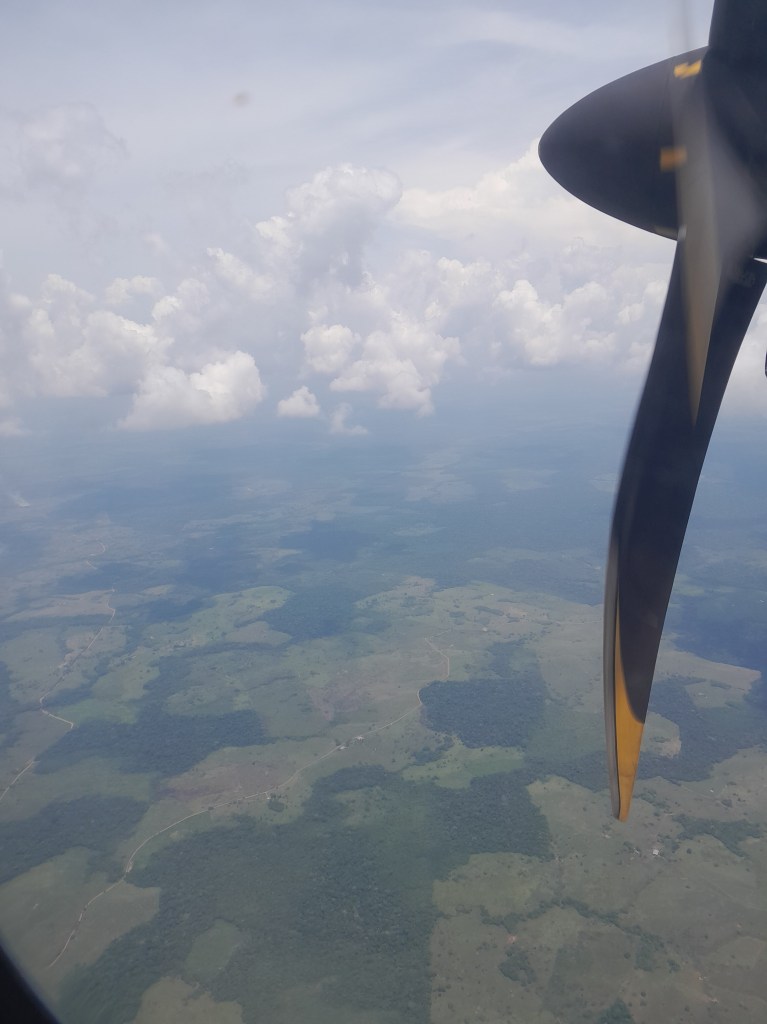
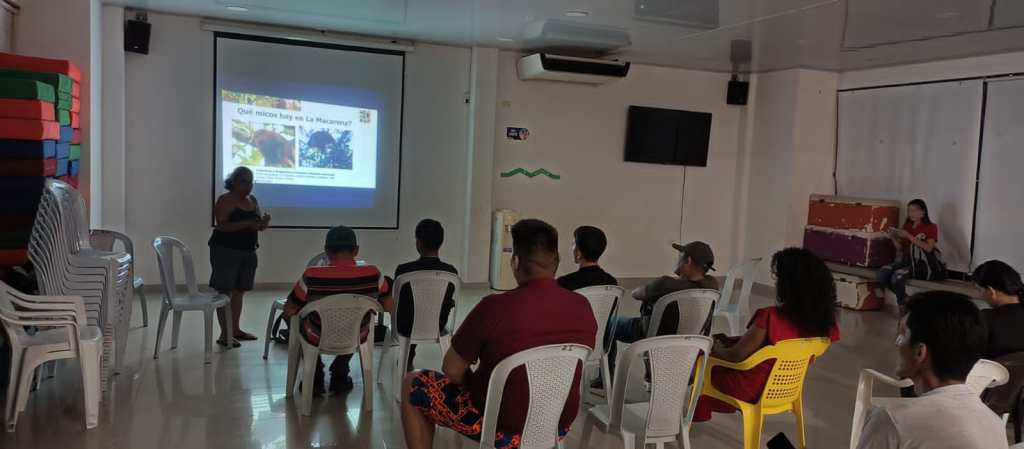


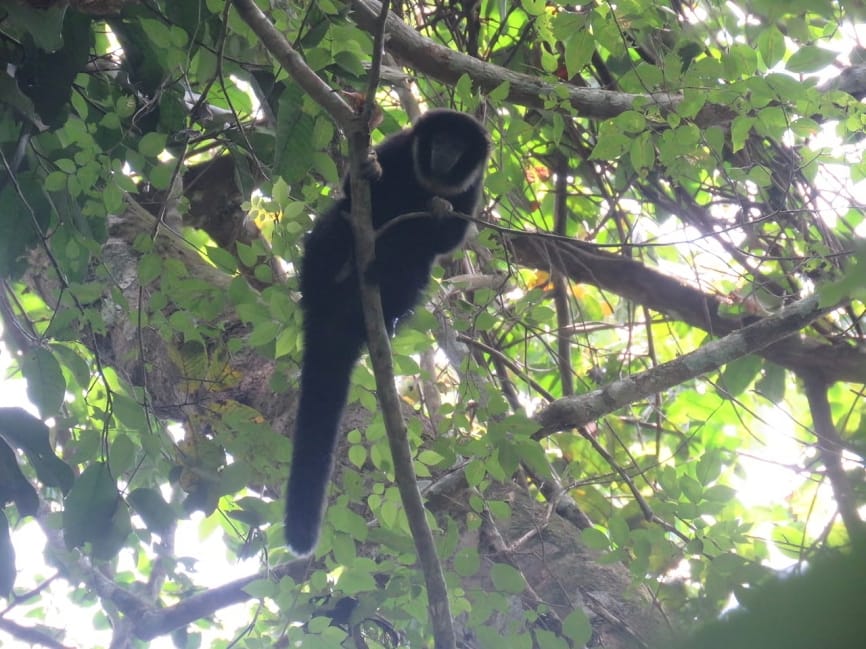
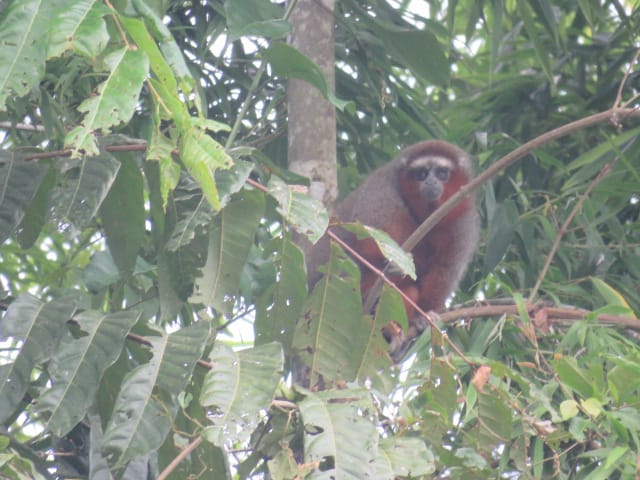
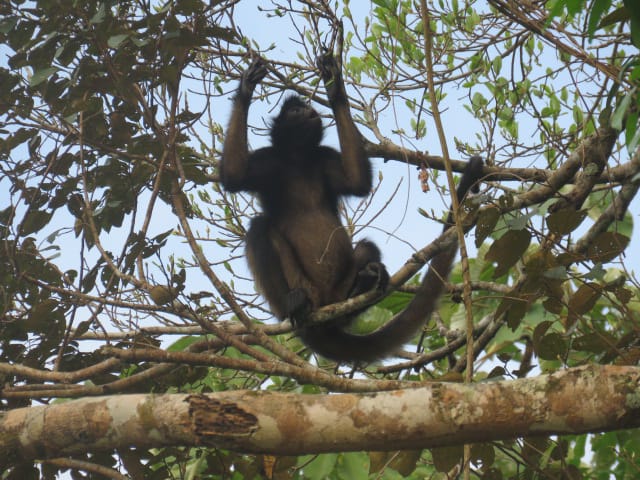


In today’s post we are talking about our last fieldtrips looking for ornate titi monkeys (Plecturocebus ornatus), including a trip to a wonderful area where Orinoquia, Andean and Amazonian fauna and flora meet, an area of great beauty and complex topography. In our search for ornate titi monkeys, we traveled from this species northern limit towards south looking for this elusive monkeys, using vocalizations, informal interviews and direct sightings to find a species of small monkeys which is endemic mainly to Meta department. In our trip in the north, we only found them in few places. However, they still remain in forest fragments close to towns and cattle ranches.Then we travel to the southern part of its distribution, in the amazing Macarena area, where they are in gallery forest fragments close to streams and Guayabero river, in the north bank. Traveling towards Guayabero river south bank, we found a cousin of ornate titi monkeys, white-chested titi (Cheracebus lugens), a similar monkey of black fur with white hands and white collar. In our trips along Guayabero river we also witness other monkeys, resting in tall trees we saw red howler monkeys (Alouatta seniculus), woolly monkeys (Lagothrix lugens), and spider monkeys (Ateles belzebuth). We also saw Colombian squirrel monkeys (Saimiri albigena) and black capped capuchins (Sapajus apella) running and catching arthropods close to river banks. Our trip took us a bit more south, to larger patches of lowland forest, with high canopies. This higher canopy give us an additional surprise, a larger and colorful monkey, with bird sounds flying through tall trees, a black ouakary (Cacajao ouakary). This is a big monkey with short tail, poorly known even to local people in the area. We didn’t see other monkeys more typical from Amazonian forest such as black mantle tamarin (Leontocebus nigricollis) and Humboldt white-fronted capuchins (Cebus albifrons), both species rarely seen by local guides. We also look close to town for nocturnal monkeys, but this elusive small monkeys didn’t let us see them. If you love to see monkeys this area will give you some amazing surprises with a wide diversity of species from Orinoquia and Amazonian regions that you can combine with bird species unique from this area. Local tourist guides have a wide knowledge and potential to include fauna watching, birds, dolphins and monkeys, in their activities as a complement to its touristic activities.We take advantage of our visit to this incredible area, to also organize a small talk about monkeys with tourism guides where we share our monkey stories. We talk about monkeys and how we can take care of them and ways to coexist with them while they develop their economic activities. So, if you visit La Macarena town area, look for birds, dolphins and monkeys, while you visit the river of seven colors, ask questions to local guides as they love to talk about their local fauna and let us know what you see.If you want to support our activities, please visit https://fineartamerica.com/art/xyomara+carretero or get in contact with us at xcarretero@gmail.com if you want to collaborate, donate or volunteer in our activities. You can also support our activities by buying our ornate titi monkeys stuff dolls https://www.instagram.com/p/Ctm_sEORvk8/?igshid=MzRlODBiNWFlZA== and our new journals in Amazon https://www.amazon.com/X-Carretero/dp/B0CWD1DBJM/ref=mp_s_a_1_1?© Copyright Disclaimer. All pictures used on this web page are protected with copyrights to Xyomara Carretero-Pinzón. Pictures in this post were taken by Francisco Gomez. If you want to use any of these pictures, please leave a message on the website or contact xcarretero@gmail.com
zocayproject
Long-term monitoring of primates in Colombian Llanos, research opportunities and some forest stories

 zocayproject