
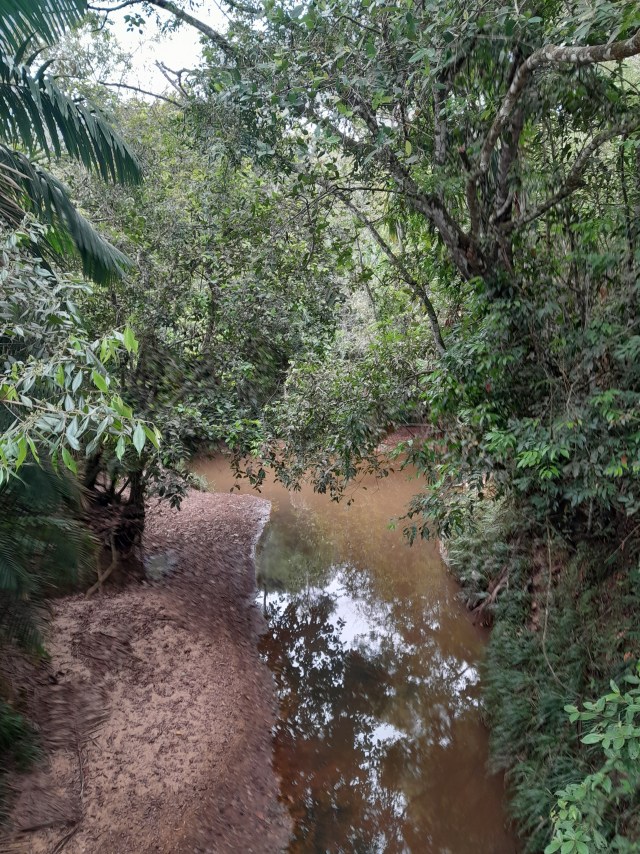
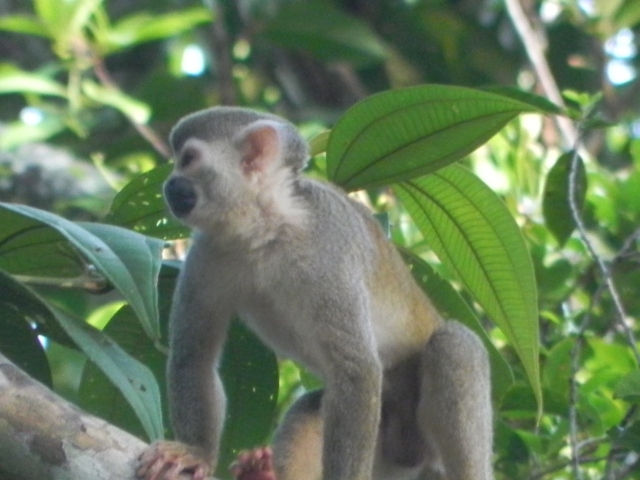
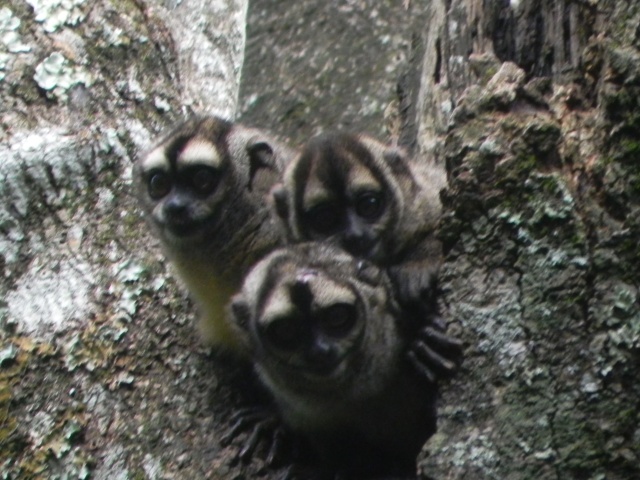
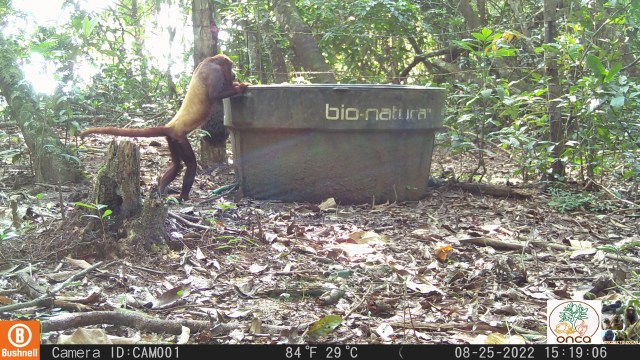
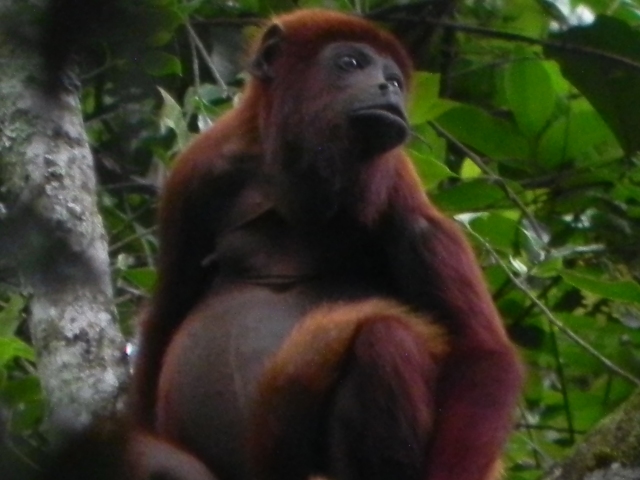
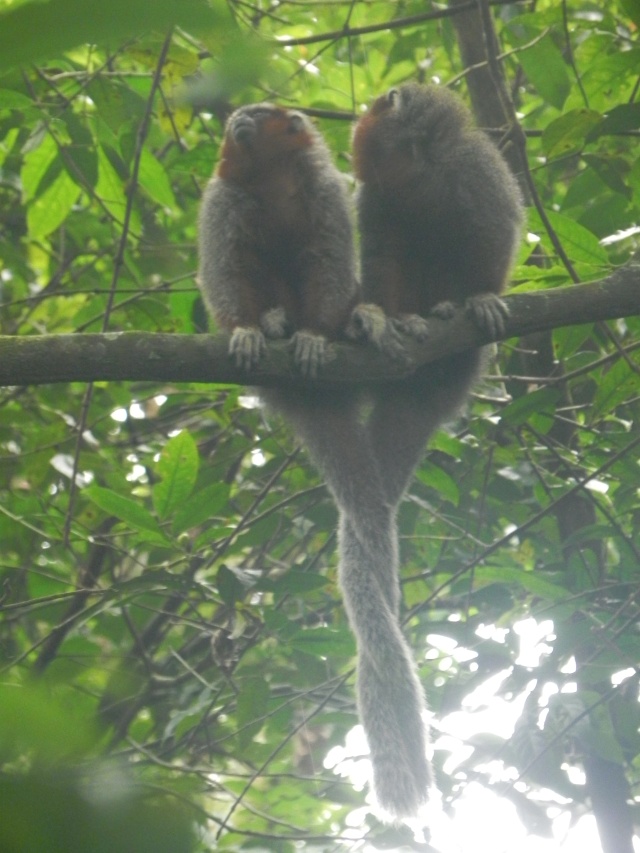

One day in March of 2004, I started a small project in a cattle ranching farm, where owners wanted to know what species of monkeys were living in their forests as well as how many of them were there. What I didn’t know is that thanks to the interest of landowners of this and neighboring farms as well as nearby reserves this project will become my life research project, Zocay Project or “Proyecto Zocay” in Spanish. And this year, this project that was not only build by me, but also all the students, volunteers and collaborators, had 20 years. This project had many challenges over time but probably the best part, apart from looking at monkeys in every step, is the learning process. Since a few months after the beginning, I started to mentor undergraduate students and that had been the biggest learning lesson from this project.
I not only had learned about monkeys living in forest fragments in an amazing part of Colombia, piedmont of Colombian Llanos, but through mentoring students I had learned about myself and how I would have liked to learn myself, what things I wish I knew when I was starting this process. How to relate with different types of people, from different background and with different dreams and challenges in life. Not always was an easy process but I hope that I was able to teach and help my students in their own learning process.
This project had its lows and ups as many research projects had, especially in terms of funds, however we had been able to learn about monkeys and how they cope with forest fragmentation and other threats that they face in human transformed landscapes. This project had also taught me to see monkeys from different perspectives. I started as a natural history researcher, focus on behavior, then I focus more on the ecological aspects of their lives, focusing on what was happening in the forest fragments where they live. However, once I started to study ecology of primates living in forest fragments, I notice that monkeys move beyond forest fragments and use other landscape structures, such as living fences, isolates trees, wire fences and other human-made structures to move and find food resources. Therefore, this project also had expanded my way to see nature and how primates relate with their surroundings.
I want to thank all our supporters over the years, as well as all students, volunteers and collaborators, my advisors over the years and specially all the landowners in which this project had performed its activities in San Martin, Cumaral, and Villavicencio for all their support and for allowed me to study monkeys in their lands. Thank you all and let’s hope this project continues for more years…
If you want to support our activities, please visit https://fineartamerica.com/art/xyomara+carretero or get in contact with us at xcarretero@gmail.com if you want to collaborate, donate or volunteer in our activities. You can also support our activities by buying our ornate titi monkeys stuff dolls https://www.instagram.com/p/Ctm_sEORvk8/?igshid=MzRlODBiNWFlZA== and our new journals in Amazon https://www.amazon.com/X-Carretero/dp/B0CWD1DBJM/ref=mp_s_a_1_1?
© Copyright Disclaimer. All pictures used on this web page are protected with copyrights to Xyomara Carretero-Pinzón. If you want to use any of these pictures, please leave a message on the website.
Month: March 2024
Monkey Forest Tales: The importance of our hobbies in science careers
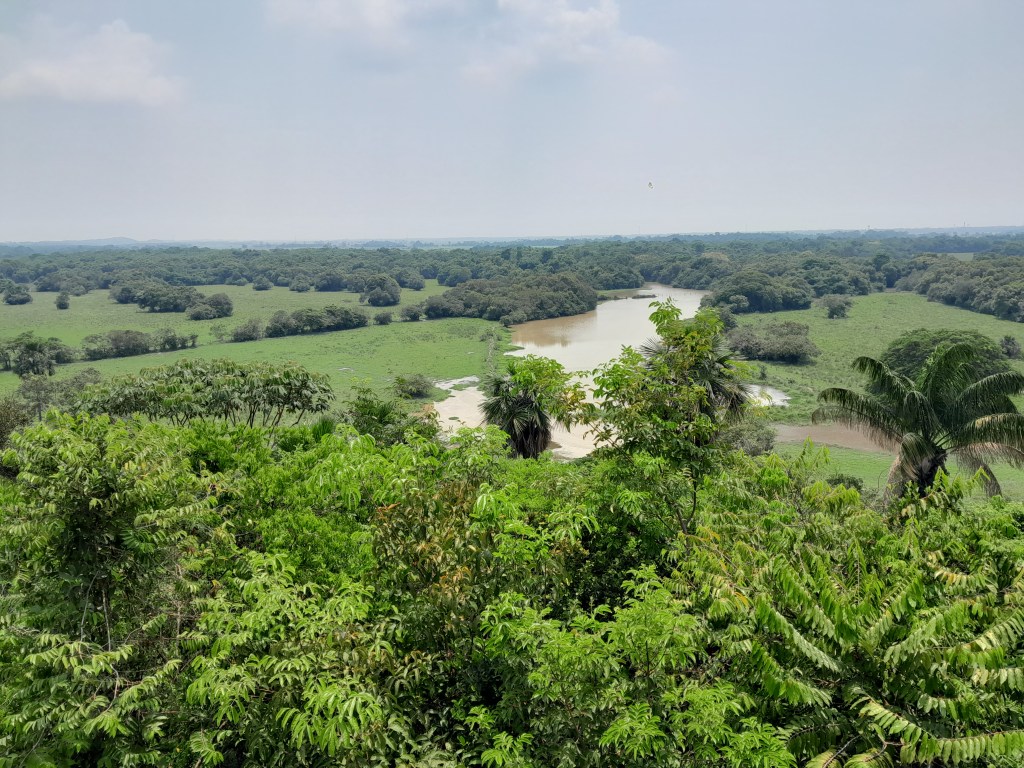
In today’s post I want to highlight again the importance of all our hobbies and other activities that we do outside of our science career. I had a student who is beginning his science journey and I had been thinking of all the things I would like someone had told me, when I was starting. So here I will hive you some of that advise I would like someone had given me earlier.
If you are hyper focus as I was when you start you career in scince, my first advise will be take advantage of any experience you are offer to learn about other groups different that the one you love the most, even when you are complete sure that group of organism are the ones you want to spend your life studying. Although I took advantage of being working at my university museum when I was doing my biology career, I wish I had continued this practice after. The reason for this is that in today’s job market, being too focus can limit your job opportunities, especially in a country like Colombia in which research is not well paid.
My second advise is to get yourself a second career option and this can be directly related to my previous advise. Having skills, knowledge and passion about other things outside of science, like music, painting, crafting, languages or anything else can give you additional option when life get difficult and jobs are scarce.
And finally, learn about your finances early in life, specially because science jobs are not always permanent or well paid. Some of the people I know are as lucky as me to have family support, however that is not the case and I also had seen good professionals doing not so good thing or accepting jobs with ethical issues just to have money to feed their families.
So, although I had love my career more than I can express in a world like today’s with so much competition and lack of opportunities, it is useful to had a second career or at least a hobby that you can use to make you life easy and keep your soul free of ethical issues.
If you want to support our activities, please visit https://fineartamerica.com/art/xyomara+carretero or get in contact with us at xcarretero@gmail.com if you want to collaborate, donate or volunteer in our activities. You can also support our activities by buying our ornate titi monkeys stuff dolls https://www.instagram.com/p/Ctm_sEORvk8/?igshid=MzRlODBiNWFlZA== and our new journals in Amazon https://www.amazon.com/X-Carretero/dp/B0CWD1DBJM/ref=mp_s_a_1_1?
© Copyright Disclaimer. All pictures used on this web page are protected with copyrights to Xyomara Carretero-Pinzón. If you want to use any of these pictures, please leave a message on the website.
Monkey Forest Tales: News from the field: samplings for our ornate titi monkey distribution project and Colombian squirrel monkey babies counts.

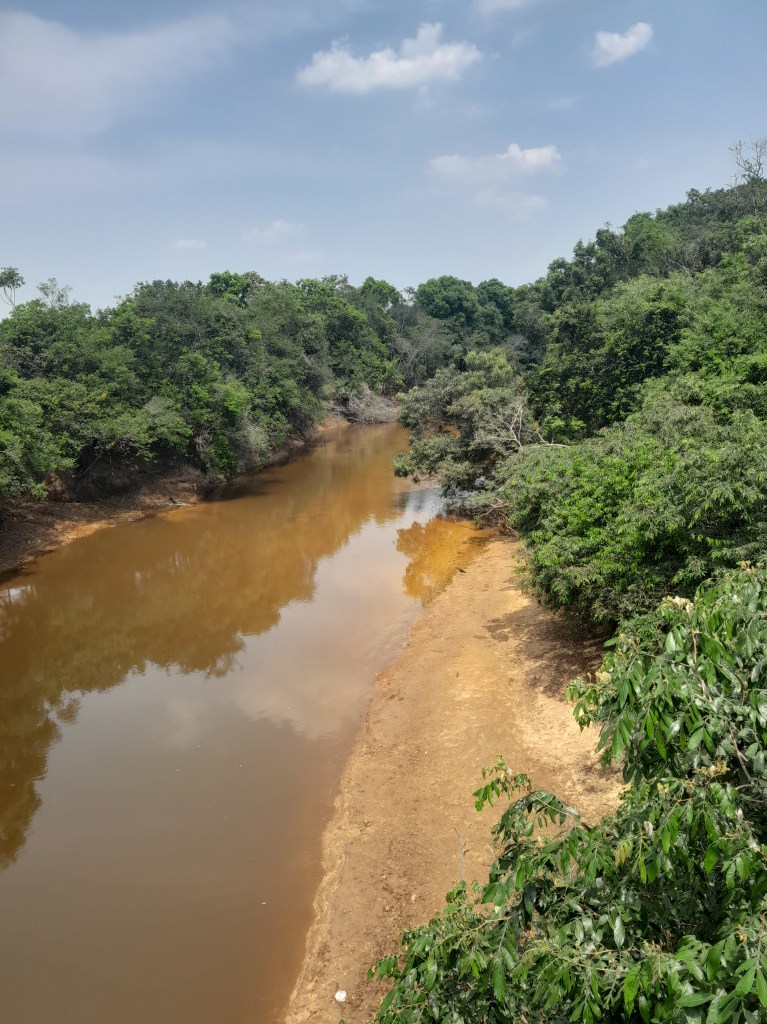
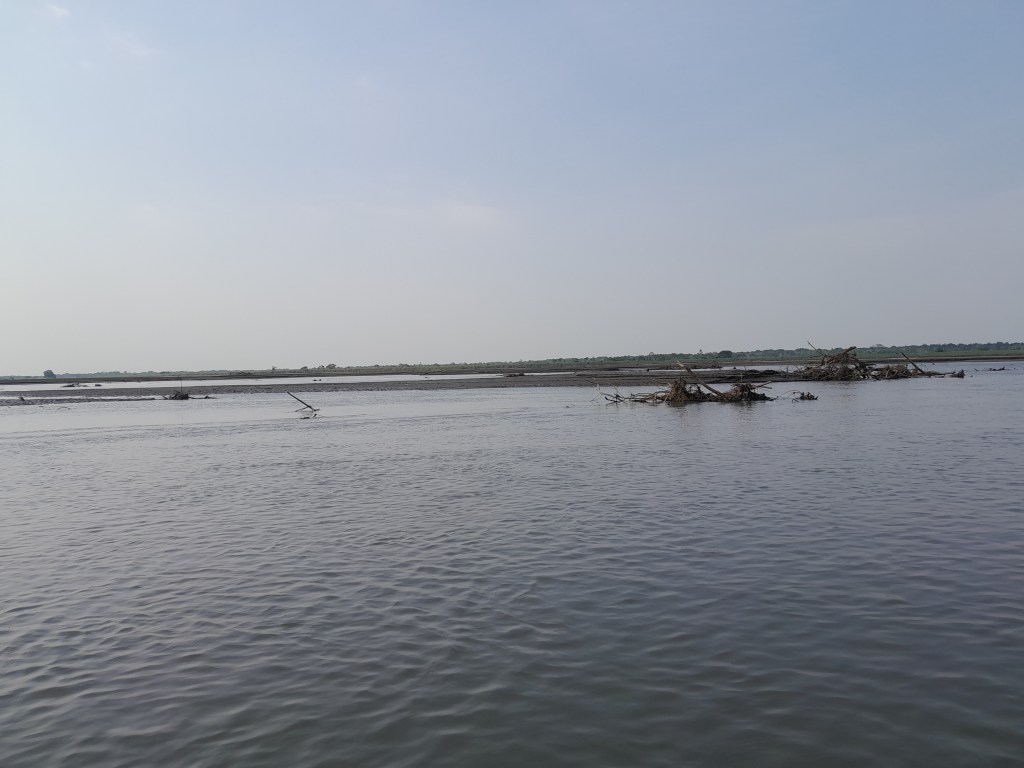


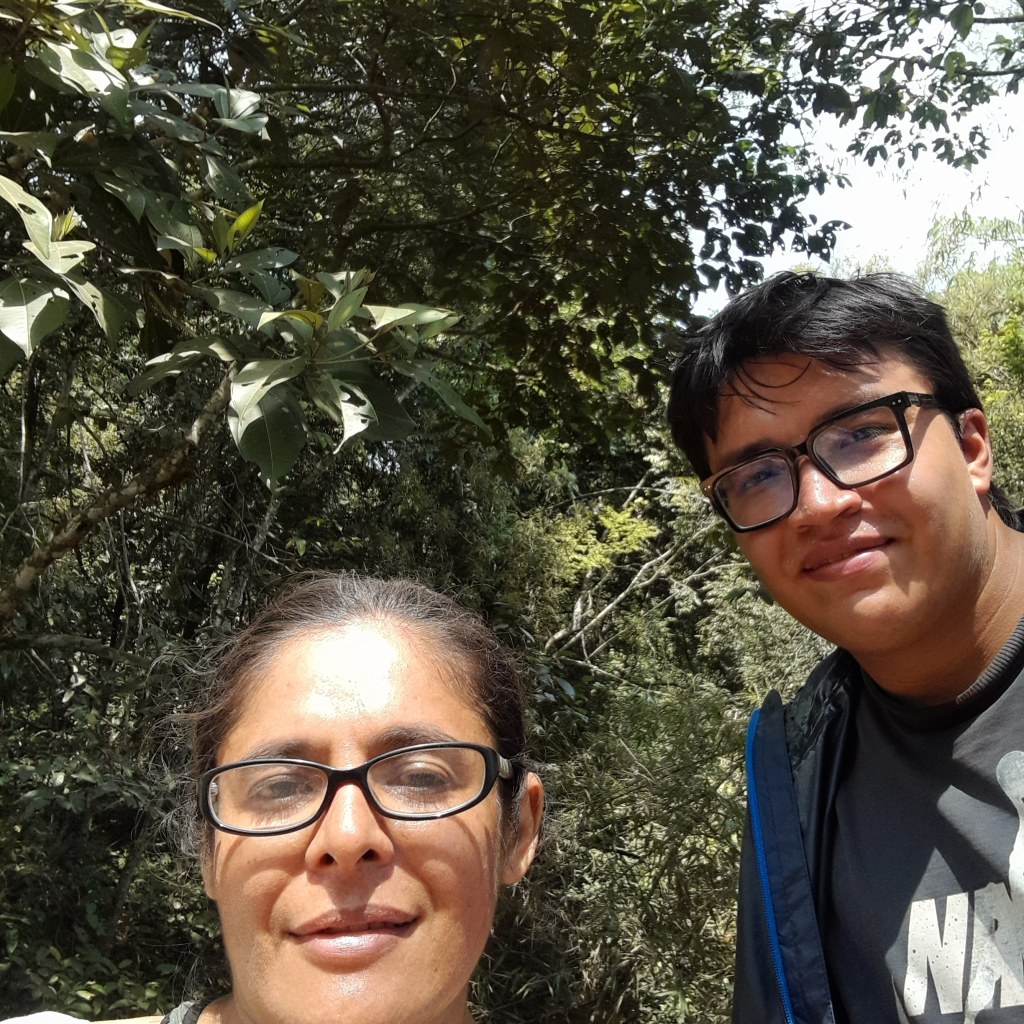
In February, we continue our annual Colombian squirrel monkeys baby counts and we started our ornate titi monkey’s distribution project samplings in Upia- Meta rivers confluence and Metica river source. Although there were just a few days of sampling, work was intense and lots of distance were covered. Deforestation on both areas is widespread and monkeys are using living fences alongside primary, secondary and tertiary roads as corridors. Colombian squirrel monkeys are still having babies, with some females with infants of around one month and other still pregnant as usual for this species, in all sites visited. Ornate titi monkeys are more elusive up to now in our samplings with some local people reporting them occasionally in some areas but not in others.
During the first month of the year, Colombian Llanos had its drier season and with El Niño phenomenon, this month all rivers in the region had very low level, making navigability very difficult and access to some forest fragments near to rivers complicated by river or land, a challenge we had to sort during this month samplings.
During this field trip we also register red howler monkeys (Alouatta seniculus), black capped capuchins (Sapajus apella fatuellus), and crab-eating fox (Cerdocyon thous) using open areas and living fences. Some prints of capybaras were also recorded on Meta riverbanks. We were also fortunate to had great people helping us with our samplings, especially Stella, Jose, Sr. Vanegas and Francisco, who support several aspects of our samplings during this month.
If you want to support our activities, please visit https://fineartamerica.com/art/xyomara+carretero or get in contact with us at xcarretero@gmail.com if you want to collaborate, donate or volunteer in our activities. You can also support our activities by buying our ornate titi monkeys stuff dolls https://www.instagram.com/p/Ctm_sEORvk8/?igshid=MzRlODBiNWFlZA== and our new journals in Amazon https://www.amazon.com/X-Carretero/dp/B0CWD1DBJM/ref=mp_s_a_1_1?dib=eyJ2IjoiMSJ9.X-DZnsRxEDXfTBPZsuG4GiwWwBCqmoeCJ_WW-bEm_Z85wKyUyBvy76iMm0z4k4oY9YD81Pz4e_ZYHYz8QK7T3BNo_mX6d-Mo7FroQLkxo6yy0k6KPwMjP8GC27PVXa-39FSo87QCzagOOnEgz-IfS8ADg0gEc9feWAkXyRNpRpuqWEv9qnKE2ALCzsyAt4aM0O-PM4L6U1PSn1neUX7axw.vI1S0GofRHMSCqMV41jOdEmaxXHCJCHL6ya-uAHsxTo&dib_tag=se&keywords=X.+Carretero+Journal&qid=1709327306&sr=8-1
© Copyright Disclaimer. All pictures used on this web page are protected with copyrights to Xyomara Carretero-Pinzón. If you want to use any of these pictures, please leave a message on the website.
 zocayproject