
Monkey Forest Tales: Balance of Zocay Project activities in 2023 – Part 1: events participation

In today’s post we are going to start our year’s balance for this ending year 2023. This year was an intense and dynamic year for us with multiple participations in conferences and talks with different audiences, from scientific to kids. As well as assistance to regional events and technical discussions.
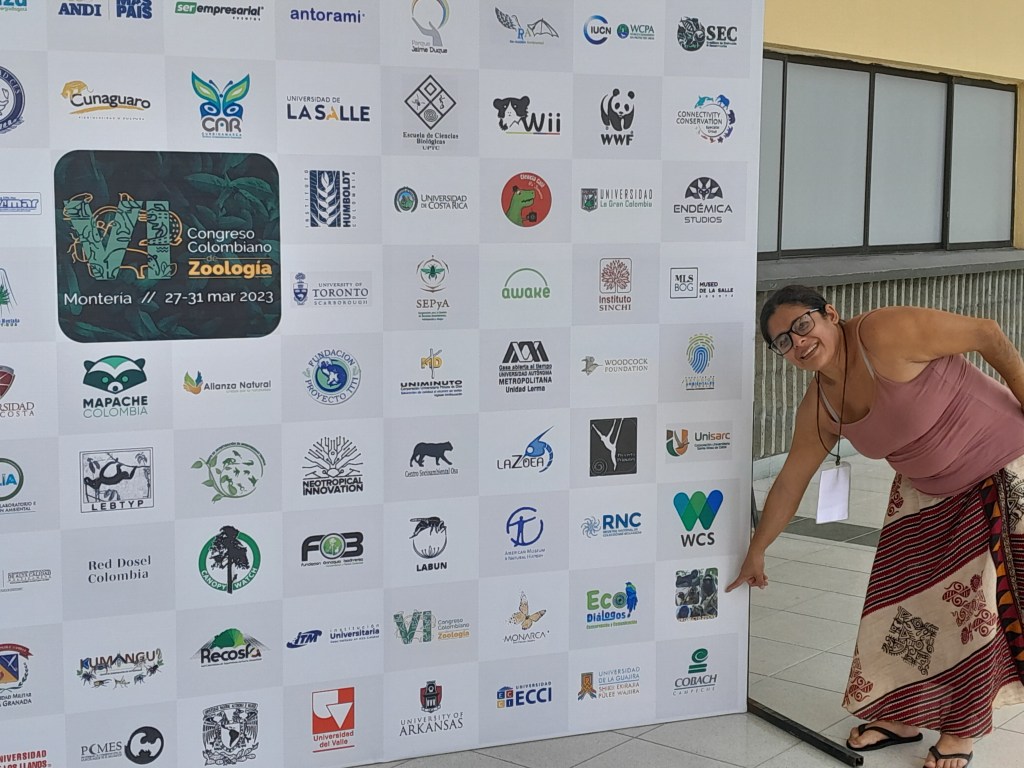
Our first event was our participation, in collaboration with Onca Foundation, to the VIth congress of zoology in which we presented the preliminary results of our camera trap project. This project aimed to establish wildlife use of water sources used for cattle in private farms. Use of water sources, artificial and natural, by wildlife include a wide variety of mammals, birds and reptiles. Some recommendations from this project can be found in Spanish and English here
Our next event was our participation in a vaccination campaign of farm dogs in our study area. This campaign was an international campaign to reduce the impact of domestic dog’s diseases on wildlife. Some studies had found transmission of diseases from domestic dogs to wild canids and felids in areas where both speciez enter in contact. Therefore, prevention and vaccination of domestic dogs and cats are important tool to reduce this disease prevalence in wildlife.
We also participate in a couple of talks with kids from Police School in Villavicencio to celebrate environmental and biodiversity day. These talks were focused on monkeys present in Villavicencio city as well as a small story for small kids to learn about dusky titi monkeys and its importance.

We also participate in regional symposium of biodiversity in the Orinoquia region organized by National Parks of Colombia, where biodiversity experiences from the Orinoquia region were presented.
Finally, we participate in a virtual forum to celebrate Dr Chuck Snowdown contributions to primatology, where we share our experience and lessons learned over the past 28 years of studying monkeys in Colombia, here.
In our next post, we will share our projects and collaborations in 2023. We are grateful with all people who invite us to participate on these events.
If you want to support our activities, please visit https://fineartamerica.com/art/xyomara+carretero or get in contact with as at xcarretero@gmail.com if you want to collaborate, donate or volunteer in our activities. You can also support our activities by buying our dusky titi monkeys stuff dolls https://www.instagram.com/p/Ctm_sEORvk8/?igshid=MzRlODBiNWFlZA==
© Copyright Disclaimer. All pictures used on this web page are protected with copyrights to Xyomara Carretero-Pinzón. If you want to use any of these pictures, please leave a message on the website.
Monkey Forest Tales: Considerations for long term studies in private lands

First I want to apologize for this post delay, but to be complete honest with you, it was hard to find a topic to talk about. However, during past days I had the opportunity to share my experience and knowledge with a potential future biologist. While talking with him I realize that part of Zocay Project success is that we had persisted working in private lands by a combination of good decisions and hard work, especially during early years, and being able to adapt ourselves to talk with people of different backgrounds over the years.
Those initial good decisions build trust between landowners and researchers/ students because we were able to sit and listen to each other, share our knowledge and agreed on management actions that benefit them and the wildlife inhabiting their land. This couldn’t be possible without the hard work of some students and my persistence, despite all challenges, to continue working in those farms.
Being able to talk with people of different backgrounds is extremely important when working close to people, not matter if it is landowners, farm workers, peasant or indigenous communities. Our skills to talk and explain scientific concept to people is part of the success of any long term project.
Another important factor is to be able to secure financial support, probably the most difficult part and one that for sure I didn’t master yet.
Additional factors that influence your success on a long term project is your personal motivation. For me, being close to monkeys and forest as well as trying to understand how they persist and survive despite all threats surrounding them are my constant motivations to continue as long as the landowners allow me to be in their farms.
So, if you are thinking about implementing a long term project not matter the context or species you study, first build trust with people living in the area and listen their concerns, work together to find solutions and consult each other opinions when making management decisions. Stay motivated and never loose your passion for what you are doing.
If you want to support our activities, please visit https://fineartamerica.com/art/xyomara+carretero or get in contact with as at xcarretero@gmail.com if you want to collaborate, donate or volunteer in our activities. You can also support our activities by buying our dusky titi monkeys stuff dolls https://www.instagram.com/p/Ctm_sEORvk8/?igshid=MzRlODBiNWFlZA==
© Copyright Disclaimer. All pictures used on this web page are protected with copyrights to Xyomara Carretero-Pinzón. If you want to use any of these pictures, please leave a message on the website.