


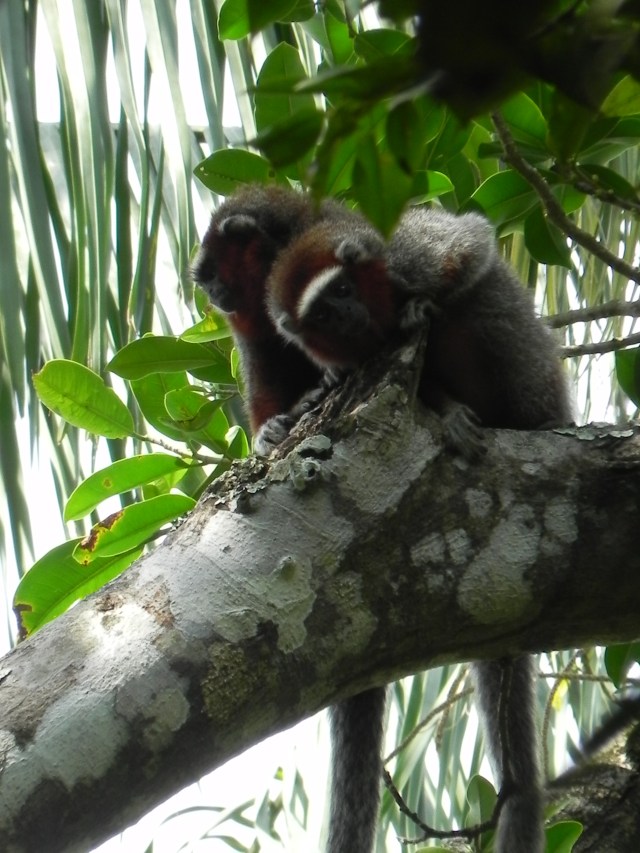

In today’s world in which climate change and biodiversity loss crisis are of high priority and concern to all of us who study life, we often forget that some basic information to understand and mitigate the effects of both climate change and biodiversity loss are still need it such as species distributions. In today’s post I want to discuss some challenges that this kind of studies presents and how important these studies are in endemic species cases.
Colombia is a privileged country in terms of biodiversity and endemic species. However, for some endemic species there is still gaps in their distribution limits that challenges all conservation actions we do on behalf of these species. Colombia’s internal war, had represented an obstacle for the definition of species distribution limits as well as our abrupt geography. Since peace agreement some areas had become open to register new species, to rediscover forget species populations and to access to areas that had long being suspected to be distribution limits of endemic species.
These is the case for our endemic dusky titi monkey or mono zocay (Plecturocebus ornatus), in Spanish. Since its description as a subspecies and up to know part of their northern, eastern and southern limits had been not verified. Current hypothesis for its limits are related to a widespread theory of rivers acting as geographic barriers of species distributions, especially for small vertebrates that are unable to swim and cross those rivers.
Some of the challenges of species distribution studies had is the number of records need it to delineate those limits, which implies large expeditions by rivers and sampling in multiples sites, something that requires a lot of logistic and economic resources that funding agencies and grant are not always willing to give to this kind of projects. However, internet and natural applications such as inaturalust had opened new opportunities to register data of new sites in which species had been seen. This year we started a new project to clarify northern, eastern and southern limits of dusky titi monkeys, so I want to make a call to all people living, visiting and having farms along the Upía, Meta, Metica and Guayabero rivers to share with us pictures and locations where you have seen this beautiful endemic species of primate in Colombia. You can send all you records and/or you names in inaturalist to xcarretero@gmail.com for us to collect and improve our knowledge on the distribution limits of this species.
SPANISH
En el mundo de hoy en el cual el cambio climático y la crisis de la pérdida de biodiversidad son de alta prioridad y preocupación para todos los que estudiamos la vida, a menudo olvidamos que alguna de la información básica para entender y mitigar los efectos tanto del cambio climático como de la pérdida de la biodiversidad aún son necesarios como las distribuciones de las especies. En este blog quiero discutir algunos retos que este tipo de estudios presentan y lo importante que son estos estudios en el caso de especies endémicas.
Colombia es un país privilegiado en términos de biodiversidad y especies endémicas. Sin embargo, para algunas especies endémicas aún existen vacios en sus límites de distribución que representan retos para todas las acciones de conservación que hacemos en mombre de estas especies. La guerra interna de Colombia ha representado un obstaculo para la definición de los limites de distribución así como nuestra geografía abrupta. Desde la firma del acuerdo de paz, algunas áreas se han vuelto disponibles para el registro de nuevas especies, el redescubrimiento de poblaciones olvidadas de especies y para el acceso a áreaa que por largo tiempo se ha sospechado que son limites de distribución de especies endémicas.
Este es el caso de nuestro mono endémico el mono zocay (Plecturocebus ornatus). Desde du descrpción como subespecie y hasta ahora parte de sus límites norte, oriental y sur no han sido verificados. Hipótesis actuales para sus limites se relacionan con la teoria ampliamente distribuida de los ríos que actuan como barreras geograficas de la distribución de especies, especialmente para vertebrados pequeños que no son capaces de nadar y atravesar esos ríos.
Algunos de los retos que los estudios de distribucion de especies tienen es la necesidad de delinear esos límites lo que implica grandes expediciones a lo largo de rios y muestreos en multiples sitios, algo que requiere mucha logistica y recursos económicos que las agencias de financiamiento y becas no siempre estan dispuestas a dar a este tipo de proyectos. Sin embargo, internet y las aplicaciones de naturaleza como inaturalist han abierto nuevas oportunidades para registrar datos de nuevos sitios en lis que las especies han sido vistas. Este año empezamos un nuevo proyecto para clarificar los limites norte, este y sur del mono zocay, de forma que quiero invitar a las personas viviendo, visitando y que tengan fincas a lo largo de los ríos Upía, Meta, Metica y Guayabero para que nos compartan sus registros de fotos y ubicaciones fonde hayan observado esta hermosa especie endémica de mono en Colombia. Pueden enviar sus registros y/o nombres en inaturalist a xcarretero@gmail.com para que podamos mejorar nuestro conocimienyo de los limites de distribución de esta especie.
If you want to support our activities, please visit https://fineartamerica.com/art/xyomara+carretero or get in contact with as at xcarretero@gmail.com if you want to collaborate, donate or volunteer in our activities. You can also support our activities by buying our dusky titi monkeys stuff dolls https://www.instagram.com/p/Ctm_sEORvk8/?igshid=MzRlODBiNWFlZA==
© Copyright Disclaimer. All pictures used on this web page are protected with copyrights to Xyomara Carretero-Pinzón. If you want to use any of these pictures, please leave a message on the website.
zocayproject
Long-term monitoring of primates in Colombian Llanos, research opportunities and some forest stories

 zocayproject
Pingback: Monkey Forest Tales: – zocayproject